

Module 1
Lecture 1
Chapter 1 The cost of a common currency
Introduction
● Costs arise because, when joining a monetary union, a country loses monetary policy
instrument (e.g. exchange rate)
● This is costly when asymmetric shocks occur
● In this chapter we analyse different sources of asymmetry
1.1 shifts in demand (mundell)
● Analysis is based on celebrated contribution of robert mundell (1961)
● Assume two countries, france and germany
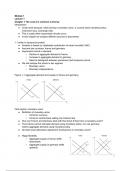
● Asymmetric shock in demand:
○ Decline in aggregate demand in france
○ Increase in aggregate demand in germany
○ Need to distinguish between permanent and temporary shock
● We will analyse this shock in two regimes
○ Monetary union
○ Monetary independence
Figure 1.1 Aggregate demand and supply in france and germany
First regime: monetary union
● Definition of monetary union
○ Common currency
○ Common central bank setting one interest rate
● How can France and Germany deal with this shock if they form a monetary union?
● Thus france cannot stimulate demand using monetary policy; nor can germany
restrict aggregate demand using monetary policy
● Do there exist alternative adjustment mechanisms in monetary union?
● Wage flexibility
○ Aggregate supply in france shifts
downwards
○ Aggregate supply in germany shifts
upwards
,Additional adjustment mechanism
● Labour mobility
○ Is very limited in europe
○ Especially for low-skilled workers
○ Main reason: social security systems
● Monetary union will be costly if:
○ Wages and prices are not flexible
○ If labour is not mobile
● France and germany may then regret being in a uniom
Second regime: monetary independence
● What if france and germany had maintained their own currency and national central
bank?
● Then national interest rate and/or exchange rate can be used
Figure 1.3 effects of monetary expansion in france and monetary restriction in germany
● Thus when asymmetric shocks occur and when there are a lot of rigidities monetary
union may be more costly than not being in a monetary union
1.2 monetary independence and government budgets
● When countries join a monetary union they lose their monetary independence
● That affects their capacity to deal with asymmetric shocks
● The loss of monetary independence has another major implication:
○ It fundamentally changes the capacity of governments to finance their budget
deficits
○ Let us develop this point further
● Member of monetary union issue debt in currency over which they have no control
● It follows that financial markets acquire power to force default on these countries
● Not so in countries that are not part of monetary union, and have kept control over
the currency in which they issue debt
● Consider case of UK (‘stand-alone’ country) and spain (member of monetary union)
,UK case
● Suppose investors fear default of UK government
○ They sell UK govt bonds (yield increase)
○ Proceeds of sales are presented in forex market
○ Sterling drops
○ UK money stock remains unchanged, maintaining pool of liquidity that will be
reinvested in UK govt. Securities
○ If not, bank of England can be forced to buy UK govt. Bonds
● Investors cannot trigger a liquidity crisis for UK government and thus cannot force
default (bank of england is superior force)
● Investors know this; thus, they will not try to force default
Spanish case
● Suppose investors fear default of spanish government
○ They sell spanish govt bonds (yield increase)
○ Proceeds of these sales are used to invest in other eurozone assets
○ No foreign exchange market and floating exchange rate to stop this
○ Spanish money stock declines; pool of liquidity for investing in spanish govt
bonds shrinks
○ No spanish central bank that can be forced to buy spanish government bonds
○ Liquidity crisis possible: spanish government cannot fund bond issues at
reasonable interest rate
○ Can be forced to default
○ Investors know this and will be tempted to try
● Situation of spain is reminiscent of situation of emerging economies that have to
borrow in foreign currency
● These emerging economies face the same problem:
○ They can suddenly be confronted with a ‘sudden stop’ when capital inflows
suddenly stop
○ Leading to a liquidity crisis
Monetary union is fragile
● When investors distrust a particular member government:
○ They will sell the bonds
○ Thereby raising the interest rate and triggering a liquidity crisis
● This may in turn set in motion a solvency problem:
○ With a higher interest rate the government debt burden increases
○ Forcing the government to reduce spending and increase taxation
● Such a forced budgetary austerity is politically costly,
● And may lead the government
○ To stop servicing the debt
○ And to declare a default
● By entering a monetary union
○ Member countries become vulnerable to movements of distrust by investors
, Self fulfilling prophecy
● When financial markets start distrusting a particular government’s ability (or
willingness) to service its debt:
○ Investors sell the government bonds
○ This makes it more likely that the government will stop servicing the debt
● This dynamic is absent in countries that have kept their monetary independence
○ These ‘stand alone’ countries issue their debt in their own currencies
○ They can always create the liquidity to pay out the bondholders
● This does not mean that these countries may not have problems of their own
○ One problem could be that the capacity to finance debt by money creation too
easily leads to inflation
● But it remains true that these countries cannot be forced against their will into default
by financial markets
● The fact that this is possible in a monetary union makes such a union fragile and
costly
1.3 Asymmetric shocks and debt dynamics
● There is an important interaction between asymmetric shocks and debt dynamics:
○ Negative shock in france increases budget deficit in france (due to automatic
stabilizers)
○ If financial markets maintain trust in the french government’s solvency same
analysis as before
○ If markets lose trust in the french government the asymmetric shock is
amplified in france and in germany
Figure 1.5 Amplification of asymmetric shocks
Negative amplification in france
● Investors sell french government bonds,
● Leading to an increase in the interest rate and a liquidity crisis
● Aggregate demand curve in france shifts further to the left,
○ I.e. with a higher interest rate in france, french residents will spend less on
consumption and investment goods
● Debt crisis adds to the negative demand shock by further shifting the demand curve
to D”F
Lecture 1
Chapter 1 The cost of a common currency
Introduction
● Costs arise because, when joining a monetary union, a country loses monetary policy
instrument (e.g. exchange rate)
● This is costly when asymmetric shocks occur
● In this chapter we analyse different sources of asymmetry
1.1 shifts in demand (mundell)
● Analysis is based on celebrated contribution of robert mundell (1961)
● Assume two countries, france and germany
● Asymmetric shock in demand:
○ Decline in aggregate demand in france
○ Increase in aggregate demand in germany
○ Need to distinguish between permanent and temporary shock
● We will analyse this shock in two regimes
○ Monetary union
○ Monetary independence
Figure 1.1 Aggregate demand and supply in france and germany
First regime: monetary union
● Definition of monetary union
○ Common currency
○ Common central bank setting one interest rate
● How can France and Germany deal with this shock if they form a monetary union?
● Thus france cannot stimulate demand using monetary policy; nor can germany
restrict aggregate demand using monetary policy
● Do there exist alternative adjustment mechanisms in monetary union?
● Wage flexibility
○ Aggregate supply in france shifts
downwards
○ Aggregate supply in germany shifts
upwards
,Additional adjustment mechanism
● Labour mobility
○ Is very limited in europe
○ Especially for low-skilled workers
○ Main reason: social security systems
● Monetary union will be costly if:
○ Wages and prices are not flexible
○ If labour is not mobile
● France and germany may then regret being in a uniom
Second regime: monetary independence
● What if france and germany had maintained their own currency and national central
bank?
● Then national interest rate and/or exchange rate can be used
Figure 1.3 effects of monetary expansion in france and monetary restriction in germany
● Thus when asymmetric shocks occur and when there are a lot of rigidities monetary
union may be more costly than not being in a monetary union
1.2 monetary independence and government budgets
● When countries join a monetary union they lose their monetary independence
● That affects their capacity to deal with asymmetric shocks
● The loss of monetary independence has another major implication:
○ It fundamentally changes the capacity of governments to finance their budget
deficits
○ Let us develop this point further
● Member of monetary union issue debt in currency over which they have no control
● It follows that financial markets acquire power to force default on these countries
● Not so in countries that are not part of monetary union, and have kept control over
the currency in which they issue debt
● Consider case of UK (‘stand-alone’ country) and spain (member of monetary union)
,UK case
● Suppose investors fear default of UK government
○ They sell UK govt bonds (yield increase)
○ Proceeds of sales are presented in forex market
○ Sterling drops
○ UK money stock remains unchanged, maintaining pool of liquidity that will be
reinvested in UK govt. Securities
○ If not, bank of England can be forced to buy UK govt. Bonds
● Investors cannot trigger a liquidity crisis for UK government and thus cannot force
default (bank of england is superior force)
● Investors know this; thus, they will not try to force default
Spanish case
● Suppose investors fear default of spanish government
○ They sell spanish govt bonds (yield increase)
○ Proceeds of these sales are used to invest in other eurozone assets
○ No foreign exchange market and floating exchange rate to stop this
○ Spanish money stock declines; pool of liquidity for investing in spanish govt
bonds shrinks
○ No spanish central bank that can be forced to buy spanish government bonds
○ Liquidity crisis possible: spanish government cannot fund bond issues at
reasonable interest rate
○ Can be forced to default
○ Investors know this and will be tempted to try
● Situation of spain is reminiscent of situation of emerging economies that have to
borrow in foreign currency
● These emerging economies face the same problem:
○ They can suddenly be confronted with a ‘sudden stop’ when capital inflows
suddenly stop
○ Leading to a liquidity crisis
Monetary union is fragile
● When investors distrust a particular member government:
○ They will sell the bonds
○ Thereby raising the interest rate and triggering a liquidity crisis
● This may in turn set in motion a solvency problem:
○ With a higher interest rate the government debt burden increases
○ Forcing the government to reduce spending and increase taxation
● Such a forced budgetary austerity is politically costly,
● And may lead the government
○ To stop servicing the debt
○ And to declare a default
● By entering a monetary union
○ Member countries become vulnerable to movements of distrust by investors
, Self fulfilling prophecy
● When financial markets start distrusting a particular government’s ability (or
willingness) to service its debt:
○ Investors sell the government bonds
○ This makes it more likely that the government will stop servicing the debt
● This dynamic is absent in countries that have kept their monetary independence
○ These ‘stand alone’ countries issue their debt in their own currencies
○ They can always create the liquidity to pay out the bondholders
● This does not mean that these countries may not have problems of their own
○ One problem could be that the capacity to finance debt by money creation too
easily leads to inflation
● But it remains true that these countries cannot be forced against their will into default
by financial markets
● The fact that this is possible in a monetary union makes such a union fragile and
costly
1.3 Asymmetric shocks and debt dynamics
● There is an important interaction between asymmetric shocks and debt dynamics:
○ Negative shock in france increases budget deficit in france (due to automatic
stabilizers)
○ If financial markets maintain trust in the french government’s solvency same
analysis as before
○ If markets lose trust in the french government the asymmetric shock is
amplified in france and in germany
Figure 1.5 Amplification of asymmetric shocks
Negative amplification in france
● Investors sell french government bonds,
● Leading to an increase in the interest rate and a liquidity crisis
● Aggregate demand curve in france shifts further to the left,
○ I.e. with a higher interest rate in france, french residents will spend less on
consumption and investment goods
● Debt crisis adds to the negative demand shock by further shifting the demand curve
to D”F


