Subcultural strain theories
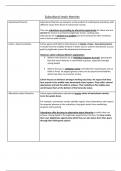
Subcultural theorists Subcultural theorists see deviance as the product of a delinquent subculture with
different values from those of mainstream society
They see subcultures as providing an alternative opportunity for those who are
denied the chance to achieve by legitimate means- working class
Subcultures are a solution to a problem and are functional for their members,
even if not for wider society
Cohen- status frustration Cohen agrees with Merton that deviance is largely a lower- class phenomenon.
It results from the inability of those in lower class to achieve mainstream success
goals by legitimate means like educational achievement.
However, Cohen criticises Meron’s explanation:
• Merton sees deviance as an individual response to strain- ignoring the
fact that much deviance is committed in groups, especially amongst
young people
• Merton focuses on utilitarian crime committed for material gain such as
theft or fraud. He largely ignores crime such as assault and vandalism,
which may have no economic motive
Cohen focuses on deviance amongst working class boys. He argues that they
face anomie in the middle class dominated school system. They suffer cultural
deprivation and lack the skills to achieve. Their inability in this middle-class
world leaves them at the bottom of the hierarchy status
Alternative status hierarchy Cohen argues delinquent subcultures inverts values of mainstream society-
turns the upside down.
For example, mainstream society upholds regular school attendance and respect
for property whereas in the subculture, boys gain status from vandalising
property and truanting
Subcultures offer the boys an alternative status hierarchy in which they can
achieve. Having failed in the legitimate opportunity structure, the boys create
their own illegitimate opportunity which they can win status from their peers
through their delinquent actions
Subcultural theorists Subcultural theorists see deviance as the product of a delinquent subculture with
different values from those of mainstream society
They see subcultures as providing an alternative opportunity for those who are
denied the chance to achieve by legitimate means- working class
Subcultures are a solution to a problem and are functional for their members,
even if not for wider society
Cohen- status frustration Cohen agrees with Merton that deviance is largely a lower- class phenomenon.
It results from the inability of those in lower class to achieve mainstream success
goals by legitimate means like educational achievement.
However, Cohen criticises Meron’s explanation:
• Merton sees deviance as an individual response to strain- ignoring the
fact that much deviance is committed in groups, especially amongst
young people
• Merton focuses on utilitarian crime committed for material gain such as
theft or fraud. He largely ignores crime such as assault and vandalism,
which may have no economic motive
Cohen focuses on deviance amongst working class boys. He argues that they
face anomie in the middle class dominated school system. They suffer cultural
deprivation and lack the skills to achieve. Their inability in this middle-class
world leaves them at the bottom of the hierarchy status
Alternative status hierarchy Cohen argues delinquent subcultures inverts values of mainstream society-
turns the upside down.
For example, mainstream society upholds regular school attendance and respect
for property whereas in the subculture, boys gain status from vandalising
property and truanting
Subcultures offer the boys an alternative status hierarchy in which they can
achieve. Having failed in the legitimate opportunity structure, the boys create
their own illegitimate opportunity which they can win status from their peers
through their delinquent actions