Lab 2 Introduction to Culturing & Aseptic Technique BIO250L
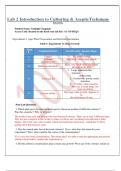
Lab 2 BIO250L BIO250L Student Name: Ashleigh Chapman Access Code (located on the lid of your lab kit): AC-SY45LQ1 Experiment 1- Agar Plate Preparation and Bacterial Inoculation Table 1: Experiment 1 Colony Growth Plate # Condition/Surface Growth (color, amount, shape, etc.) 1 Control No growth found 2 Ariborne contamination One small, white round growth 3 Bathroom doorknob Many very small white dots found throughout the dish 4 Trash can lid 1. Large spiderweb like structure in the center 2. 8 yellowish, mostly round structures 3. 15 milky white strucures. Most are a round shape, but some are oblong 5 Car gear shifter One large white growth. Appears to be the consistency of snot Post-Lab Questions 1. Which plate grew the most bacterial species (based on number of different colonies)? Was this a surprise? Why or why not? The inside of my trash can lid grew the most bacterial colonies. There are at least 3 different types. This was not a surprise to me, as this is where we throw out everything from old food to baby diapers. The trash can is also wooden, which may hold more bacteria in. I think that I will be getting rid of that trash can soon. 2. Was the control plate free of bacterial colonies? If yes, what does this mean for your experiment? If not, what could be the source of the contamination? Yes, it was free from contamination. This means that I was able to take the appropriate precautions to keep a clean field to conduct the experiment in . 3. Did the airborne contamination plate contain any growth? Were any of the colonies similar in
Written for
- Institution
- Lab 2 Introduction to Culturing & Aseptic
- Course
- Lab 2 Introduction to Culturing & Aseptic
Document information
- Uploaded on
- June 8, 2023
- Number of pages
- 6
- Written in
- 2022/2023
- Type
- Exam (elaborations)
- Contains
- Questions & answers
Subjects
- bio250l
-
lab 2 introduction to culturing amp aseptic bio250l

Also available in package deal