U.S. History exam 1 study guide Latest Updates
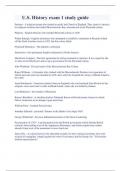
U.S. History exam 1 study guide Puritans - A religious group who wanted to purify the Church of England. They came to America for religious freedom and settled Massachusetts Bay; unconnected to the Plymouth colony Pilgrims - English Puritans who founded Plymouth colony in 1620 Walter Raleigh - English adventurer who attempted to establish a settlement at Roanoke Island off the North Carolina coast in 1587, but the colony failed. Plymouth Plantation - The pilgrim's settlement Jamestown - first permanent English settlement in North America Mayflower Compact - The first agreement for self-government in America. It was signed by the 41 men on the Mayflower and set up a government for the Plymouth colony. John Winthrop - First governor of the Massachusetts Bay Colony Roger Williams - A dissenter who clashed with the Massachusetts Puritans over separation of church and state and was banished in 1636, after which he founded the colony of Rhode Island to the south Anne Hutchinson - American colonist (born in England) who was banished from Boston for her religious views and went to settle in Rhode Island, where she was killed by Indians Lord Baltimore - the founder of Maryland Bacon's Rebellion - A rebellion lead by Nathaniel Bacon with backcountry farmers to attack Native Americans in an attemp to gain more land William Penn - founded Pennsylvania Jonathan Edwards - preached "Sinners in the Hands of an Angry God" George Whitefield - the most influential preacher of the Great Awakening Proclamation of 1763 - A proclamation from the British government which forbade British colonists from settling west of the Appalacian Mountains, and which required any settlers already living west of the mountains to move back east James Otis - A colonial lawyer who defended (usually for free) colonial merchants who were accused of smuggling. Argued against the writs of assistance and the Stamp Act. "No taxation without representation." Sugar Act - a British tariff on sugar, coffee, wines, and molasses Stamp Act - a British tariff on anything paper Sons of Liberty - A radical political organization for colonial independence which formed in 1765 after the passage of the Stamp Act. They incited riots and burned the customs houses where the stamped British paper was kept. After the repeal of the Stamp Act, many of the local chapters formed the Committees of Correspondence which continued to promote opposition to British policies towards the colonies. The Sons leaders included Samuel Adams and Paul Revere. Stamp Act Congress - Organization of colonies that protested taxes after the Stamp Act Declaratory Act - Stated that the British Parliament had the same power to tax in the colonies as it did in Great Britain; Parliament emphasized its authority to make binding laws on the American colonies Quartering Act - Required the colonials to provide food, lodging, and supplies for the British troops in the colonies. Townshend Duties - Popular name for the Revenue Act of 1767 which taxed glass, lead, paint, paper and tea entering the colonies Samuel Adams - American Revolutionary leader and patriot, Founder of the Sons of Liberty and one of the most vocal patriots for independence; signed the Declaration of Independence John Hancock - Presided over Continental Congress; signed the Declaration of Independence Boston Massacre - 1770; The first bloodshed of the Amercan Revolution, as British guards at the Boston Customs House opened fire on a crowd killing five americans Boston Tea Party - 1773; a protest against British taxes in which Boston colonists disguised as Mohawks dumped valuable tea into Boston Harbor Coercive Acts - Intolerable Acts; series of harsh laws passed by Parliament intended to make Massachusetts pay for its resistance after Britain heard news of the Tea Party; also closed down the Boston Harbor until the Massachusetts colonists paid for the ruined tea, banned most town meetings, and forced Bostonians to shelter soldiers in their own homes First Continental Congress - a response to the Intolerable Acts; 55 men from 12 colonies met in Philadelphia and called for a complete halt in trade with Britain; it was an important step towards independence Second Continental Congress - opposed the drastic move toward complete independence from Britain. In an effort to reach a reconciliation, the Congress offered peace under the conditions that there be a cease-fire in Boston, that the Coercive Acts be repealed, and that negotiations begin immediately. King George III rejected the petition.
Document information
- Uploaded on
- May 28, 2023
- Number of pages
- 8
- Written in
- 2022/2023
- Type
- Exam (elaborations)
- Contains
- Questions & answers