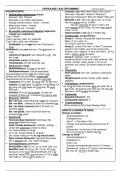
AFRIKAANS TAALOPSOMMING - Hermien Botes
WOORDSOORTE - Vraende v.nw: Wie? Wat? Waar? Hoe (how)?
• Selfstandige naamwoord (noun): Wanneer? Hoeveel? Hoekom? Waarvan?
- Eienaam: Piet, Pretoria - Waarmee? Waarvoor? Wie se? Watter? Met wie?
- Abstrakte s.nw: liefde, demokrasie - Betreklik v.nw.: Die man wat jy sien, is my pa.
- Geslag (manlik/vroulik): vriend – vriendin Die huis waarin ek bly, is mooi.
- Meervoude: hemp – hemde Die pen waarmee ek skryf, is blou. Die
- Verkleining: kar – karretjie stoel waarop ek sit, is sag. Die man met wie ek
• Byvoeglike naamwoord/adjektief (adjective): praat, is oud.
- Trappe van vergelyking: - Onpersoonlike v.nw: Dit is ʼn lekker dag.
Trap 1: lekker • Voegwoorde: (conjunctions)
Trap 2 (as/hoe) (add –er): lekkerder - Groep 1: Friends. Woordorder stays the same.
Trap 3 (die) (add –ste): lekkerste Maar, of (or), want, en.
- Predikatief: (b.nw agter die ww.):Die boom is Dit is koud, want dit is winter.
hoog. - Groep 2: Lovers.The verb 1 of the 2nd sentence
Attributief:(b.nw voor die ww.): Die hoë boom is stands in the middle, next to the conjunction.
mooi. Daarom, dan, nogtans, al, dus, toe (then)…Ek kry
- Letterlik en figuurlik: Die miljoenêr is ryk. / Die warm, daarom gaan ek swem.
kos is ryk. - Groep 3: Fighters. Verb 1 of the 2nd
- Intensiewe vorme: skreeulelik sentence,stands at the end of the sentence. Dat,
- Vergelykings: So lelik soos die nag. omdat, voordat, nadat, sodat, of (if), as (if),
alhoewel, toe (when). Ek swem omdat ek warm
• Werkwoord: (Verb):
kry.
- Hoofwerkwoord: Ek sing in die kerk.
• Telwoorde:
- Deeltjiewerkwoord: (can be separated)
Teenwoordige tyd: Ek maak die venster oop. - Hoof telwoord: een, tien, honderd, vyfduisend,
Verlede tyd: Ek het die venster oopgemaak. tagtig
Toekomende tyd: Ek sal die venster oopmaak. - Rangtelwoord: eerste, tiende, vyfde, laaste,
- Koppelww: Ek is siek. Ek word siek. Sy lyk mooi. tagtigste
- Hulpww: Ek het geëet. Ek sal eet. Ek wil slaap. Ek • Voorsetsels: (prepositions)
kan sing. Ek mag slaap. Ek moet leer. Ek gaan Ek sit op die stoel. Ek staan agter die stoel. Ek ry
hard leer. per motor. Ek gaan te voet werk toe. Ek loop om
die boom. Ek sit tussen die kinders.
- Infinitief: Ek is lus om te swem. Jy hoef nie
huiswerk te doen nie. Jy behoort jou hare te was. • Lidwoorde:
• Bywoord: (adverb) - Bepaalde lidwoord: Die
- Bw. van Tyd: (when?)Ek doen altyd my huiswerk. - Onbepaalde lidwoord: ʼn
- Bw. van Plek: (where) Ek doen my huiswerk hier. • Tussenwerpsels:
- Bw. van Wyse (manner)(How?) Ek doen my (Show emotions) Eina! Sjoe! Magtag! Nee!
huiswerk goed. ______________________________________
DIREKTE & INDIREKTE REDE:
- Bw. van graad: (How much?)Ek doen my
Change to Indirek:
huiswerk baie goed.
- Aanhalingstekens out.
• Deelwoord:
- Dubbelpunt out.
- Teenwoordige deelwoord: (still busy) Die
werkende kinders lyk moeg.
- dat/ of in the place of the :
- Swak Verlede deelwoord: (finished / add ge-… - - Change voornaamwoorde (pronouns) to 3rd
person.
te/de)) Die gebreekte venster is skerp.
(…-te: words ending on –k,-p) - Werkwoord 1 to the end of the sentence.
(…-te of -de: words ending on –f,-g,-s) Die vrou sê dat sy ʼn lekker dag het.
(…-de: words ending on –n,-m,-ng and all other) Change to Direk:
- Sterk verlede deelwoord: (figuurlik) Die meisie - Aanhalingstekens in.
het ʼn gebroke hart. (the vowel changes) - Dubbelpunt in.
• Voornaamwoord: (pronoun) - Dat/of out.
- Persoonlike v.nw: Ek, hy, sy, jy, hulle, julle, ons - Change voornaamwoorde back to 1st person.
- Besitlike v.nw: Dit is my kos / myne. Dit is jou - Werkwoord 1 back to 2nd place in the sentence.
kos/joune. Dit is haar kos/hare(female). Dit is sy Die vrou sê: “Ek het ʼn lekker dag.”
kos/syne (male).Dit is ons kos/ons s’n. Dit is hulle
kos/ hulle s’n. Dit is julle kos/julle s’n.
WOORDSOORTE - Vraende v.nw: Wie? Wat? Waar? Hoe (how)?
• Selfstandige naamwoord (noun): Wanneer? Hoeveel? Hoekom? Waarvan?
- Eienaam: Piet, Pretoria - Waarmee? Waarvoor? Wie se? Watter? Met wie?
- Abstrakte s.nw: liefde, demokrasie - Betreklik v.nw.: Die man wat jy sien, is my pa.
- Geslag (manlik/vroulik): vriend – vriendin Die huis waarin ek bly, is mooi.
- Meervoude: hemp – hemde Die pen waarmee ek skryf, is blou. Die
- Verkleining: kar – karretjie stoel waarop ek sit, is sag. Die man met wie ek
• Byvoeglike naamwoord/adjektief (adjective): praat, is oud.
- Trappe van vergelyking: - Onpersoonlike v.nw: Dit is ʼn lekker dag.
Trap 1: lekker • Voegwoorde: (conjunctions)
Trap 2 (as/hoe) (add –er): lekkerder - Groep 1: Friends. Woordorder stays the same.
Trap 3 (die) (add –ste): lekkerste Maar, of (or), want, en.
- Predikatief: (b.nw agter die ww.):Die boom is Dit is koud, want dit is winter.
hoog. - Groep 2: Lovers.The verb 1 of the 2nd sentence
Attributief:(b.nw voor die ww.): Die hoë boom is stands in the middle, next to the conjunction.
mooi. Daarom, dan, nogtans, al, dus, toe (then)…Ek kry
- Letterlik en figuurlik: Die miljoenêr is ryk. / Die warm, daarom gaan ek swem.
kos is ryk. - Groep 3: Fighters. Verb 1 of the 2nd
- Intensiewe vorme: skreeulelik sentence,stands at the end of the sentence. Dat,
- Vergelykings: So lelik soos die nag. omdat, voordat, nadat, sodat, of (if), as (if),
alhoewel, toe (when). Ek swem omdat ek warm
• Werkwoord: (Verb):
kry.
- Hoofwerkwoord: Ek sing in die kerk.
• Telwoorde:
- Deeltjiewerkwoord: (can be separated)
Teenwoordige tyd: Ek maak die venster oop. - Hoof telwoord: een, tien, honderd, vyfduisend,
Verlede tyd: Ek het die venster oopgemaak. tagtig
Toekomende tyd: Ek sal die venster oopmaak. - Rangtelwoord: eerste, tiende, vyfde, laaste,
- Koppelww: Ek is siek. Ek word siek. Sy lyk mooi. tagtigste
- Hulpww: Ek het geëet. Ek sal eet. Ek wil slaap. Ek • Voorsetsels: (prepositions)
kan sing. Ek mag slaap. Ek moet leer. Ek gaan Ek sit op die stoel. Ek staan agter die stoel. Ek ry
hard leer. per motor. Ek gaan te voet werk toe. Ek loop om
die boom. Ek sit tussen die kinders.
- Infinitief: Ek is lus om te swem. Jy hoef nie
huiswerk te doen nie. Jy behoort jou hare te was. • Lidwoorde:
• Bywoord: (adverb) - Bepaalde lidwoord: Die
- Bw. van Tyd: (when?)Ek doen altyd my huiswerk. - Onbepaalde lidwoord: ʼn
- Bw. van Plek: (where) Ek doen my huiswerk hier. • Tussenwerpsels:
- Bw. van Wyse (manner)(How?) Ek doen my (Show emotions) Eina! Sjoe! Magtag! Nee!
huiswerk goed. ______________________________________
DIREKTE & INDIREKTE REDE:
- Bw. van graad: (How much?)Ek doen my
Change to Indirek:
huiswerk baie goed.
- Aanhalingstekens out.
• Deelwoord:
- Dubbelpunt out.
- Teenwoordige deelwoord: (still busy) Die
werkende kinders lyk moeg.
- dat/ of in the place of the :
- Swak Verlede deelwoord: (finished / add ge-… - - Change voornaamwoorde (pronouns) to 3rd
person.
te/de)) Die gebreekte venster is skerp.
(…-te: words ending on –k,-p) - Werkwoord 1 to the end of the sentence.
(…-te of -de: words ending on –f,-g,-s) Die vrou sê dat sy ʼn lekker dag het.
(…-de: words ending on –n,-m,-ng and all other) Change to Direk:
- Sterk verlede deelwoord: (figuurlik) Die meisie - Aanhalingstekens in.
het ʼn gebroke hart. (the vowel changes) - Dubbelpunt in.
• Voornaamwoord: (pronoun) - Dat/of out.
- Persoonlike v.nw: Ek, hy, sy, jy, hulle, julle, ons - Change voornaamwoorde back to 1st person.
- Besitlike v.nw: Dit is my kos / myne. Dit is jou - Werkwoord 1 back to 2nd place in the sentence.
kos/joune. Dit is haar kos/hare(female). Dit is sy Die vrou sê: “Ek het ʼn lekker dag.”
kos/syne (male).Dit is ons kos/ons s’n. Dit is hulle
kos/ hulle s’n. Dit is julle kos/julle s’n.