PAP CODE OF ETHICS QUESTIONS AND ANSWERS GRADED A+
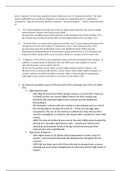
PAP CODE OF ETHICS QUESTIONS AND ANSWERS GRADED A+ Respect for the Dignity of Persons and Peoples the most fundamental and universally found ethical principle across geographical and cultural boundaries, and across professional disciplines. It provides the philosophical foundation for many of the other ethical principles put forward by professions. Competent Caring for the Well-Being of Persons and Peoples involves working for their benefit and, above all, doing no harm. It includes maximizing benefits, minimizing potential harm, and offsetting or correcting harm. It requires the application of knowledge and skills that are appropriate for the nature of a situation as well as the social and cultural context. Integrity vital to the advancement of scientific knowledge and to the maintenance of public confidence in the discipline of psychology. It is based on honesty, and on truthful, open and accurate communications. It includes recognizing, monitoring, and managing potential biases, multiple relationships, and other conflicts of interest that could result in harm and exploitation of persons or peoples. Professional and Scientific Responsibilities to Society responsibilities include contributing to the knowledge about human behavior and to persons' understanding of themselves and others, and using such knowledge to improve the condition of individuals, families, groups, communities, and society. They also include conducting its affairs within society in accordance with the highest ethical standards, and encouraging the development of social structures and policies that benefit all persons and peoples. Misuse of Psychologist's Works In instances where misuse or misrepresentation of our work comes to our attention, we take appropriate and reasonable steps to correct or minimize effects of such misuse or misrepresentation. Conflicts between Ethics and Law, Regulations or other Governing legal Authority In instances where our code of ethics conflicts with the law, regulations or governing legal authority, our first step is to take appropriate actions to resolve the conflicts while being committed to our code of ethics. However, if the conflicts cannot be resolved by such means, we adhere to the law, regulations or governing legal authority. Conflicts between Ethics and Organizational Demands In instances where our code of ethics conflicts with organizational demands, we make our code of ethics known to the organization. We also declare our commitment and adherence to this code when resolving the conflicts. Informal Resolution of Ethical Violations When we become aware that another psychologist violated our code of ethics, we may resolve the issue by bringing it to the attention of the psychologist. We do so if informal resolution is sufficient and if the intervention does not violate confidentiality rights. Reporting Ethical Violations 1. If there is likely to have substantial harm to a person or organization, we take further action to report violation of the code of ethics to appropriate institutional authorities. 2. This does not apply when an intervention would violate confidentiality rights or when we are called to review the work of another psychologist whose professional conduct is in question. Cooperating with Ethics Committee We cooperate with the ethics investigation, proceedings and requirements of any psychological association we belong to. Improper Complaints We refrain from filing ethical complaints with reckless disregard or willful ignorance of facts that would disprove allegations of ethical violations. We also refrain from filing complaints without supporting factual evidence. Unfair Discrimination Against Complainants and Respondents 1. We do not discriminate against complainants and respondents of ethical complaints by denying them employment, advancement, admissions to academic, tenure or promotion. 2. This does not rule out taking appropriate actions based on outcomes of proceedings. Providing Services in Emergencies We shall make available our services in emergency situations to individuals for whom the necessary mental health services are not available even if we lack the training appropriate to the case to ensure these individuals are not deprived of the emergency services they require at that time. Maintaining Competence We shall undertake continuing education and training to ensure our services continue to be relevant and applicable. Delegation of Work to Others we shall have to delegate work to employees, supervisees, or research or teaching assistants or when using the services of others, such as interpreters,
Written for
- Institution
- Pap
- Course
- Pap
Document information
- Uploaded on
- April 21, 2023
- Number of pages
- 3
- Written in
- 2022/2023
- Type
- Exam (elaborations)
- Contains
- Questions & answers
Subjects
-
pap code of ethics questions and answers graded a
-
respect for the dignity of persons and peoples the most fundamental and universally found ethical principle across geographical and cultural boundari

Also available in package deal