

Income, borrowing and saving Unit 10.1. - 10.6.
Monday, 01 August 2022 09:05
10.1. Money and wealth
Money is a medium of exchange used to purchase goods or services and can be accepted as legal tender, and includes bank
notes, bank deposits, cheques, …
• Money allows purchasing power to be transferred among people.
• For money to do its work, everyone else must trust that others will accept your money as payment.
Income is the amount of money one person receives over some period of time. Income can come from market earnings,
investments and the government.
Wealth is the stock of things you own or the value of the stock. It includes the difference in monetary value of things such as
buildings, land, machinery, capital goods and debts owed by/to you.
Depreciation is the reduction in the value of a stock of wealth over a period of time.
Net income is the maximum amount that one could consume without running down the wealth.
Earnings includes the wages, salaries, and all the other income earned from labour.
Consumption refers to the expenditure on consumer goods.
Savings refers to the income that is not consumed by the consumers.
Investment [economic] is the expenditure on newly produced capital goods. If interest increases, we can afford fewer
goods.
10.2. Consumption over time
Should we be consuming goods now? or later?
There is a trade-off between consuming goods now and layer.
The opportunity cost of having more goods now?
The opportunity cost of having fewer goods later?
Borrowing and lending allows us to reorganise our capacity over time to buy goods and services.
Borrowing
To borrow allows us to buy more now at a cost of buying less in the future.
Interest rate [r] is the price of bringing some buying power forward in time.
[1 + r] is the trade-off between the current and future consumption [MRT].
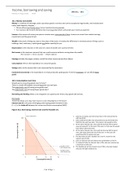
Figure 10.2. Borrowing, interest rate and the feasible set.
1. Julia has no money, but she knows that in the next period she
will have $100.
2. Julia could borrow $91 now and promise to pay the lender the
$100 that she will have later. The interest rate would be 10%.
3. At the same interest rate, she could also borrow $70 to spend
now and repay $77 at the end of the year. In that case she would
have $23 to spend next year.
4. At the same interest rate, she could also borrow $30 to spend
4
now, and repay $33 at the end of the year. In that case she
would have $67 to spend next year.
5. The boundary of Julia's feasible set is her FF, shown for the
interest rate of 10%.
6. Julia can borrow now and choose any combination on her FF.
7. If, instead of 10%, the interest rate is 78%, Julia can only borrow
a maximum of $56 now.
3 8. The feasible set w/ the interest rate of 78% is the dark shaded
area plus the light shaded area.
Unit 10 Page 1
, 10.3. Preferences for consumption
Borrowing allows us to bring consumption forward… how much consumption an individual will bring
forwards depends on:
- Consumption smoothing
- Impatience
Consumption smoothing
Diminishing marginal returns to consumption = the value of an additional unit of consumption declines,
the more the consumption the individual has. An individual smoothes their consumption to avoid
consuming a lot in one period and little in the other.
Figure 10.3. Consumption smoothing: Diminishing marginal returns to consumption
Julia's choices
The dashed line shows the combinations of consumption now and later from which Julia can choose.
Diminishing marginal returns to consumption
Julia's indifference curve is bowed toward the origin as a consequence of diminishing marginal returns to
consumption in each period: the more goods she has in the present, the less she values an additional one now
relative to more in the future.
The slope of the indifference curve is the MRT between consumption now and later.
What choices would Julia make?
The MRS at C is high [slope of indiff. curve is steep]:
Julia has little consumption now and a lot later, so diminishing marginal returns mean that she would like to move
some consumption to the present.
The MRS at E is low:
She has a lot of consumption now and less later, so diminishing marginal returns mean that she would like to move
some consumption to the future.
:. So she will choose a point between C and E.
MRS falls
We can see now that the MRS is falling/decreasing as we move along the indifference curve from C to E: the slope is
steeper at C than at E.
Julia's optimal choice
Given the choice shown by the line, CE, Julia will choose point F. It is on the highest attainable indifference curve. She
prefers to smooth consumption between now and later. Optimal consumption point: MRT = MRS = F.
10.3. Pure impatience
Consumption smoothing may appear as being impatient. However, we differentiate it from pure impatience.
• Myopia [short-sightedness] - people that experience the present satisfaction more strongly than the same
satisfaction later.
• Prudence - people know that they may not be around in the future, so they want to consume now.
Unit 10 Page 2
Monday, 01 August 2022 09:05
10.1. Money and wealth
Money is a medium of exchange used to purchase goods or services and can be accepted as legal tender, and includes bank
notes, bank deposits, cheques, …
• Money allows purchasing power to be transferred among people.
• For money to do its work, everyone else must trust that others will accept your money as payment.
Income is the amount of money one person receives over some period of time. Income can come from market earnings,
investments and the government.
Wealth is the stock of things you own or the value of the stock. It includes the difference in monetary value of things such as
buildings, land, machinery, capital goods and debts owed by/to you.
Depreciation is the reduction in the value of a stock of wealth over a period of time.
Net income is the maximum amount that one could consume without running down the wealth.
Earnings includes the wages, salaries, and all the other income earned from labour.
Consumption refers to the expenditure on consumer goods.
Savings refers to the income that is not consumed by the consumers.
Investment [economic] is the expenditure on newly produced capital goods. If interest increases, we can afford fewer
goods.
10.2. Consumption over time
Should we be consuming goods now? or later?
There is a trade-off between consuming goods now and layer.
The opportunity cost of having more goods now?
The opportunity cost of having fewer goods later?
Borrowing and lending allows us to reorganise our capacity over time to buy goods and services.
Borrowing
To borrow allows us to buy more now at a cost of buying less in the future.
Interest rate [r] is the price of bringing some buying power forward in time.
[1 + r] is the trade-off between the current and future consumption [MRT].
Figure 10.2. Borrowing, interest rate and the feasible set.
1. Julia has no money, but she knows that in the next period she
will have $100.
2. Julia could borrow $91 now and promise to pay the lender the
$100 that she will have later. The interest rate would be 10%.
3. At the same interest rate, she could also borrow $70 to spend
now and repay $77 at the end of the year. In that case she would
have $23 to spend next year.
4. At the same interest rate, she could also borrow $30 to spend
4
now, and repay $33 at the end of the year. In that case she
would have $67 to spend next year.
5. The boundary of Julia's feasible set is her FF, shown for the
interest rate of 10%.
6. Julia can borrow now and choose any combination on her FF.
7. If, instead of 10%, the interest rate is 78%, Julia can only borrow
a maximum of $56 now.
3 8. The feasible set w/ the interest rate of 78% is the dark shaded
area plus the light shaded area.
Unit 10 Page 1
, 10.3. Preferences for consumption
Borrowing allows us to bring consumption forward… how much consumption an individual will bring
forwards depends on:
- Consumption smoothing
- Impatience
Consumption smoothing
Diminishing marginal returns to consumption = the value of an additional unit of consumption declines,
the more the consumption the individual has. An individual smoothes their consumption to avoid
consuming a lot in one period and little in the other.
Figure 10.3. Consumption smoothing: Diminishing marginal returns to consumption
Julia's choices
The dashed line shows the combinations of consumption now and later from which Julia can choose.
Diminishing marginal returns to consumption
Julia's indifference curve is bowed toward the origin as a consequence of diminishing marginal returns to
consumption in each period: the more goods she has in the present, the less she values an additional one now
relative to more in the future.
The slope of the indifference curve is the MRT between consumption now and later.
What choices would Julia make?
The MRS at C is high [slope of indiff. curve is steep]:
Julia has little consumption now and a lot later, so diminishing marginal returns mean that she would like to move
some consumption to the present.
The MRS at E is low:
She has a lot of consumption now and less later, so diminishing marginal returns mean that she would like to move
some consumption to the future.
:. So she will choose a point between C and E.
MRS falls
We can see now that the MRS is falling/decreasing as we move along the indifference curve from C to E: the slope is
steeper at C than at E.
Julia's optimal choice
Given the choice shown by the line, CE, Julia will choose point F. It is on the highest attainable indifference curve. She
prefers to smooth consumption between now and later. Optimal consumption point: MRT = MRS = F.
10.3. Pure impatience
Consumption smoothing may appear as being impatient. However, we differentiate it from pure impatience.
• Myopia [short-sightedness] - people that experience the present satisfaction more strongly than the same
satisfaction later.
• Prudence - people know that they may not be around in the future, so they want to consume now.
Unit 10 Page 2



