

College 1.
123 countries have a coastline including seas and or oceans.
The coast is an area where aquatic and terrestrial ecosystems meet. It is the littoral zone (intertidal
zone). The coast is a dynamic place. It is hard to set boundaries.
ecological importance: biodiversity.
Over 1 million species can be found on the coasts (conservative estimation; highest global diversity
estimates of all species: 5-30 million).
The coast provides all kinds of ecosystem services.
humans use the oceans and coast for:
- fishing
- seafaring
- exploration
- warfare
- trade
- energy:
o oil and gas
o renewable energy: wind, tidal and wave energy
- minerals
- sand and gravel
- tourism
environmental impacts.
humans have impacts on the ocean and the environment:
- oil spill
- garbage
- plastic soup
- fishing/bottom trawling
- fishing through the food web
- ballast water
- spooknetten/abanded fishing gear
- shipping
benefits and costs.
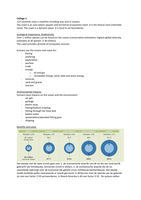
Het plaatje met de twee circels gaat over 1. de economische waarde van de vis die aan land wordt
gebracht (de lichtblauwe, binnenste circel) in dollars; 2. de economische waarde die de vis
uiteindelijk opbrengt voor de economie (de gehele circel, lichtblauw+donkerblauw). Het plaatje
maakt duidelijk welke meerwaarde er wordt gecreerd: In Afrika kan men de waarde van de gelande
vis met een factor 2.59 vermeerderen, in Noord-Amerika is dit een factor 3.52. De auteurs willen
123 countries have a coastline including seas and or oceans.
The coast is an area where aquatic and terrestrial ecosystems meet. It is the littoral zone (intertidal
zone). The coast is a dynamic place. It is hard to set boundaries.
ecological importance: biodiversity.
Over 1 million species can be found on the coasts (conservative estimation; highest global diversity
estimates of all species: 5-30 million).
The coast provides all kinds of ecosystem services.
humans use the oceans and coast for:
- fishing
- seafaring
- exploration
- warfare
- trade
- energy:
o oil and gas
o renewable energy: wind, tidal and wave energy
- minerals
- sand and gravel
- tourism
environmental impacts.
humans have impacts on the ocean and the environment:
- oil spill
- garbage
- plastic soup
- fishing/bottom trawling
- fishing through the food web
- ballast water
- spooknetten/abanded fishing gear
- shipping
benefits and costs.
Het plaatje met de twee circels gaat over 1. de economische waarde van de vis die aan land wordt
gebracht (de lichtblauwe, binnenste circel) in dollars; 2. de economische waarde die de vis
uiteindelijk opbrengt voor de economie (de gehele circel, lichtblauw+donkerblauw). Het plaatje
maakt duidelijk welke meerwaarde er wordt gecreerd: In Afrika kan men de waarde van de gelande
vis met een factor 2.59 vermeerderen, in Noord-Amerika is dit een factor 3.52. De auteurs willen


