
Quiz 2
Supplementary Conditions
Lecture script: SC supplementary conditions/special conditions: to address something which could not
have been addressed through the use of general conditions. Designed to either delete in completely or
amend the portion of general conditions
,Obligees: owner. Principal: contractor. Surety is the one who gives this owner a confidence that I am
issuing a bid bond to the principal who's the contractor, and I am guaranteeing you that if selected, the
principal or the seller or the contractor will honor its price.
In Hamilton Board of Education v. U.S.F. & G. a bid bond was before the court. The outbreak of the
Korean War had intervened between preparation of the contractor's tender and its acceptance, thereby
escalating all labour and material prices by 7% to 15% and leaving the tenderer with an unavoidable
$50,000 loss before he even began construction. Learning of thisloss, the contractor notified the owner
that the tender was with-drawn. The board immediately called upon the bid bond, but the surety denied
liability. The court concluded that the ordinary rules of contract law applied in the case of construction
contracts and that a tender, therefore, was merely an offer subject to acceptance. The tender, as an
offer, could be withdrawn at any time prior to acceptance.9 The court also held that the bid bond had
no validity apart from the tender it supported; consequently, only if a tender was accepted in
accordance with the laws applying to all contracts could the bond properly be called on."0
In Hamilton Board of Education, the tender or offer had been nullified by withdrawal before the owner
could have accepted it. Thus, the owner could not properly claim on the bid bond - notwithstanding the
,fact that on its face, the withdrawal appeared to be the very event upon which the bond was
conditioned.
Belle River Community Arena Inc. v. W.J.C. Kaufmann Co.: The court held that in order to make a claim
on the bid bond, the obligee-owner needed to obtain an unequivocal refusal from the tenderer before
expiration of the sixty-day period that the tender stipulated for acceptance. 16 Because the contractor
had not been presented a contract for unequivocal refusal, the court denied the claim against the
bonding company.
Brandon Construction Co. v. Saskatoon School Board: The school board declared that the construction
company had forfeited the deposit, and Brandon sued for its recovery. At trial the court dismissed the
plaintiff's action, but on appeal Brandon persuaded the court that its deposit in reality was a penalty, as
opposed to a genuine pre-estimate of damages.Therefore, the school board could not keep the deposit.
The court would have allowed the forfeiture only if satisfied that the amount of the deposit was a
genuine pre-estimate of the school board's damages.' Throughout the early cases, courts persisted in
treating bid deposits as forfeitures requiring equitable relief.
Contract A was determined when the owners came out with a call for tender that call for tender is
considered as an offer. As bidders responded to that tender or tenders submitted their submission that
submission is considered an acceptance. There is no promise in this contract. How can the owner get
into the contracts with all those bidders at the same time?
Contract A is unilaterally formed between the owner and all those people who decided to submit the
attender in compliance with the terms and conditions given in those tenders. If contract A has terms and
conditions and provisions, which makes the tenders submission irrevocable then those provisions
prevail. That means you may not be able to go to contract B. Contract A itself will say as long as you will
submit your bid in response to my offer, which is a call for tender, a contract has been formed. If
contract A stipulates that the lowest standard or whoever the successful party must make the contract
B, which is the only contract existed before 1981. But now that is the contract, which parties signed to
execute this report. If the contract A talks about that you must execute it, that means the tenders are
not left with many choices.
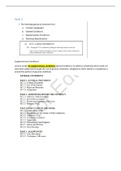
, B is the correct answer
A: A surety bond usually involves 3 parties, obligee, principal, and the surety. Obligees: owner. Principal:
contractor. Surety is the one who gives this owner a confidence that I am issuing a bid bond to the
principal who's the contractor, and I am guaranteeing you that if selected, the principal or the seller or
the contractor will honor its price.
C: safety records. In Canada, easily pick it up from WSIB ratings, your more premiums->lots of accidents.
Like insurance plan, if you have asked for a lot of claims, your premium will go up similar things will
come into effect for you WSIB matters.
Unknown condition provision – CCDC 2 is under GC section 6
Supplementary Conditions
Lecture script: SC supplementary conditions/special conditions: to address something which could not
have been addressed through the use of general conditions. Designed to either delete in completely or
amend the portion of general conditions
,Obligees: owner. Principal: contractor. Surety is the one who gives this owner a confidence that I am
issuing a bid bond to the principal who's the contractor, and I am guaranteeing you that if selected, the
principal or the seller or the contractor will honor its price.
In Hamilton Board of Education v. U.S.F. & G. a bid bond was before the court. The outbreak of the
Korean War had intervened between preparation of the contractor's tender and its acceptance, thereby
escalating all labour and material prices by 7% to 15% and leaving the tenderer with an unavoidable
$50,000 loss before he even began construction. Learning of thisloss, the contractor notified the owner
that the tender was with-drawn. The board immediately called upon the bid bond, but the surety denied
liability. The court concluded that the ordinary rules of contract law applied in the case of construction
contracts and that a tender, therefore, was merely an offer subject to acceptance. The tender, as an
offer, could be withdrawn at any time prior to acceptance.9 The court also held that the bid bond had
no validity apart from the tender it supported; consequently, only if a tender was accepted in
accordance with the laws applying to all contracts could the bond properly be called on."0
In Hamilton Board of Education, the tender or offer had been nullified by withdrawal before the owner
could have accepted it. Thus, the owner could not properly claim on the bid bond - notwithstanding the
,fact that on its face, the withdrawal appeared to be the very event upon which the bond was
conditioned.
Belle River Community Arena Inc. v. W.J.C. Kaufmann Co.: The court held that in order to make a claim
on the bid bond, the obligee-owner needed to obtain an unequivocal refusal from the tenderer before
expiration of the sixty-day period that the tender stipulated for acceptance. 16 Because the contractor
had not been presented a contract for unequivocal refusal, the court denied the claim against the
bonding company.
Brandon Construction Co. v. Saskatoon School Board: The school board declared that the construction
company had forfeited the deposit, and Brandon sued for its recovery. At trial the court dismissed the
plaintiff's action, but on appeal Brandon persuaded the court that its deposit in reality was a penalty, as
opposed to a genuine pre-estimate of damages.Therefore, the school board could not keep the deposit.
The court would have allowed the forfeiture only if satisfied that the amount of the deposit was a
genuine pre-estimate of the school board's damages.' Throughout the early cases, courts persisted in
treating bid deposits as forfeitures requiring equitable relief.
Contract A was determined when the owners came out with a call for tender that call for tender is
considered as an offer. As bidders responded to that tender or tenders submitted their submission that
submission is considered an acceptance. There is no promise in this contract. How can the owner get
into the contracts with all those bidders at the same time?
Contract A is unilaterally formed between the owner and all those people who decided to submit the
attender in compliance with the terms and conditions given in those tenders. If contract A has terms and
conditions and provisions, which makes the tenders submission irrevocable then those provisions
prevail. That means you may not be able to go to contract B. Contract A itself will say as long as you will
submit your bid in response to my offer, which is a call for tender, a contract has been formed. If
contract A stipulates that the lowest standard or whoever the successful party must make the contract
B, which is the only contract existed before 1981. But now that is the contract, which parties signed to
execute this report. If the contract A talks about that you must execute it, that means the tenders are
not left with many choices.
, B is the correct answer
A: A surety bond usually involves 3 parties, obligee, principal, and the surety. Obligees: owner. Principal:
contractor. Surety is the one who gives this owner a confidence that I am issuing a bid bond to the
principal who's the contractor, and I am guaranteeing you that if selected, the principal or the seller or
the contractor will honor its price.
C: safety records. In Canada, easily pick it up from WSIB ratings, your more premiums->lots of accidents.
Like insurance plan, if you have asked for a lot of claims, your premium will go up similar things will
come into effect for you WSIB matters.
Unknown condition provision – CCDC 2 is under GC section 6


