Shadow Health Respiratory Concept Lab with complete
solution
Detail normal air passage when a patient breathes.
air rushes through nasal passages and trachea, bronchi , & into lungs where it's
absorbed by the alveoli
What happens during auscultation?
Healthcare professional listen to the heart sounds through a stethoscope
What are bronchial sounds and how are these sounds detected?
Harsh, high-pitched, & loud sound that can be heard
above the manubrium (over the trachea).
What are bronchovesicular sounds and how are these sounds detected?
Medium in loudness & pitch sounds that can be heard over the main bronchi
What are vesicular sounds and how are these sounds detected?
The softest and lowest in pitch sounds that are heard over the lower bronchi,
bronchioles, and lobes
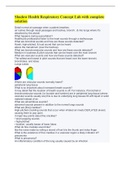
Lungs Lobes
Where are vesicular sounds normally heard?
peripheral lung tissue
What is so important about increased breath sounds?
It may detail that the location of breath sounds is off. For instance, if bronchial or
bronchovesicular sounds (i.e lounder and harsher) are in peripheral lung tissue (where
vesicular sounds usually are) this is due to underlying lung tissues fill with liquid or solid
material instead of air.
What are adventitious sounds?
abnormal sounds present in addition to the normal lungs sounds
What are [fine] crackles?
High-pitched crackling sounds that occur when inhaled air meets DEFLATED alveoli,
causing them to pop open
3 major key points about fine crackles?
• short popping sounds
• high-pitched
• location: usually bases of lower lobes
What do fine crackles sound like?
like the noise made by rolling a strand of hair b/w the thumb and index finger
What is the existence of fine crackles in a vesicular region a likely indicator of?
pneumonia
What is pneumonia?
An inflammatory condition of the lung usually caused by an infection
solution
Detail normal air passage when a patient breathes.
air rushes through nasal passages and trachea, bronchi , & into lungs where it's
absorbed by the alveoli
What happens during auscultation?
Healthcare professional listen to the heart sounds through a stethoscope
What are bronchial sounds and how are these sounds detected?
Harsh, high-pitched, & loud sound that can be heard
above the manubrium (over the trachea).
What are bronchovesicular sounds and how are these sounds detected?
Medium in loudness & pitch sounds that can be heard over the main bronchi
What are vesicular sounds and how are these sounds detected?
The softest and lowest in pitch sounds that are heard over the lower bronchi,
bronchioles, and lobes
Lungs Lobes
Where are vesicular sounds normally heard?
peripheral lung tissue
What is so important about increased breath sounds?
It may detail that the location of breath sounds is off. For instance, if bronchial or
bronchovesicular sounds (i.e lounder and harsher) are in peripheral lung tissue (where
vesicular sounds usually are) this is due to underlying lung tissues fill with liquid or solid
material instead of air.
What are adventitious sounds?
abnormal sounds present in addition to the normal lungs sounds
What are [fine] crackles?
High-pitched crackling sounds that occur when inhaled air meets DEFLATED alveoli,
causing them to pop open
3 major key points about fine crackles?
• short popping sounds
• high-pitched
• location: usually bases of lower lobes
What do fine crackles sound like?
like the noise made by rolling a strand of hair b/w the thumb and index finger
What is the existence of fine crackles in a vesicular region a likely indicator of?
pneumonia
What is pneumonia?
An inflammatory condition of the lung usually caused by an infection