

NATIVE AMERICANS
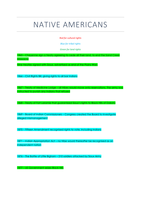
Red for cultural rights
Blue for tribal rights
Green for land rights
1865 – Cheyenne sign a treaty agreeing to cede all their land, to end the Sand Creek
Massacre
Nine treaties signed with Sioux, advertised as end of the Plains Wars
1866 – Civil Rights Bill, giving rights to all bar Indians
1867 – Treaty of Medicine Lodge – all tribes would move onto reservations. The army was
instructed to punish any Indians that refused
1868 – Treaty of Fort Laramie that guaranteed Sioux’s rights to Black Hills of Dakota
1869 – Board of Indian Commissioners – Congress created the Board to investigate
alleged mismanagement
1870 – Fifteen Amendment recognised rights to vote, including Indians
1871 – Indian Appropriation Act – no tribe would thereafter be recognised as an
independent nation
1876 – The Battle of Little Bighorn – 210 soldiers attacked by Sioux Army
1877 – US Government seizes Black Hills
Red for cultural rights
Blue for tribal rights
Green for land rights
1865 – Cheyenne sign a treaty agreeing to cede all their land, to end the Sand Creek
Massacre
Nine treaties signed with Sioux, advertised as end of the Plains Wars
1866 – Civil Rights Bill, giving rights to all bar Indians
1867 – Treaty of Medicine Lodge – all tribes would move onto reservations. The army was
instructed to punish any Indians that refused
1868 – Treaty of Fort Laramie that guaranteed Sioux’s rights to Black Hills of Dakota
1869 – Board of Indian Commissioners – Congress created the Board to investigate
alleged mismanagement
1870 – Fifteen Amendment recognised rights to vote, including Indians
1871 – Indian Appropriation Act – no tribe would thereafter be recognised as an
independent nation
1876 – The Battle of Little Bighorn – 210 soldiers attacked by Sioux Army
1877 – US Government seizes Black Hills


