TNCC 8th Edition: Shock Question with complete solution 2023
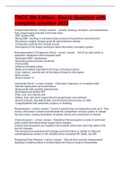
TNCC 8th Edition: Shock Question with complete solution 2023Compensated Shock -anxiety, lethargy, confusion, and restlessness from oxygen being shunted to the brain stem -SBP usually WNL -Rising DBP, resulting in narrowed pulse pressure d/t peripheral vasocontriction -Bounding or slightly thready pulse d/t catecholamine release -Tachypnea could be from anxiety or pain -Decreased UO d/t kidney working to retain fluid within circulatory system Decompensated or Progressive Shock -ALOC as cells switch to anaerobic metabolism with increased lactic -Decreased SBP; hypotension -Narrowing pulse pressure continues -Tachycardia -Weak and thready pulses -Rapid and shallow respirations d/t lungs correcting acidosis -Cool, clammy, cyanotic skin d/t shunting of blood to vital organs -Base excess -Serum lactate 2 Irreversible Shock -Obtunded, stuporous, or comatose state -Marked hypotension and heart failure -Bradycardia with possible dysrhythmias -Decreased and shallow RR -Pale, cool, and clammy skin -Kidney, liver, and other organs fail d/t hypoperfusion and ischemia -Severe acidosis, elevated lactate, and worsened base excess on ABG -Coagulopathies with petechiae, purpura, or bleeding Baroreceptors Found in carotid sinus and along the aortic arch. They sense a decrease in stretch and stimulate the sympathetic nervous system to release epi and norepi, causing stimulation of cardiac activity and constriction of vessels Chemoreceptors Peripheral chemoreceptors consist of cartid and aortic bodies that detect blood oxygen level changes. Central chemoreceptors are located in the medulla of the brain stem that detect CO2 and pH changes. The receptors are activated with changes and information is related to CNS and cardiorespiratory centers in the medulla which increased RR, depth, and BP. Narrowing Pulse Pressure -May be first concrete measurement signaling circulatory status is compromised and body is trying to compensate Trauma Triad of Death -Hypothermia: Impairs thrombin and platelet function. -Acidosis: Impairs thrombin production and coagulation factors d/t low pH, elevated lactate, and base deficits -Coagulopathy: Replacement with PRBCs and saline without platelets and plasma further dilutes the blood's ability to clot. Hypovolemic Shock Volume Problem -Hemorrhage, vomiting, diarrhea, or burn trauma. -Class I-IV dependent on blood loss stating replace with either crystalloid, blood, or massive transfusion. Obstructive Shock Mechanical Problem: Obstruction in vasculature or heart -Tension Pnuemothorax: Increased intrathoracic pressure leads to displacement of vena cava, obstruction to atrial filling, decreased preload, and decreased cardiac output -Cardiac Tamponade: Accumulation of blood within the inflexible pericardial sac impedes diastolic expansion and filling -Venous Air Embolism: Occurs on right side of heart during systole in the pulmonary artery.
Document information
- Uploaded on
- February 26, 2023
- Number of pages
- 2
- Written in
- 2022/2023
- Type
- Exam (elaborations)
- Contains
- Questions & answers