
To: Clair Catherall
From: Mohammed Uzair
Date: 21/09/15
Subject: Budgets for Curry Lounge
June Var. July Var. August Var.
Budget Actual Budget Actual Budget Actual
(£) (£) (£) (£) (£) (£)
Food Sales 2500 1500 1000 (A) 3200 2100 1100 4200 5000 800 (F)
(A)
Drink Sales 1000 800 200( A) 1300 1000 300 (A) 2600 2800 200 (F)
Sales Revenue 3500 2300 1200 (A) 4500 3100 1400 (A) 6800 7800 1000
(F)
Materials 650 800 150 (A) 850 1000 150 (A) 1100 1500 400 (A)
Rent and rates 1500 1500 0 1500 1500 0 1500 1500 0
Salaries 1000 1000 0 1000 1000 0 1000 1000 0
Costs 3150 3300 150 (A) 3350 3500 150 (A) 3600 4000 400 (A)
Profit/loss 350 (1000) 1350 (A) 1150 (400) 1550 (A) 3200 3800 600 (F)
Sales
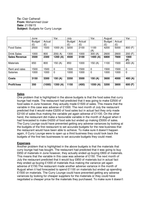
One problem that is highlighted in the above budgets is that the food sales that curry
lounge had made. The restaurant had predicted that it was going to make £2500 of
food sales in June however, they actually made £1500 of sales. This means that the
variable in this case was adverse of £1000. The next month of July the restaurant
predicted that it would make £3200 of food sales but in actual fact they only made
£2100 of sales thus making the variable yet again adverse of £1100. On the other
hand, the restaurant did make a favourable variable in the month of August when it
had forecasted to make £4200 of food sale but ended up making £5000 of sales.
The Curry Lounge could have prevented getting any adverse variances by looking at
the budgets of the first restaurant to set accurate budgets for the new business that
the restaurant would have been able to achieve. To make sure it doesn’t happen
again, if Curry Lounge were to open up a third business they could look back the
budgets of the first two businesses to set accurate budgets they could meet.
Expenses
Another problem that is highlighted in the above budgets is that the materials that
curry lounge had has bought. The restaurant had predicted that it was going to buy
£650 of materials in June however, they actually ended up buying £800 of materials.
This means that the variable in this case was adverse of £150. The next month of
July the restaurant predicted that it would buy £850 of materials but in actual fact
they ended up buying £1000 of materials thus making the variance yet again
adverse of £150.The restaurant made another adverse variance in the month of
August when it had forecasted to spend £1100 on materials but ended up spending
£1500 on materials. The Curry Lounge could have prevented getting any adverse
variances by looking for cheaper suppliers for the materials or they could have
negotiated a cheaper price for the materials they purchased. To make sure it doesn’t
From: Mohammed Uzair
Date: 21/09/15
Subject: Budgets for Curry Lounge
June Var. July Var. August Var.
Budget Actual Budget Actual Budget Actual
(£) (£) (£) (£) (£) (£)
Food Sales 2500 1500 1000 (A) 3200 2100 1100 4200 5000 800 (F)
(A)
Drink Sales 1000 800 200( A) 1300 1000 300 (A) 2600 2800 200 (F)
Sales Revenue 3500 2300 1200 (A) 4500 3100 1400 (A) 6800 7800 1000
(F)
Materials 650 800 150 (A) 850 1000 150 (A) 1100 1500 400 (A)
Rent and rates 1500 1500 0 1500 1500 0 1500 1500 0
Salaries 1000 1000 0 1000 1000 0 1000 1000 0
Costs 3150 3300 150 (A) 3350 3500 150 (A) 3600 4000 400 (A)
Profit/loss 350 (1000) 1350 (A) 1150 (400) 1550 (A) 3200 3800 600 (F)
Sales
One problem that is highlighted in the above budgets is that the food sales that curry
lounge had made. The restaurant had predicted that it was going to make £2500 of
food sales in June however, they actually made £1500 of sales. This means that the
variable in this case was adverse of £1000. The next month of July the restaurant
predicted that it would make £3200 of food sales but in actual fact they only made
£2100 of sales thus making the variable yet again adverse of £1100. On the other
hand, the restaurant did make a favourable variable in the month of August when it
had forecasted to make £4200 of food sale but ended up making £5000 of sales.
The Curry Lounge could have prevented getting any adverse variances by looking at
the budgets of the first restaurant to set accurate budgets for the new business that
the restaurant would have been able to achieve. To make sure it doesn’t happen
again, if Curry Lounge were to open up a third business they could look back the
budgets of the first two businesses to set accurate budgets they could meet.
Expenses
Another problem that is highlighted in the above budgets is that the materials that
curry lounge had has bought. The restaurant had predicted that it was going to buy
£650 of materials in June however, they actually ended up buying £800 of materials.
This means that the variable in this case was adverse of £150. The next month of
July the restaurant predicted that it would buy £850 of materials but in actual fact
they ended up buying £1000 of materials thus making the variance yet again
adverse of £150.The restaurant made another adverse variance in the month of
August when it had forecasted to spend £1100 on materials but ended up spending
£1500 on materials. The Curry Lounge could have prevented getting any adverse
variances by looking for cheaper suppliers for the materials or they could have
negotiated a cheaper price for the materials they purchased. To make sure it doesn’t


