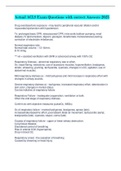
Actual ACLS Exam Questions with correct Answers 2023
Drug overdose/toxic exposure - may lead to peripheral vascular dilation and/or myocardial dysfunction with hypotension. Tx: prolonged basic CPR, etracorporeal CPR, intra-aortic balloon pumping, renal dialysis, IV lipid emulsion, digoxin, glucagon, bicarbonate, transcutaneous pacing, correction of electrolyte imbalances. Normal respiratory rate. Normal tidal volume. - 12-16/min. 8-10 ml/kg. ***<6 = assisted ventilation with BVM or advanced airway with 100% O2. Respiratory Distress - abnormal respiratory rate or effort. Sx: nasal flaring, retractions, use of accessory muscles, hypoventilation, bradypnea, stridor, wheezing, grunting, tachycardia, cyanosis, changes in LOC, agitation, use of abdominal muscles. Mild respiratory distress sx - mild tachypnea and mild increase in respiratory effort with changes in airway sounds. Severe respiratory distress sx - tachypnea, increased respiratory effort, deterioration in skin color, changes in mental status. Can be indicitive of respiratory failure. Respiratory Failure - inadequate oxygenation, ventilation or both. Often the end stage of respiratory distress. Confirm dx with objective measures (pulseOx, ABGs). Sx of respiratory failure - marked tachypnea, bradypnea, apnea (late), increased/decreased/no effort, poor/absent distal air movement, tachycardia (early), bradycardia (late), cyanosis, stupor, coma (late).
École, étude et sujet
- Établissement
- Acls
- Cours
- Acls
Infos sur le Document
- Publié le
- 27 janvier 2023
- Nombre de pages
- 24
- Écrit en
- 2022/2023
- Type
- Examen
- Contient
- Questions et réponses
Sujets
- acls
-
actual acls exam questions with correct answers 2023

Document également disponible en groupe