NR-283 Week 6 Pathophysiological Processes (RUA): Chronic Obstructive Pulmonary Disease (COPD) | GRADED
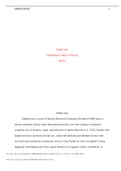
Emphysema Chamberlain College of Nursing NR283 Emphysema Emphysema is a form of Chronic Obstructive Pulmonary Disorder (COPD) and is a chronic respiratory disease where lung function declines over time, leading to respiratory symptoms such as dyspnea, cough, and production of sputum (Rycroft et al., 2012). Patients with Emphysema have destroyed alveolar sacs, along with thickened and inflamed airways with increased mucus production causing the airway to clog. People are more susceptible to being diagnosed with Emphysema if they expose themselves to cigarette smoke, air pollution, or occupational factors such as vegetable dust, cotton dust, bacterial and fungal toxins, and plant dust (Raherison, 2009). Other risk factors that play a role in developing Emphysema is genetics and Alpha-1 Antitrypsin deficiency, pneumonia, chronic bronchitis, and older age. Patients with Emphysema often experience a cough, tight feeling in the chest, wheezing, rapid and labored breathing, dyspnea, and increased thick or sticky mucus. The American Lung Association states, “COPD is the third leading cause of death in the U.S. behind cancer and heart disease” (‘Emphysema,’ 2019). The likelihood of developing Show Less
Geschreven voor
Documentinformatie
- Geüpload op
- 13 december 2022
- Aantal pagina's
- 6
- Geschreven in
- 2022/2023
- Type
- Case uitwerking
- Docent(en)
- Prof f
- Cijfer
- A+
Onderwerpen
-
chronic obstructive pulmonary disease copd
-
nr 283 week 6 pathophysiological processes rua chronic obstructive pulmonary disease copd | graded

Ook beschikbaar in voordeelbundel