

ATI NUTRITION PROCTORED 2022 FOCUSED REVIEW GUIDE
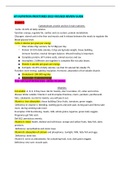
Carbohydrate, protein and fat 3 main nutrients. Carbs: 45-65% of daily calories function: energy, regulate fat, cardiac and cns system, protein metabolism. Glycogen: stored carb in the liver and muscle and it release between the meals to regulate the Blood glucose level. Carbs 4 calories per gram per energy * Fiber intake 25gr women, for M 38gr per day * Protein 10-35% daily calories, 0.8 gr per kg body weight, tissue building, immune function, neutral nitrogen balance. Wound healing is important. ▪ Complete protein: all 9 amino acids, animal sources and soy ▪ Incomplete: 2 different one together is complete like rice plus beans. ▪ Protein 4 calories per gram per energy. ▪ Fat lipids: 20-35% of daily calories. Les that 10 sutured fat, ideally 7% Function: store energy, padding insulation. Hormone, absorption of fat-soluble vitamin ▪ Cholesterol: 200-300 mg/day ▪ Fat provides 9 calories/energy If you eat 5 gr of fat how many calories: 45 calories. Vitamins: Fat soluble: A, D, E, K they have risk for toxicity, don’t overdose, CF, celiac and crohns disease Water soluble: Vitamin C and B complex thiamine, niacin, pardaxin, panthocacid, folic, cobalamin: no risk for toxicity, you will pee it out. Vitamin c: iron absorption, tissue building Citrus fruits, tomatoes, green veggie. Deficiency in vitamin C: bleeding, swelling gums and joint pain, during pain and illness take more, during smoking take more B complex: CNS functioning, meats, milk, whole grains, legumes, green leafy veggies. Pregnancy get folic acid. Def B12: pernicious anemia. Vitamin A: vision health, skeletal and soft tissue: orange and yellow fruits, fatty fish, dairy products. Deficiency: xeropthalmia and vision issue Vitamin D: absorption of calcium and phosphorus. Sunlight, Milk, fatty fish and eggs. Deficiency: bone loss Vitamin E: serve as antioxidants: fat containing food, nuts, dark green veggies. Deficiency very rare: muscle pain. Vitamin K: blood clotting and bone maintenance, dark green veggie, carrots deficiency: increase bleeding time. Antidote for Warfarin Electrolytes: Sodium Na: 136-145 normal level. function: fluid balance and nerve and muscle function. Food high in Na: salt and processed food. Hyper: hypervolemia and HTN Hypo: confusion, muscle cramps, headache, fatigue, NV Potassium K: 3.5-5 normal level. Function: ICF, nerve function, muscle and heart contraction FOOD HIGH IN K: bananas, potatoes, tomatoes, oranges, avocadoes, dark green veggies, dried foods Hyper: dysrhythmias, muscle weakness, NV, confusion Hypo: dysrhythmias, muscle cramps and constipation Chloride Cl: 98-106 is normal level Function: Help with digestion, ICF and ECF. Find in salt Hyper: NV Hypo: muscle cramps, GI upset Calcium CA: 9-10.5 is normal level Function: bone, teeth formation, nerve and muscle function, BP Food: dairy, dark green veggie, fruits Hyper: constipation, decreased DTR, kidney stones, lethargy Hypo: Positive Chvostek and Trousers’, muscle spasm and tingling Magnesium Mg: 1.3-2.1 Function: Nerve, muscle function, bone formation, biochemical reactions Foods: nuts, veggies, whole grain, milk Hyper: NV/ hypotension, muscle weakness, lethargy. Respiratory and cardiac arrest Hypo: increased DTR, dysthymias, seizure, tremors Ph: Phosphorus 3-4.5 is normal level Function: bone and teeth formation Dairy and cheese, dark green veggies, fish and legumes Inverse relationship with calcium, high Calcium low Ph Trace Minerals: 1. Iodine: synthesis of thyroxine required level is 100-150mcg. Find in table salt and sea food 2. Iron: make help HH. Meat, fish, legumes, Vitamin C, constipation, increase fiber intake, tooth discoloration. Z track for IM injection. Calcium lower absorption 3. Zinc: important in immune functions, NUTS, cereal and beans 4. Fluoride: help protect cavities, in water Water: 2-3 L/day .minimum requirement level is 1.5 L I should = O Sensible fluid loss: can be measured. Urine, vomit Insensible: fluid loss from lung, water excreted in the feces. Sweat Older adult and children greater risk for dehydration S/S: dehydration poor skin turgor, confusion, hypotension, decrease Urine output, dry mucous membrane, increase urine osmolarity. Sunken in babies. Chapter 2: Catabolism: breaking down of substance to release energy Anabolism uses energy to repair BMR: energy required for involuntary activities within 24hrs. heart function, respiration INCREASE BMMR: Male gender, more muscle mass, periods of growth such as puberty, stress, exposure to cold, disease and illness, hyperthyroidism, seizure, surgery, pregnancy and lactation Decrease: female gender, shorter height, less muscle mass, starvation, older age and hypothyroidism. Nitrogen balance: component amino acids: nitrogen intake-nitrogen excretion For the Adults this nitrogen balance should be neutral. Negative nitrogen: insufficient protein intake, malnutrition or aging, illness. Positive nitrogen balance: growth, pregnancy and lactation Chapter 3: S/s of malnutrition: poor wound healing, hair loss, brittle hair, weakness, poor LOC and look for pre albumin (15-36) albumin (3.5-5) ▪ Increase protein and calories: add milk powder to milk, whole milk, high calories food, cheese, peanut butter, use of supplement and collaborate with dietitian. ▪ Calculations weight change: usual weight- current weight/ usual weight *100 ▪ 2% weight loss in 1 wk. or 7.5% weight loss in 3 months indicate weight loss. when to weight them? early in the morning BMI: kg/m (WEIGHT (kg)/ Height (m)) BMI ranges include: Under 18.5 is underweight 18.5-24.9 healthy 25-29.9 overweight 30 or more is obese 300 calories equal 1 pound. Decrease 500 calories a week lose 1 lb. in 1 wk. 1lb =2.2 kg Pt teaching: monitor hunger 1-10 scale before eating. Certain food should not be forbidden. Moderation is good. Weight loss is not consistent. Don’t weight daily for fluctuations. Eat meal free of distraction, not in front of TV Chapter 4: 5 or more serving of veggie, fruits daily is recommended for everyone. Monosaturated fat. Less than 7% of calories from saturated fat Salt: 2300mg /day intake Alcohol: women 1 drink a day and Men 2 drinks a day or less. Exercise rec: 2.5 hrs. /wk. vigorous or 1.25/wk. SWIMMING IS NOT HELPING TO PREVENT OSTEOPOROSIS ,NOT WEIGHT BARING Children: 16 minutes/day of physical activities. Vegan diet no animal products at all Lacto-vegetarian: dairy is ok Lacto-ovo: dairy and eggs are ok Vegan diet not get enough vitamin D, B12, Omega 3 fatty acid. Food labels: calories, calories from fat, sutured fat, trans fat, Na, carbs, dietary fiber, sugar, protein, Calcium and Iron. NO Mg IN THE LIST. Chapter 5: Food born illness: • frequent wash hands, refrigerate perishable 2 hrs. or 1 hr if it is hot. • Prevent cross contaminations. • Cooks food to recommended temperature. • Raw and undercooked meats, sprouts, unpasteurized fruit juice, raw milk high risk food • Salmonella, E. Choli, Listeria, Norovirus Foods that affect med: grapefruits juice is a NO, affects statins ...................................................................................................CONTINUE
Document information
- Uploaded on
- December 12, 2022
- Number of pages
- 13
- Written in
- 2022/2023
- Type
- Exam (elaborations)
- Contains
- Questions & answers


