
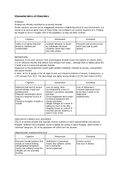
Characteristics of Disorders
PHOBIAS
Phobias are officially classified as an anxiety disorder.
Phobic reactions are seen as an exaggerated response to frightening stimuli in your environment. It is
normal to be anxious about many of these things, but a phobia is an extreme response to it. Phobias
are thought to occur in roughly 10% of the population, so they are fairly common.
Cognitive Behavioural Emotional
Ability to recognise that their Avoidant behaviour is shown Persistent and excessive fear
phobia is irrational and as individuals will avoid which may lead to panic
unreasonable. situations where they might attacks.
face their phobia.
DEPRESSION
Depression is the most common ‘mild’ psychological disorder across the majority of cultures (20%).
It is an ‘affective’ disorder that affects more females than males – although there is debate about this.
It tends to be a cyclical and episodic disorder.
Depression is the predominant mental health problem worldwide, followed by anxiety, schizophrenia
and bipolar disorder.
In 2014, 19.7% of people in the UK aged 16 and over showed symptoms of anxiety or depression - a
1.5% increase from 2013. This percentage was higher among females (22.5%) than males (16.8%).
Cognitive Behavioural Emotional
Delusions that tend to revolve Loss of energy, often Loss of enthusiasm.
around feelings of guilt and accompanied by a loss of Constant depressed mood
worthlessness. interest in previously enjoyable (more than 2 weeks to be
Reduced concentration which activities. diagnosed).
may be a response to lack of Social impairment which leads worthlessness.
sleep. to reduced interaction with
Pervasive thoughts of death or friends and family.
suicide. Weight changes as a result of
eating too much or too little.
Sleeping issues as a result of
insomnia and the tendency to
want to stay in bed.
OBSESSIVE-COMPULSIVE DISORDER
OCD is an anxiety disorder that typically involves sufferers to have irrational beliefs and intrusive
thoughts. Sufferers feel compelled, forced or bullied into acting on these thoughts, which results in
‘abnormal’ behaviour. 2% of the population will suffer from this disorder.
OBSESSIONS CHARACTERISTICS
Cognitive Behavioural Emotional
Recurrent thought patterns that Debilitation in functioning Extreme anxiety
intrude on normal thinking. means that sufferers cannot Fear loss of identity
Self-generated recognition live a normal life.
means that sufferers know the Social impairment.
thoughts are not externally
inserted.


