Nr 507 WEEK 1 CASE STUDY LATEST 2022/2023
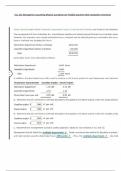
Nr 507 WEEK 1 CASE STUDY LATEST 2022/2023 Week 1 Case Study Template Cameron Macchia Chamberlain University NR507: Advanced Pathophysiology Dr. Alex Bahadori July 11th, Week 1 Case Study Template Pathophysiology & Clinical Findings of the Disease 1. Identify the correct hypersensitivity reaction: The patient is clearly having allergic symptoms, related to her environment. The most common allergic nasal mediated disease is allergic rhinitis (AR). As the case study points out the patient’s symptoms are rhinorrhea, sneezing, and chronic nasal stuffiness. Diagnosis of AR can be achieved from accurate description of symptoms as well as a personal and physical exam. A provider should attempt to identify the triggers of inflammation, and identify the environment for which they occur. Identification of AR is usually confirmed after initiation of medical treatment, such as antihistamines. If a patient responds well to this, then it is almost certain that the correct hypersensitivity reaction has been made (NHS, 2019). 2. Explain the pathophysiology associated with the chosen hypersensitivity reaction: AR is caused by an overreacting immune system response to an environmental trigger. In the nasal passage, immune cells known as mast cells are located in the loose connective tissues, which are in close proximity to blood vessels. Mast cells are considered cellular activators for the inflammatory process. On mast cells are antigen specific immunoglobulin E (IgE) receptors, which are triggered by the exposure to certain allergens. Upon activation, the mast cell releases specific molecules, which include histamines and chemotactic factors. This early-phase reaction is characterized by mast cell degranulation, which causes the rapid onset (over a period of minutes) of acute nasal symptoms (i.e., sneezing and rhinorrhea) and the emergence of ocular symptoms (i.e., itching, redness, and watering) (Bjermer, 2019). Once histamine and other proinflammatory molecules bind with mucosal receptors, this causes mast cell synthesis, which is characterized as the late phase of the pathophysiological process. In this phase, there is a rapid, but temporary constriction of smooth muscle and dilation of the adjacent venules, increasing oedema. This increase in pressure and fluid perpetuates nasal congestion and stuffiness. 3. Identify at least three subjective findings from the case: The subjective findings as it relates to the case study is the symptoms for which the patient is experiencing and describing. The patient is experiencing rhinorrhea, sneezing, and constant nasal congestion. 4. Identify at least three objective findings from the case: The objective findings would be observations made during the physical exam. In the case of AR, the practitioner should expect to observe classic findings, such as clear rhinorrhea and pale pink or bluish swelling of the nasal turbinate mucosa, as well as swelling of the conjunctiva (Seidman, 2015)
École, étude et sujet
- Établissement
-
Chamberlain College Of Nursing
- Cours
-
Nr 507
Infos sur le Document
- Publié le
- 29 octobre 2022
- Nombre de pages
- 6
- Écrit en
- 2022/2023
- Type
- Examen
- Contenu
- Questions et réponses
Sujets
-
nr 507 week 1 case study latest 20222023

Document également disponible en groupe