Gel Electrophoresis
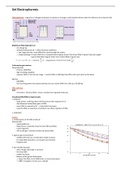
Electrophoresis - migration of charged molecules (in solution or through a solid medium) when under the influence of an electric field
Mobility of DNA dependent on
- net charge (q)
- molecular dimension (f) → affect frictional coefficient
→ size: larger the size, more difficult to move through the matrix
→ shape/topology: Circular DNA that is relaxed/nicked migrate slower than linear DNA of equal molecular weight
Supercoiled DNAs migrate faster than relaxed DNA of equal mass
-
2 alternative gel matrices
Polyacrylamide
- Proteins, DNA/RNA
- high resolving capability
- separate DNAs of narrow size range → resolve DNAs (<1000 bp) that differ with each other by few bases
Agarose
- DNA/RNA
- less resolving power than polyacrylamide, but can resolve DNA from 100 up to 50,000 bp
Why and How
How
- Gel matrix + Electrical field + way to visualise the migrated molecules
Visualising DNA/RNA on Agarose gels
1. Ethidium
- large, planar, multiring cation that fluoresces when exposed to UV
- slips between stacked base pairs of DNA
- cause DNA to unwind by 26° → helical pitch increases
- relax the DNA, so saturation of ethidium can affect migration of DNA
2. SYBR SAFE
Factors
1. Conformation of the DNA molecule
Plasmid DNA
- supercoiled form
- Nicked form, covalently closed circular DNA (cccDNA)
- Linear fragment
- will usually get 2 strands (nicked and supercoiled)
2. Agarose gel concentration
- mobility decreases as concentration of gel increases
- For large DNA separation, use low gel concentration
- Ferguson plot
3. Size of DNA molecule
- when charge and length is constant
- for linear DNA
- smaller the faster
- Bottom of the gel less fluorescent
→ longer the DNA, more SYBR binds, so more illumination
→ SYBR + charged to moves up to cathode
Electrophoresis - migration of charged molecules (in solution or through a solid medium) when under the influence of an electric field
Mobility of DNA dependent on
- net charge (q)
- molecular dimension (f) → affect frictional coefficient
→ size: larger the size, more difficult to move through the matrix
→ shape/topology: Circular DNA that is relaxed/nicked migrate slower than linear DNA of equal molecular weight
Supercoiled DNAs migrate faster than relaxed DNA of equal mass
-
2 alternative gel matrices
Polyacrylamide
- Proteins, DNA/RNA
- high resolving capability
- separate DNAs of narrow size range → resolve DNAs (<1000 bp) that differ with each other by few bases
Agarose
- DNA/RNA
- less resolving power than polyacrylamide, but can resolve DNA from 100 up to 50,000 bp
Why and How
How
- Gel matrix + Electrical field + way to visualise the migrated molecules
Visualising DNA/RNA on Agarose gels
1. Ethidium
- large, planar, multiring cation that fluoresces when exposed to UV
- slips between stacked base pairs of DNA
- cause DNA to unwind by 26° → helical pitch increases
- relax the DNA, so saturation of ethidium can affect migration of DNA
2. SYBR SAFE
Factors
1. Conformation of the DNA molecule
Plasmid DNA
- supercoiled form
- Nicked form, covalently closed circular DNA (cccDNA)
- Linear fragment
- will usually get 2 strands (nicked and supercoiled)
2. Agarose gel concentration
- mobility decreases as concentration of gel increases
- For large DNA separation, use low gel concentration
- Ferguson plot
3. Size of DNA molecule
- when charge and length is constant
- for linear DNA
- smaller the faster
- Bottom of the gel less fluorescent
→ longer the DNA, more SYBR binds, so more illumination
→ SYBR + charged to moves up to cathode