The Cognitive approach to explaining Depression
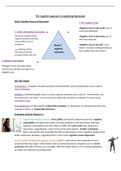
Becks Cognitive theory of depression
3, The negative triad
-Negative view of the world e.g it is
1, Faulty information processing cruel and unhopeful.
We ignore positives during -Negative view of the future e.g "It
negative situations and blow will never improve"
small problems out of
proportion -Negative view of the self "I am a
Becks 3
negative failure" (enhance existing feelings as
e.g. Winning £50 but
they confirm low self esteem)
focussing on how the schemata
previous winner had £100
2, Negative self schema
Packages of info we make about
ourselves to interpret ourselves in a
negative way
Ellis ABC Model
A:Activation- A negative situation activates irrational beliefs "good mental health is the result of
rational thinking"
B:Beliefs- Irrational thoughts based on these negative situations arise, such as.. 'Musturbation' we
must always be successful, 'I can't stand it-itis' believing a situation is a disaster if it does not go
according to plan.
C:Consequences- of these beliefs, Undesirable emotions e.g. depression can develop even from one
example of failure or Undesirable behaviour.
Evaluation of Becks Theory(+/-)
Supporting research evidence; Terry (2000) assessed 65 pregnant women for cognitive
vulnerability and depression before and after giving birth and found those with high
cognitive vulnerability were more likely to suffer from post-natal (after pregnancy)
depression, supporting the chain of events that beck explains. (Further evaluation)
Beck reviewed this and concluded that this is solid evidence of the cognitions being known
before depression develops, suggesting beck is correct that cognition causes depression.
It can't explain all depression aspects; it is too simplistic and reduces the complexity of some
symptoms like deep anger, hallucinations and occasional depressive symptoms such as cotard
syndrome (the belief that they are a zombie). Therefore becks theory is not a strong explanation
as it does not represent all of depression.
, Real world application; strengths on clinical practise. (Cohen) says assessing cognitive vulnerability
using becks theory helps identity young children most susceptible to developing depression and so
can help prevent it before it develops. Furthermore, it assists the effectiveness of CBT as the
qualities of the negative triad can be questioned or challenge patients if they are familiar with
thoughts of the negative triad. Therefore this theory has positive impacts on multiple depression
treatments and the wellbeing of societies.
Evaluation of Ellis's ABC Model (+/-)
Alike Becks, it is only a partial explanation for certain types of depression. Some depression arises
from an activating event (reactive depression) but doesn't explain depression that arises without an
obvious cause, or those that may develop depression but cannot think of reasoning to why, this is
called endogenous depression. Therefore ABC model is a limited explanation of depression.
Real world application to psychological treatments of depression. ABC approach to cognitive therapy
is called REBT (rational emotive behavioural therapy). Evidence by David et al. suggests that by
vigorously arguing with the depressed patient, this can alter the negative beliefs and therefore
relieve some of depressions symptoms (consequences), showing the positive application that the
ABC model has on explaining depression to support treatment.
Becks Cognitive theory of depression
3, The negative triad
-Negative view of the world e.g it is
1, Faulty information processing cruel and unhopeful.
We ignore positives during -Negative view of the future e.g "It
negative situations and blow will never improve"
small problems out of
proportion -Negative view of the self "I am a
Becks 3
negative failure" (enhance existing feelings as
e.g. Winning £50 but
they confirm low self esteem)
focussing on how the schemata
previous winner had £100
2, Negative self schema
Packages of info we make about
ourselves to interpret ourselves in a
negative way
Ellis ABC Model
A:Activation- A negative situation activates irrational beliefs "good mental health is the result of
rational thinking"
B:Beliefs- Irrational thoughts based on these negative situations arise, such as.. 'Musturbation' we
must always be successful, 'I can't stand it-itis' believing a situation is a disaster if it does not go
according to plan.
C:Consequences- of these beliefs, Undesirable emotions e.g. depression can develop even from one
example of failure or Undesirable behaviour.
Evaluation of Becks Theory(+/-)
Supporting research evidence; Terry (2000) assessed 65 pregnant women for cognitive
vulnerability and depression before and after giving birth and found those with high
cognitive vulnerability were more likely to suffer from post-natal (after pregnancy)
depression, supporting the chain of events that beck explains. (Further evaluation)
Beck reviewed this and concluded that this is solid evidence of the cognitions being known
before depression develops, suggesting beck is correct that cognition causes depression.
It can't explain all depression aspects; it is too simplistic and reduces the complexity of some
symptoms like deep anger, hallucinations and occasional depressive symptoms such as cotard
syndrome (the belief that they are a zombie). Therefore becks theory is not a strong explanation
as it does not represent all of depression.
, Real world application; strengths on clinical practise. (Cohen) says assessing cognitive vulnerability
using becks theory helps identity young children most susceptible to developing depression and so
can help prevent it before it develops. Furthermore, it assists the effectiveness of CBT as the
qualities of the negative triad can be questioned or challenge patients if they are familiar with
thoughts of the negative triad. Therefore this theory has positive impacts on multiple depression
treatments and the wellbeing of societies.
Evaluation of Ellis's ABC Model (+/-)
Alike Becks, it is only a partial explanation for certain types of depression. Some depression arises
from an activating event (reactive depression) but doesn't explain depression that arises without an
obvious cause, or those that may develop depression but cannot think of reasoning to why, this is
called endogenous depression. Therefore ABC model is a limited explanation of depression.
Real world application to psychological treatments of depression. ABC approach to cognitive therapy
is called REBT (rational emotive behavioural therapy). Evidence by David et al. suggests that by
vigorously arguing with the depressed patient, this can alter the negative beliefs and therefore
relieve some of depressions symptoms (consequences), showing the positive application that the
ABC model has on explaining depression to support treatment.