

NURS 5334 - Final Exam Study Guide.
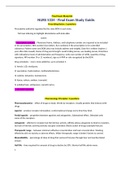
Prescriptive authority regulated by the state BON in each state. Tall man lettering to highlight dissimilaries with look-alike names *Prescription contains… Physicians Name, Address, and telephone number are required to be included in the prescription. DEA number (two letters, five numbers) if the prescription is for controlled substance, Patient name and DOB (also may include address and weight), Date Rx is written (expires 1 year after date issued), Name of drug and strength- avoid trailing zeroes, use leading zeroes, Directions with indications/route of administration and frequency, write out number of refills, quantity of drug, signature, NPI number (9 or 11 numbers), sign as A-PNP or role recognized by the BON Drug schedules – one is most addictive, up to schedule 5. 1) heroin, LSD, marijuana. 2) oxycodone, hydrocodone, methamphetamines. 3) codeine, ketamine, testosterone. 4) Xanax, valium, ambien, tramadol. 5) antidiarrheal, antitussives, Lomotil, lyrica. *calculation question Pharmacology Principles: 3 questions Pharmacodynamics – effect of drugs on body. Works by receptors. Usually proteins that interact with drugs. Agonist – produce receptor stimulation, conformational change every time they bind. Partial agonist – properties between agonists and antagonists. Submaximal effect. Stimulate only some of the receptors. Antagonist – affinity for receptor but NO intrinsic activity. Affinity allows antagonist to bind to receptors, but lack of intrinsic activity prevents receptor activation. Blocks action of drugs (example Narcan). Therapeutic range – between minimum effective concentration and toxic concentration. Working effectivity with no toxicity or adverse effects. Wider therapeutic range is better! Easiest to control. Bioavailability – percentage of dose of drug that survives first pass through liver and reaches blood stream. Half life – time required for amount of drug to decline by 50%. Shorter half life admin more frequently. 4.5-5 half lives to get to steady state and to eliminate from body. Pharmacokinetics – what body does to drug. Absorption, distribution, metabolism, elimination. (ADME) Parenteral (bypass first pass), then oral, then lungs, then skin, eye and ears for best absorption. Distribution affected by lipid/water solubility, PH, protein binding, size of molecule. Protein binding – unbound drug is free drug which is active. When 2 highly bound drugs are given it increases the level of one of the drugs, leading to toxicity. IE warfarin and phenytoin are both highly protein bound. Low plasma protein result in more free drug. May be in elderly, so decrease dose of medication. T3 and T4 both highly protein bound. 1% of drug is powerful. Distribution – BBB (only lipid soluble will pass) – these such as narcotics, only work because they do cross BBB. Some meds we do not want to pass. Placental barrier (many drugs can pass) so be careful with drugs in pregnancy. Metabolism – liver. Chemical change of a drug structure to enhance excretion, inactivate drug, increase therapeutic action, activate prodrug, increase or decrease toxicity. Substrate – agent that is metabolized by an enzyme into a metabolite and product and eventually excreted. *Inhibitors – compete with other drugs for a particular enzyme affecting the metabolism (decreases) of the substrate and decreases the excretion of the substrate and increasing the circulating drug. Need to decrease dose of substrate if start on an inhibitor. INH increases substrate. *Inducer – competes with other drugs for a particular enzyme affecting metabolism of the substrate (increases) decreasing the efficacy of the drug. Need to increase dose of substrate if start on an inducer. IND decreases substrate. Renal excretion – passive glomerular filtration, active tubular secretion, tubular reabsorption. Pharmacogenomics: 1 question Pharmacogenomics- the study of the influence of hereditary factors on the response of individual organism to drugs, and the study of variations of DNA and RNA characteristics as related to drug response. Pharmacogenetic tests mentioned on drug labels can be classified as “test required”, “test recommended”, and “information only”. Currently there are 4 drugs requiring to have pharmacogenetic testing performed before they are prescribed: Cetuximab, Trastuzumab, Maraviroc, and Dasatinib. No genetic testing is required by the FDA for the initiation of medications such as warfarin, carbamazepine, valproic avid and abacavir are currently in place, such tests are recommended prior to initial dosing. BBW initiated in December 2007- on carbamazepine label – testing recommended for HLA-B 1502 in patient with Asian ancestry due to high risk of developing SJS or toxic epidermal necrolysis (TEN). .....................................................................................................CONTINUE
Document information
- Uploaded on
- October 25, 2022
- Number of pages
- 40
- Written in
- 2022/2023
- Type
- Exam (elaborations)
- Contains
- Questions & answers


