
Contract and Tort Law – lecture notes
Week 1 – Tort Law: Liability
● Three key concepts in Private Law: Contracts, torts, and property
● Solving simple cases by applying both
I)case law
II)Draft Common Name of Reference (DCFR)
● Every country has its own system of private law
Private law is mainly national law, hence why there are many jurisdictions set for each
state.
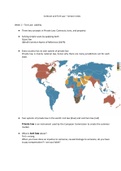
● Two systems of private law in the world: civil law (blue) and common law (red)
Private law is an instrument used by the European Commission to create the common
market.
● What is tort law about?
Tort = wrong
When you have done an injustice to someone, caused damage to someone, do you have
to pay compensation? = are you liable?
, Examples where a private company / natural persons cause damage to someone else:
o Injury caused by traffic accidents
o Injury caused by faulty products
o Injury caused by physical abuse, stalking
o Economic loss caused by unfair competition, patent infringement
o Violation of privacy, injury to reputation
o Nuisance (e.g., loud noise)
o Crimes, human rights violations
● What makes these examples different is the intent, or the type of loss the person has
caused to another (e.g., financial loss, medical costs incurred to someone, pain and
suffering)
● Two categories of tort law:
o Intentional torts (e.g., crimes) (Art. VI – 3:101 DCFR)
o Negligence (carelessness) (Art. VI – 3:102 DCFR)
Two types of negligence:
1. Violation of statutory law, e.g., traffic laws. (Speeding)
It is not problematic in most cases since causality must be investigated, however the
person is still liable because they have violated a statute.
2. Unwritten rules of social conduct – ‘unwritten negligence’
Art. VI 3:102 (b) DCFR:
Violation of unwritten rules of social behavior:
o Conduct which does not amount to such case as could be expected from a
reasonably careful person in the circumstances of the case
o Court decisions (case law)
In the older days, people were against the idea of ‘a reasonably careful person’ because
it violates the idea of legal certainty. Nevertheless, there is certainty, but it cannot be
found in the civil code, but in cases.
● Why do people sue? Because in many cases, you have to bear the loss yourself, and that
is the link between tort law and social security law.
For example, if a person falls down the stairs of a municipality and he gets a handicap,
he can either sue the municipality or rely on social security.
If the state does not have social security, like the US, they either go down, or the other
option is that they sue someone, which is why people in the US sue a lot.
U sue people with money. Between the municipality and the factory that doesn't have
insurance, you sue the municipality.
, ● Dangerous situations: what is negligent?
● Example: man falls on stairs of municipality
Negligence or not?
> Court: yes, because:
Owner (municipality has control over the state and quality of the steps
The steps are open to the public
Q: imagine that maintaining the steps and cleaning them repeatedly in winter costs a lot
of money, is imposing liability problematic from a constitutional point?
● The court in this case does not really provide a criterion, they cherry pick. Some of the
criteria can be foreseeability, for example. Pretty foreseeable that a person could fall in
these circumstances.
Liability of municipality: holding the municipality liable for their policy decisions can be
tricky, where there can be tension and collision between tort law on one hand, and
democracy on the other hand (for example, if the municipality could not inspect all
factories for danger due to budget cuts).
● Usually, people sue the ‘deep pocket’ defendant – the person with the most money
Week 1 – Tort Law: Liability
● Three key concepts in Private Law: Contracts, torts, and property
● Solving simple cases by applying both
I)case law
II)Draft Common Name of Reference (DCFR)
● Every country has its own system of private law
Private law is mainly national law, hence why there are many jurisdictions set for each
state.
● Two systems of private law in the world: civil law (blue) and common law (red)
Private law is an instrument used by the European Commission to create the common
market.
● What is tort law about?
Tort = wrong
When you have done an injustice to someone, caused damage to someone, do you have
to pay compensation? = are you liable?
, Examples where a private company / natural persons cause damage to someone else:
o Injury caused by traffic accidents
o Injury caused by faulty products
o Injury caused by physical abuse, stalking
o Economic loss caused by unfair competition, patent infringement
o Violation of privacy, injury to reputation
o Nuisance (e.g., loud noise)
o Crimes, human rights violations
● What makes these examples different is the intent, or the type of loss the person has
caused to another (e.g., financial loss, medical costs incurred to someone, pain and
suffering)
● Two categories of tort law:
o Intentional torts (e.g., crimes) (Art. VI – 3:101 DCFR)
o Negligence (carelessness) (Art. VI – 3:102 DCFR)
Two types of negligence:
1. Violation of statutory law, e.g., traffic laws. (Speeding)
It is not problematic in most cases since causality must be investigated, however the
person is still liable because they have violated a statute.
2. Unwritten rules of social conduct – ‘unwritten negligence’
Art. VI 3:102 (b) DCFR:
Violation of unwritten rules of social behavior:
o Conduct which does not amount to such case as could be expected from a
reasonably careful person in the circumstances of the case
o Court decisions (case law)
In the older days, people were against the idea of ‘a reasonably careful person’ because
it violates the idea of legal certainty. Nevertheless, there is certainty, but it cannot be
found in the civil code, but in cases.
● Why do people sue? Because in many cases, you have to bear the loss yourself, and that
is the link between tort law and social security law.
For example, if a person falls down the stairs of a municipality and he gets a handicap,
he can either sue the municipality or rely on social security.
If the state does not have social security, like the US, they either go down, or the other
option is that they sue someone, which is why people in the US sue a lot.
U sue people with money. Between the municipality and the factory that doesn't have
insurance, you sue the municipality.
, ● Dangerous situations: what is negligent?
● Example: man falls on stairs of municipality
Negligence or not?
> Court: yes, because:
Owner (municipality has control over the state and quality of the steps
The steps are open to the public
Q: imagine that maintaining the steps and cleaning them repeatedly in winter costs a lot
of money, is imposing liability problematic from a constitutional point?
● The court in this case does not really provide a criterion, they cherry pick. Some of the
criteria can be foreseeability, for example. Pretty foreseeable that a person could fall in
these circumstances.
Liability of municipality: holding the municipality liable for their policy decisions can be
tricky, where there can be tension and collision between tort law on one hand, and
democracy on the other hand (for example, if the municipality could not inspect all
factories for danger due to budget cuts).
● Usually, people sue the ‘deep pocket’ defendant – the person with the most money


