
NURS 6531 FINAL EXAM STUDY GUIDE- Updated 01/2022
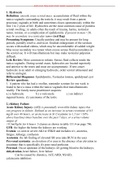
1. Hydrocele Definition: smooth, tense scrotal mass. accumulation of fluid within the tunica vaginalis surrounding the testicle; it may result from a patent processus vaginalis at birth and sometimes closes spontaneously within the first 1 to 2 years of life. Hydroceles are the most common cause of painless scrotal swelling.; in adults often the result of trauma, hernia, testicular tumor, torsion, or a complication of epididymitis. If present in man 30, may be secondary to a testicular tumor (red flag) Presenting Symptoms: Usually painless and may be present for long periods, partially resolve, and recur. Gradual enlargement of the scrotum occurs with marked edema, which may be uncomfortable d/t added weight. May occur secondary to a tumor when excess serous fluid accumulates in the scrotal sac. It will transilluminate but may make testicular palpation difficult. Leik Review: More common in infants. Serous fluid collects inside the tunica vaginalis. During the scrotal exam, hydroceles are located superiorly and anterior to the testes and most are asymptomatic. If new-onset hydrocele is in an adult or enlarging hydrocele, order a scrotal ultrasound and refer to a urologist. Differential Diagnoses: Epididymitis, Testicular torsion, epididymal cyst Review questions: 1. A patient who has had a swollen, nontender scrotum for one week is found to have a mass within the tunica vaginalis that transilluminates readily. The family nurse practitioner suspects: a.) a hydrocele. b.) a varicocele. c.) an indirect inguinal hernia. d.) carcinoma of the testis. 2.) Kidney Failure Acute Kidney Injury: (AKI) is a potentially reversible kidney injury but can progress to failure. Defined as an increase in serum creatinine of 0.3 mg/dl over 48 hours, or an increase in Sr Creatinine to 1.5 (or 50% above baseline) times baseline over the past 7 days, or a urine volume output of 0.5ml/kg/hr for 6 hours. 3 classes as shown in table 131.4 on page 786. GFR: the higher the better the kidneys are working Uremia: s/s seen in severe AKI or ESKD and includes n/v, anorexia, fatigue, lethargy, confusion Azotemia: the lab finding of elevated SR urea (aka BUN in the USA) Pre-renal azotemia: an elevation of sr urea in the absence of an elevation in creatinine that is specifically d/t poor renal perfusion Prerenal: Occur upstream of the kidneys: d/t getting blood to the kidneys; dehydration, heart failure, liver failure Can be caused by diuretics, ACE/ARB, NSAID, calcineurin inhibitors
Document information
- Uploaded on
- October 22, 2022
- Number of pages
- 165
- Written in
- 2022/2023
- Type
- Exam (elaborations)
- Contains
- Questions & answers


