NUR 210, 242 -Exam 3 Pharm Study Guide (100% correct).
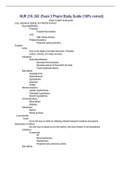
NUR 210, 242 -Exam 3 Pharm Study Guide (100% correct). Exam 3 pharm study guide Loop, potassium-sparing, and thiazide diuretics Drug classification Thiazides Thiazide-like diuretics Loop High ceiling diuretics Thiazide Action Potassium-sparing Potassium sparing diuretics Acts on the distal convoluted renal tube. Promotes sodium, chloride, and water excretion Indications Hydrochlorothiazide Decrease blood pressure Decrease amount of fluid within the body Treats peripheral edema Side effects Hyperglycemia Hypercalcemia Hypokalemia Dizziness Vertigo Adverse reactions Cardiac dysrhythmias Orthostatic hypotension Severe hypokalemia Contraindications Renal failure Diabetes Interactions Digoxin Herbal products Loop diuretics Action Act on the loop on henle by inhibiting chloride transport of sodium and passive reabsorption of sodium. As more fluid is passed out by the kidneys, less fluid remains in the bloodstream Indications Furosemide HF Renal dysfunction Hypertension Peripheral and pulmonary edema Side effects Electrolyte imbalances Decrease in potassium, magnesium, sodium, calcium Hyperglycemia Dizziness Headache Adverse reactions Hypokalemia Hyponatremia Hypomagnesemia Orthostatic hypotension Renal failure Contraindications Severe electrolyte imbalance Hypovolemia Anuria Diabetes mellitus Hypotension Interactions Digoxin-risk for digitalis toxicity Lithium Potassium-sparing Action Blocks the action of aldosterone Promotes sodium and water excretion and promotes potassium retention Indications Spironolactone Edema/fluid retention Hypertension Congestive heart failure Kidney disease Side effects Dizziness GI upset Weakness Headache Adverse reactions Hyperkalemia Hepatoxicity Contraindications Severe kidney and liver disease Interactions Potassium supplements Ace inhibitors Diuretics and the nursing process Assessment (for all diuretics) Baseline vitals Weight pt Look for third spacing Medical history Peripheral edema Baseline labs Electrolytes, potassium, magnesium, and glucose Urine output Interventions Monitor urine output Daily weight Monitor vitals Loop diuretics IV very slowly to avoid hearing loss Thiazide and loop diuretics Watch for hypokalemia (low potassium) Potassium sparing diuretics Watch for hyperkalemia (high potassium) Hypokalemia ( low potassium) s/s Muscle weakness Cramps Cardiac dysrhythmias Hyperkalemia (high potassium) s/s Nausea Diarrhea Abdominal cramping Tingling In hands and feet Pt evaluation Decrease in bp or within normal limits Increase urine output Decrease in fluid retention Weight goes down Pt teaching Diet-either high or low potassium Loop or thiazide: eat more potassium Potassium sparing: eat less potassium s/s of hyper or hypokalemia teach pt to stand up slowly pt should take meds in the morning daily weights: 1 or 2lbs daily shift is normal loop diuretics: stronger and not self-limiting thiazide diuretics: self-limiting Summary Thiazide Diuretics It is important to monitor electrolytes in patients taking thiazide diuretics. Patients should see decrease in BP and peripheral edema. Teach the patient about signs and symptoms of hypokalemia. Loop Diuretics Loop Diuretics are used to treat Heart failure, HTN, and peripheral edema. During the nursing intervention, it is important to monitor electrolytes. Signs and symptoms of hypokalemia are muscle weakness/cramps and cardiac dysrhythmias. Potassium-Sparing Diuretics Potassium sparing diuretics are used to treat hypertension, edema, and heart failure. During a nursing intervention, it is important to monitor electrolyte levels, at risk for hyperkalemia. Potassium sparing diuretics may not be given with ACE inhibitors. Osmotic diuretics Classifications Osmotic diuretic Action more water. Increases osmolality and sodium reabsorption in the proximal tubule, drawing in Kidneys excrete sodium, chloride, potassium, and water Indications Mannitol Increased cranial pressure Cerebral edema Increased ocular pressure Prevent renal failure Side effects Electrolyte imbalances GI problems Adverse reactions Pulmonary edema Tachycardia Acidosis Contraindications
Document information
- Uploaded on
- August 23, 2022
- Number of pages
- 44
- Written in
- 2022/2023
- Type
- Exam (elaborations)
- Contains
- Questions & answers