

Social Reforms (1964-1970)
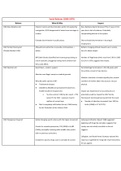
Reform What & Why Impact
1965 Race Relations Act Inherent racism and discrimination within UK sparked by Race Relations Board dismissed 75% of cases in first
immigration; 9/10 disapproved of mixed-race marriages in year due to lack of evidence. Potentially
London. compounding distrust in the system.
Forbade discrimination in public places. Did not forbid discrimination in housing &
employment.
1967 Family Planning Act Allowed local authorities to provide contraceptives + Reflects changing attitude towards sex in society,
(Private Member’s Bill) advice. less of a taboo subject.
MP Edwin Brooks identified low-income groups being at Number of illegitimate births rose from 5.8% in 1960
risk of economic struggle by having more children than to 8.2% in 1970; suggests little impact.
they could afford.
1967 Abortion Act David Steel + Jenkins’ support. Permitted legal termination in first 28 weeks with
the written consent of two doctors.
Abortion was illegal, except on medical grounds.
Marked a transition in female equality also; mental
Why did public opinion shift? condition of mother taken into account, not just
● Thalidomide disaster. physical.
● 100,000 to 200,000 annual backstreet abortions;
35,000 resulted in hospital visit. Impact was hoped to be not as profound as it
o ‘Up the Junction’ 1965 by Ken Loach + 75% potentially could be, hoped the 1967 Family
owned TV by 1961 = exposure to grim Planning Act (contraceptives) would limit the need.
realities of current laws. ● Number of abortions increased 4 per 100 live
● Didn’t completely shift before the act; 1966 Society births (1968) to 17.6 (1975).
for the Protection of the Unborn Child.
1967 Dangerous Drugs Act Global changing youth culture with the hippie movement. Subsequent Wootton Report 1968 suggested
legalizing soft drugs like cannabis; suggests that
Arrests for cannabis possession; 235 (1960) to 4,683 society was not wholly moralistic as the act
(1969); principally involving white middle class youths suggests.
with no previous convictions.
Callaghan, not liberal Home Secretary rejected the
Unlawful to possess drugs such as cannabis & cocaine. report as it signified the rising tide of permissiveness
he was against.
Reform What & Why Impact
1965 Race Relations Act Inherent racism and discrimination within UK sparked by Race Relations Board dismissed 75% of cases in first
immigration; 9/10 disapproved of mixed-race marriages in year due to lack of evidence. Potentially
London. compounding distrust in the system.
Forbade discrimination in public places. Did not forbid discrimination in housing &
employment.
1967 Family Planning Act Allowed local authorities to provide contraceptives + Reflects changing attitude towards sex in society,
(Private Member’s Bill) advice. less of a taboo subject.
MP Edwin Brooks identified low-income groups being at Number of illegitimate births rose from 5.8% in 1960
risk of economic struggle by having more children than to 8.2% in 1970; suggests little impact.
they could afford.
1967 Abortion Act David Steel + Jenkins’ support. Permitted legal termination in first 28 weeks with
the written consent of two doctors.
Abortion was illegal, except on medical grounds.
Marked a transition in female equality also; mental
Why did public opinion shift? condition of mother taken into account, not just
● Thalidomide disaster. physical.
● 100,000 to 200,000 annual backstreet abortions;
35,000 resulted in hospital visit. Impact was hoped to be not as profound as it
o ‘Up the Junction’ 1965 by Ken Loach + 75% potentially could be, hoped the 1967 Family
owned TV by 1961 = exposure to grim Planning Act (contraceptives) would limit the need.
realities of current laws. ● Number of abortions increased 4 per 100 live
● Didn’t completely shift before the act; 1966 Society births (1968) to 17.6 (1975).
for the Protection of the Unborn Child.
1967 Dangerous Drugs Act Global changing youth culture with the hippie movement. Subsequent Wootton Report 1968 suggested
legalizing soft drugs like cannabis; suggests that
Arrests for cannabis possession; 235 (1960) to 4,683 society was not wholly moralistic as the act
(1969); principally involving white middle class youths suggests.
with no previous convictions.
Callaghan, not liberal Home Secretary rejected the
Unlawful to possess drugs such as cannabis & cocaine. report as it signified the rising tide of permissiveness
he was against.


