BIOLOGY THEORY
LIGHT AND ELECTRON MICROSCOPE
1. Light microscope can show (natural colour)
a. Cell membrane
b. Cytoplasm
c. Nucleus
2. Electron microscope can show (black and white)
a. everything
PARTS OF A CELL
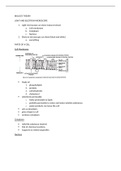
Cell Membrane
Made of:
1. phospholipids
2. proteins
3. carbohydrates
4. cholesterol
selectively permeable
o freely permeable to lipids
o partially permeable to water and water-soluble substances
o waste products can leave the cell
acts as boundary
gives shape to cell
encloses cytoplasm
Cytoplasm
Jelly-like substance (matrix)
Site of chemical reactions
Supports to embed organelles
Nucleus
, Double membraned
Contains chromosomes w genetic info
Nuclear pores = gaps in membrane that allow exchange of substances
Controls:
o Chemical reactions
o Cell division
o Protein synthesis
o Pattern of inheritance
Protoplasm = Cytoplasm + Nucleus
Mitochondria
Double membraned
Inner membrane folded to form cristae
Sight of aerobic respiration
Energy released from food stored as ATP
Endoplasmic Reticulum
RER
Ribosomes attached to outer membrane
Transports proteins produced by ribosomes
SER
No ribosomes
Involved in lipid synthesis
Transports lipids and carbs
Cell Wall
, Outer layer of plant cell
Composed of cellulose – rigid molecule
Gives shape and structural support
Freely permeable to water and water-soluble substances
Protects against damage
Vacuole
Located usually in center of cell
Surrounded by elastic membrane called tonoplast – single membrane
Contains cell sap, is a permanent feature of cell
Stores waste material
Maintains turgidity of cell
Chloroplast
Site of photosynthesis
Contains chlorophyll to absorb light energy to convert to chemical energy
Double membraned
Stroma has enzymes for photosynthesis
SPECIALISED CELLS
Red Blood Cell
1. No organelles or nucleus – for more space to absorb oxygen
2. Biconcave disc shape – large surface area and flexible to push through narrow blood vessels
3. Contains hemoglobin – transport oxygen
, Ciliated Epithelial Cell
1. Cilia, fine hair like structures – beats in rhythm to move mucus along w bacteria and dust
particles
2. Goblet cells – secrete mucus
Nerve Cell
1. Very long – to carry electrical impulses to and from brain and spinal cord
2. Axon covered in myelin sheath – protect from electric impulses
Sperm Cell
1. Head contains lots of enzymes – help penetrate egg cell membrane
2. Body contains many mitochondria – helps give more energy
3. Long tail – helps cell swim to egg cell
Muscle Cell
LIGHT AND ELECTRON MICROSCOPE
1. Light microscope can show (natural colour)
a. Cell membrane
b. Cytoplasm
c. Nucleus
2. Electron microscope can show (black and white)
a. everything
PARTS OF A CELL
Cell Membrane
Made of:
1. phospholipids
2. proteins
3. carbohydrates
4. cholesterol
selectively permeable
o freely permeable to lipids
o partially permeable to water and water-soluble substances
o waste products can leave the cell
acts as boundary
gives shape to cell
encloses cytoplasm
Cytoplasm
Jelly-like substance (matrix)
Site of chemical reactions
Supports to embed organelles
Nucleus
, Double membraned
Contains chromosomes w genetic info
Nuclear pores = gaps in membrane that allow exchange of substances
Controls:
o Chemical reactions
o Cell division
o Protein synthesis
o Pattern of inheritance
Protoplasm = Cytoplasm + Nucleus
Mitochondria
Double membraned
Inner membrane folded to form cristae
Sight of aerobic respiration
Energy released from food stored as ATP
Endoplasmic Reticulum
RER
Ribosomes attached to outer membrane
Transports proteins produced by ribosomes
SER
No ribosomes
Involved in lipid synthesis
Transports lipids and carbs
Cell Wall
, Outer layer of plant cell
Composed of cellulose – rigid molecule
Gives shape and structural support
Freely permeable to water and water-soluble substances
Protects against damage
Vacuole
Located usually in center of cell
Surrounded by elastic membrane called tonoplast – single membrane
Contains cell sap, is a permanent feature of cell
Stores waste material
Maintains turgidity of cell
Chloroplast
Site of photosynthesis
Contains chlorophyll to absorb light energy to convert to chemical energy
Double membraned
Stroma has enzymes for photosynthesis
SPECIALISED CELLS
Red Blood Cell
1. No organelles or nucleus – for more space to absorb oxygen
2. Biconcave disc shape – large surface area and flexible to push through narrow blood vessels
3. Contains hemoglobin – transport oxygen
, Ciliated Epithelial Cell
1. Cilia, fine hair like structures – beats in rhythm to move mucus along w bacteria and dust
particles
2. Goblet cells – secrete mucus
Nerve Cell
1. Very long – to carry electrical impulses to and from brain and spinal cord
2. Axon covered in myelin sheath – protect from electric impulses
Sperm Cell
1. Head contains lots of enzymes – help penetrate egg cell membrane
2. Body contains many mitochondria – helps give more energy
3. Long tail – helps cell swim to egg cell
Muscle Cell