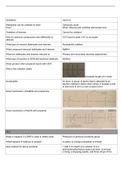
Questions Answers
Aldehydes can be oxidised to what Carboxylic acids
How? When refluxed with acidified dichromate ions
Oxidation of ketones Cannot be oxidised
Why do carbonyl compounds react differently to C=O bond is polar C=C is non-polar
alkenes
What type of reaction aldehydes and ketones Nucleophilic addition
What compound reduced aldehydes and ketones NaBH4
What are aldehydes and ketones reduced to Primary and secondary alcohols respectively
What type of reaction is HCN with ketones/ aldehyde Addition
Show product when propanal reacts with HCN
Why is this reaction useful
Increases length of C chain
Nucleophile An atom or group of atoms that is attracted to an
electron deficient carbon atom where it donates a pair
of electrons to form a new covalent bond
Draw mechanism of NaBH4 and propanone
Draw mechanism of NaCN with propanal
26.2
Brady’s reagent/ 2,4-DNP is used to detect what Presence of carbonyl functional group
What happens if carbonyl is present A yellow or orange precipitate is formed
Give method for above practical 1 Add 5 cm depth of a solution of 2,4-
dinitrophenylhydrazine clean test-tube. Is excess.
2 Using a dropping pipette, add three drops of the
, unknown compound. Leave to stand.
3 If no crystals form, add a few drops of sulfuric acid. 4
A yellow/orange precipitate (Figure 2) indicates the
presence of an aldehyde or ketone. The test tube
containing the yellow/orange precipitate can then be
put to one side and analysed later to identify the
aldehyde or ketone that formed the precipitate.
One the above procedure has confirmed presence of Using tollen’s reagent
carbonyl group how can you distinguish between a Tollens' reagent has a short shelf-life and should be
ketone and aldehyde made up immediately before carrying out the test, as
follows:
How do you make up the reagent 1 In a clean test tube, add 3 cm depth of aqueous
silver nitrate, AGNO3, (aq).
How do you identify? 2 Add aqueous sodium hydroxide to the silver nitrate
until a brown precipitate of silver oxide, Ag2O+ is
formed.
3 Add dilute ammonia solution until the brown
precipitate just dissolves to form a clear colourless
solution. This is Tollens' reagent.
The method for carrying out the test for an aldehyde
group is outlined below: then
1 Pour 2 cm depth of the unknown solution into a
clean test tube.
2 Add an equal volume of freshly prepared Tollens'
reagent.
3 Leave the test tube to stand in a beaker of warm
water at about 50 °C for about 10 to 15 minutes and
then observe whether any silver mirror is formed.
In tollen’s reagent which part of it is the oxidising Ag+
reagent, and what is aldehyde oxidised to? Carboxylic acid
What is the solubility of carboxylic acids They are soluble with up to four carbon atoms
Why is this? As the number of carbon atoms increases, the
solubility decreases as the non-polar carbon chain has
a greater effect on the overall polarity
What reactions do carboxylic acids take place in Neutralisation and redox
Give reaction of ethanoic acid and Mg (s)
Give reaction of NaOH and ethanoic acid
Na + ethanoic acid
What is a derivative of carboxylic acid A compound that can be hydrolysed to form the parent
Aldehydes can be oxidised to what Carboxylic acids
How? When refluxed with acidified dichromate ions
Oxidation of ketones Cannot be oxidised
Why do carbonyl compounds react differently to C=O bond is polar C=C is non-polar
alkenes
What type of reaction aldehydes and ketones Nucleophilic addition
What compound reduced aldehydes and ketones NaBH4
What are aldehydes and ketones reduced to Primary and secondary alcohols respectively
What type of reaction is HCN with ketones/ aldehyde Addition
Show product when propanal reacts with HCN
Why is this reaction useful
Increases length of C chain
Nucleophile An atom or group of atoms that is attracted to an
electron deficient carbon atom where it donates a pair
of electrons to form a new covalent bond
Draw mechanism of NaBH4 and propanone
Draw mechanism of NaCN with propanal
26.2
Brady’s reagent/ 2,4-DNP is used to detect what Presence of carbonyl functional group
What happens if carbonyl is present A yellow or orange precipitate is formed
Give method for above practical 1 Add 5 cm depth of a solution of 2,4-
dinitrophenylhydrazine clean test-tube. Is excess.
2 Using a dropping pipette, add three drops of the
, unknown compound. Leave to stand.
3 If no crystals form, add a few drops of sulfuric acid. 4
A yellow/orange precipitate (Figure 2) indicates the
presence of an aldehyde or ketone. The test tube
containing the yellow/orange precipitate can then be
put to one side and analysed later to identify the
aldehyde or ketone that formed the precipitate.
One the above procedure has confirmed presence of Using tollen’s reagent
carbonyl group how can you distinguish between a Tollens' reagent has a short shelf-life and should be
ketone and aldehyde made up immediately before carrying out the test, as
follows:
How do you make up the reagent 1 In a clean test tube, add 3 cm depth of aqueous
silver nitrate, AGNO3, (aq).
How do you identify? 2 Add aqueous sodium hydroxide to the silver nitrate
until a brown precipitate of silver oxide, Ag2O+ is
formed.
3 Add dilute ammonia solution until the brown
precipitate just dissolves to form a clear colourless
solution. This is Tollens' reagent.
The method for carrying out the test for an aldehyde
group is outlined below: then
1 Pour 2 cm depth of the unknown solution into a
clean test tube.
2 Add an equal volume of freshly prepared Tollens'
reagent.
3 Leave the test tube to stand in a beaker of warm
water at about 50 °C for about 10 to 15 minutes and
then observe whether any silver mirror is formed.
In tollen’s reagent which part of it is the oxidising Ag+
reagent, and what is aldehyde oxidised to? Carboxylic acid
What is the solubility of carboxylic acids They are soluble with up to four carbon atoms
Why is this? As the number of carbon atoms increases, the
solubility decreases as the non-polar carbon chain has
a greater effect on the overall polarity
What reactions do carboxylic acids take place in Neutralisation and redox
Give reaction of ethanoic acid and Mg (s)
Give reaction of NaOH and ethanoic acid
Na + ethanoic acid
What is a derivative of carboxylic acid A compound that can be hydrolysed to form the parent