

(22
Name:
We were all ready to die': Kamikaze pilot
reveals the fear and fanaticism of suicide squads
Keiichi Kuwahara, 91, one of the last surviving kamikaze pilots, says he struggled to convince
himself that he "had to die" for his country
As Keichi Kuwahara flew out to sea he gazed back with tear-flled eyes towards Japan and the
homeland he never expected to see again. His mission was clear - crash into an enemy warship,
kiling himself along with hundreds of troops who were coming to invade his country. Kuwahara, now
91, is one of the last surviving kamikaze pilots, having cheated death twice to survive the Second
World War. He says: "They didn't need to tell us what to do because we knew. It was simple. We had
to get in a plane and crash into a target.
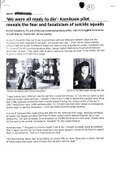
Former kamikaze pilot Keiicthi Kuwahara Keiichi in his flight gear during the war
"I kept looking back, thinking it was the last time I would see the land. As I did the sun came up and
made the horizon shine light pink. I thought 'I have to go in order to defend this beautiful land. 'More
than 5,800 Japanese servicemen died in suicide missions during the closing months of the war in
1945. Among them were 3,800 kamikaze pilots. For 70 years they have been viewed as brainwashed
zealots eager to sacrifice themselves much like today's terrorist suicide bombers.
A string of Japanese films made during and after the war reinforced that image, depicting kamikazes
as heroes who happily laid down their lives for their country and its beloved Emperor. But a new
programme, The Last Kamikazes, to be broadcast on the BBC World Service next week, reveals many
did not want to die and felt compelled to "volunteer" for the suicide missions.
Kuwahara says: "I struggled to convince myself I had to die. I thought my death would be pointless.
Even if Japan won the war my family would die in the gutter because I would not be there to support
them. It tormented me. I felt as if I was losing my mind.
"We were told that rather than accept defeat we should offer our lives. There was no choice. We had
to follow orders when push came to shove. But we didn't wish for death"
Name:
We were all ready to die': Kamikaze pilot
reveals the fear and fanaticism of suicide squads
Keiichi Kuwahara, 91, one of the last surviving kamikaze pilots, says he struggled to convince
himself that he "had to die" for his country
As Keichi Kuwahara flew out to sea he gazed back with tear-flled eyes towards Japan and the
homeland he never expected to see again. His mission was clear - crash into an enemy warship,
kiling himself along with hundreds of troops who were coming to invade his country. Kuwahara, now
91, is one of the last surviving kamikaze pilots, having cheated death twice to survive the Second
World War. He says: "They didn't need to tell us what to do because we knew. It was simple. We had
to get in a plane and crash into a target.
Former kamikaze pilot Keiicthi Kuwahara Keiichi in his flight gear during the war
"I kept looking back, thinking it was the last time I would see the land. As I did the sun came up and
made the horizon shine light pink. I thought 'I have to go in order to defend this beautiful land. 'More
than 5,800 Japanese servicemen died in suicide missions during the closing months of the war in
1945. Among them were 3,800 kamikaze pilots. For 70 years they have been viewed as brainwashed
zealots eager to sacrifice themselves much like today's terrorist suicide bombers.
A string of Japanese films made during and after the war reinforced that image, depicting kamikazes
as heroes who happily laid down their lives for their country and its beloved Emperor. But a new
programme, The Last Kamikazes, to be broadcast on the BBC World Service next week, reveals many
did not want to die and felt compelled to "volunteer" for the suicide missions.
Kuwahara says: "I struggled to convince myself I had to die. I thought my death would be pointless.
Even if Japan won the war my family would die in the gutter because I would not be there to support
them. It tormented me. I felt as if I was losing my mind.
"We were told that rather than accept defeat we should offer our lives. There was no choice. We had
to follow orders when push came to shove. But we didn't wish for death"


