

CN Psychology: Biopsychology
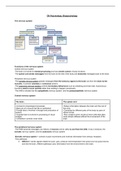
The nervous system
Functions of the nervous system
Central nervous system
-The brain is involved in mental processing and has overall control of body functions.
-The spinal cord sends messages from the brain to the rest of the body and transmits messages back to the brain.
Peripheral nervous system
-The somatic nervous system passes messages from the sensory organs to the brain and from the brain to the
muscles. It controls voluntary or conscious actions.
-The autonomic nervous system controls involuntary behaviours such as breathing and heart rate. Autonomous
functions need to occur quickly rather than waiting to happen consciously.
-The ANS is divided into the sympathetic nervous system and the parasympathetic nervous system.
Central nervous system
The brain The spinal cord
-Involved in physiological processes. -Relays information between the brain and the rest of
-Main job is to ensure that life is maintained. the body.
-Frontal lobe is involved in thought and production of -Connected to different parts of the body by pairs of
speech. spinal nerves.
-Occipital lobe is involved in processing of visual -Also contains some circuits of nerve cells that allow
images. some simple reflexes without the involvement of the
-Cerebellum controls motor skills. brain.
The peripheral nervous system
-The PNS transmits messages via millions of neurons (nerve cells) to and from the CNS. it has 2 divisions: the
somatic nervous system; and the autonomic nervous system
-Somatic nervous system = controls muscle movements and receives information from sensory receptors.
-Two pathways:
● Afferent = sends signals related to touch, pain, pressure and temperature into spinal cord via spinal nerves
and into the brain. Afferent pathways carry information from the environment to the brain.
, ● Efferent = sends motor signals from the brain out to skeletal muscles allowing the brain to control voluntary
movements. Efferent pathways allow for movement responses to environmental stimuli.
-Autonomic nervous system = governs vital functions in the body such as breathing, heart rate, sexual arousal and
stress responses.
-The ANS is central to homeostasis = the maintenance of a constant internal environment. For example body
temperature should be around 37 degrees. Sweating will decrease body temperature while shivering increases it
allowing us to continue to be active if we get too hot or cold.
Neurons & synaptic transmission
-There are 100 billion neurons (nerve cells) in the human nervous system, 80% of which are located in the brain.
-By transmitting signals, electronically and chemically, these provide the nervous system with its primary means of
communication.
The structure & function of sensory, relay and motor neurons
-The three types of neurons are arranged in circuits and networks, the simplest of which is the reflex arc.
-Neuron = the basic building blocks of the nervous system. They are nerve cells that use electronic and chemical
signals to transmit messages.
-Sensory neurons = these carry messages from the PNS to the CNS. They have long dendrites and short axons.
-Relay or inter-neurons = connect the sensory neurons to the motor and other relay neurons. They have short
dendrites and short axons.
-Motor neurons = connect the CNS to effectors such as muscles and glands. They have short dendrites and long
axons.
-Cell body (soma) = this includes the nucleus which contains the genetic material of the cell.
-Dendrites = branch-like structures that protrude from the cell body. These carry nerve impulses from neighbouring
neurons towards the cell body.
-Axon = carries the electrical impulse away from the cell body down the length of the neuron.
● The axon is insulated by a fatty substance called the myelin sheath.
● The myelin sheath is broken by gaps called the nodes of Ranvier.
-Terminal buttons = these are situated at the end of the axon and communicate with the next neuron in the chain
across a gap known as the synapse.
, -Electronic transmission = signals within the neurons are transmitted electrically. In a resting state inside of the cell
is negatively charged. When a neuron is activated the inside of the cell becomes positively charged causing a
potential action to occur.
The process of synaptic transmission
-Synaptic transmission is the process for transmitting messages from neuron to neuron.
-The electrical nerve impulse moved down the neuron prompting the release of neurotransmitters at the pre-
synaptic terminal.
-The chemicals are then released into the synapse.
-Neurotransmitters are chemicals that diffuse across the synapse to the next neuron in the chain. For example
Acetylcholine (ACh) found where a motor neuron meets a muscle, causing the muscle to contract. Serotonin
affects mood and social behaviour which is why it has been implicated as a cause for depression.
-The adjacent neuron then takes up the neurotransmitter from the fluid in the synapse, converting them into
electrical impulses which travel down the neuron to the next pre-synaptic terminal.
-This process then continues to be transmitted at high speed.
-For example, when we process visual information, the majority of the information appears to be encoded in the first
50-100 milliseconds of neural activity.
The nerve impulse arrives in the presynaptic terminal (in the axon) and triggers synaptic vesicles to move towards the
pre-synaptic membrane. Here, the vesicles bind with the membrane and neurotransmitters are released into the
synaptic cleft. They diffuse across the synaptic cleft towards the post-synaptic terminal and bind to post-synaptic
receptors. Binding to these receptors allows for positively charged particles to enter the post-synaptic terminal. Thus,
there is a change in voltage and if this change is large enough it allows for the nerve impulse to continue across.
Finally, the neurotransmitters are released from the post-synaptic receptors back into the synaptic cleft into the pre-
synaptic terminal and re-uptake proteins on the pre-synaptic terminal take them back in so that they do not continue
to bind to the receptors again) - UpLearn video
The nervous system
Functions of the nervous system
Central nervous system
-The brain is involved in mental processing and has overall control of body functions.
-The spinal cord sends messages from the brain to the rest of the body and transmits messages back to the brain.
Peripheral nervous system
-The somatic nervous system passes messages from the sensory organs to the brain and from the brain to the
muscles. It controls voluntary or conscious actions.
-The autonomic nervous system controls involuntary behaviours such as breathing and heart rate. Autonomous
functions need to occur quickly rather than waiting to happen consciously.
-The ANS is divided into the sympathetic nervous system and the parasympathetic nervous system.
Central nervous system
The brain The spinal cord
-Involved in physiological processes. -Relays information between the brain and the rest of
-Main job is to ensure that life is maintained. the body.
-Frontal lobe is involved in thought and production of -Connected to different parts of the body by pairs of
speech. spinal nerves.
-Occipital lobe is involved in processing of visual -Also contains some circuits of nerve cells that allow
images. some simple reflexes without the involvement of the
-Cerebellum controls motor skills. brain.
The peripheral nervous system
-The PNS transmits messages via millions of neurons (nerve cells) to and from the CNS. it has 2 divisions: the
somatic nervous system; and the autonomic nervous system
-Somatic nervous system = controls muscle movements and receives information from sensory receptors.
-Two pathways:
● Afferent = sends signals related to touch, pain, pressure and temperature into spinal cord via spinal nerves
and into the brain. Afferent pathways carry information from the environment to the brain.
, ● Efferent = sends motor signals from the brain out to skeletal muscles allowing the brain to control voluntary
movements. Efferent pathways allow for movement responses to environmental stimuli.
-Autonomic nervous system = governs vital functions in the body such as breathing, heart rate, sexual arousal and
stress responses.
-The ANS is central to homeostasis = the maintenance of a constant internal environment. For example body
temperature should be around 37 degrees. Sweating will decrease body temperature while shivering increases it
allowing us to continue to be active if we get too hot or cold.
Neurons & synaptic transmission
-There are 100 billion neurons (nerve cells) in the human nervous system, 80% of which are located in the brain.
-By transmitting signals, electronically and chemically, these provide the nervous system with its primary means of
communication.
The structure & function of sensory, relay and motor neurons
-The three types of neurons are arranged in circuits and networks, the simplest of which is the reflex arc.
-Neuron = the basic building blocks of the nervous system. They are nerve cells that use electronic and chemical
signals to transmit messages.
-Sensory neurons = these carry messages from the PNS to the CNS. They have long dendrites and short axons.
-Relay or inter-neurons = connect the sensory neurons to the motor and other relay neurons. They have short
dendrites and short axons.
-Motor neurons = connect the CNS to effectors such as muscles and glands. They have short dendrites and long
axons.
-Cell body (soma) = this includes the nucleus which contains the genetic material of the cell.
-Dendrites = branch-like structures that protrude from the cell body. These carry nerve impulses from neighbouring
neurons towards the cell body.
-Axon = carries the electrical impulse away from the cell body down the length of the neuron.
● The axon is insulated by a fatty substance called the myelin sheath.
● The myelin sheath is broken by gaps called the nodes of Ranvier.
-Terminal buttons = these are situated at the end of the axon and communicate with the next neuron in the chain
across a gap known as the synapse.
, -Electronic transmission = signals within the neurons are transmitted electrically. In a resting state inside of the cell
is negatively charged. When a neuron is activated the inside of the cell becomes positively charged causing a
potential action to occur.
The process of synaptic transmission
-Synaptic transmission is the process for transmitting messages from neuron to neuron.
-The electrical nerve impulse moved down the neuron prompting the release of neurotransmitters at the pre-
synaptic terminal.
-The chemicals are then released into the synapse.
-Neurotransmitters are chemicals that diffuse across the synapse to the next neuron in the chain. For example
Acetylcholine (ACh) found where a motor neuron meets a muscle, causing the muscle to contract. Serotonin
affects mood and social behaviour which is why it has been implicated as a cause for depression.
-The adjacent neuron then takes up the neurotransmitter from the fluid in the synapse, converting them into
electrical impulses which travel down the neuron to the next pre-synaptic terminal.
-This process then continues to be transmitted at high speed.
-For example, when we process visual information, the majority of the information appears to be encoded in the first
50-100 milliseconds of neural activity.
The nerve impulse arrives in the presynaptic terminal (in the axon) and triggers synaptic vesicles to move towards the
pre-synaptic membrane. Here, the vesicles bind with the membrane and neurotransmitters are released into the
synaptic cleft. They diffuse across the synaptic cleft towards the post-synaptic terminal and bind to post-synaptic
receptors. Binding to these receptors allows for positively charged particles to enter the post-synaptic terminal. Thus,
there is a change in voltage and if this change is large enough it allows for the nerve impulse to continue across.
Finally, the neurotransmitters are released from the post-synaptic receptors back into the synaptic cleft into the pre-
synaptic terminal and re-uptake proteins on the pre-synaptic terminal take them back in so that they do not continue
to bind to the receptors again) - UpLearn video


