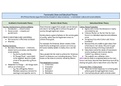
Functionalist, Strain and Subcultural Theories
All of these theories argue that society is based on value consensus - a mainstream culture and social solidarity
Durkheim’s Functionalist Theory Merton’s Strain Theory Subcultural Strain Theory
Two key mechanisms to achieve solidarity: Strain theorists suggest that people commit deviant Cohen: Status Frustration
1. Socialisation → shared culture acts due to not being able to achieve the goals of ● Agrees with merton that deviance is mainly
2. Social control → rewards and society through legitimate means. committed by w/c
punishments ● Criticises Merton on the fact that his main
Society places a great emphasis on the success goals focus is on individual response and utilitarian
CRIME IS INEVITABLE AND UNIVERSAL of society, rather than the legitimate means to crime
● Not everyone is effectively socialised achieve these goals. ● Young boys face what Cohen calls “status
● Diversity frustration”
For example, the American dream creates a false ● Because they are unable to gain status from
Positive Functions: hope that by working hard, a person can move up school due to m/c values, they aim to gain
● Boundary Maintenance → reinforces the social mobility ladder. In reality, this is not the status by joining or forming a subculture
shared norms and values, and therefore case. ● Subculture inverts the values of mainstream
social solidarity society, leading to what society deems
○ E.g. Jimmy Saville, R.Kelly Many people feel the need to achieve the “American “violent” e.g. violence, truancy
○ Ev. George Floyd - some didn’t dream” at whatever cost, including deviancy. This is ● This explains non-utilitarian crime
come together; doesn’t include known as the strain to anomie, coined by Merton. A03: Cohen’s study is unrepresentative as his main
crime of the powerful e.g Prince focus is w/c boys; assumes that these boys start off by
Andrew Five adaptations to strain: sharing m/c goals, only to reject them once they fail
● Adaptation & Change → all change starts 1. Conformist
with an act of deviance 2. Innovation Cloward & Ohlin: 3 Subcultures
○ E.g. the suffragettes; Nelson 3. Ritualism ● There are 3 main responses to not being able
Mandela viewed as a terrorist for 4. Retreatism achieve goals through legitimate means
wanting to end apartite, sent to 5. Rebellions ● Criminal subcultures: adult criminals select