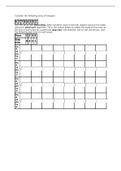
Consider the following array of integers:
6 2784351
Sort the array into ascending order (smallest value to the left, largest value to the right)
using the shell sort algorithm. Fill in the values below to reflect the state of the array at
the end of each pass for a particular gap size. Use insertion sort to sort sub-arrays, and
the following gap sizes for each pass:
Pass 1234
Gap
size
5321
En
d
of
pa
ss
1:
En
d
of
pa
ss
2:
En
d
of
pa
ss
3:
En
d
of
pa
ss
4:
, Consider the following array of integers:
32 442 20 300
9 4
0 9 0 2
Sort the array into ascending order (smallest value to the left, largest value to the right)
using the radix sort algorithm for decimal values. Fill in the values below to reflect the
state of the array after all values have been re-inserted into the array. Be sure to enter
all values in their padded form:
End
of
pass
1:
End
of
pass
2:
End
of
pass
3:
End
of
pass
4:
6 2784351
Sort the array into ascending order (smallest value to the left, largest value to the right)
using the shell sort algorithm. Fill in the values below to reflect the state of the array at
the end of each pass for a particular gap size. Use insertion sort to sort sub-arrays, and
the following gap sizes for each pass:
Pass 1234
Gap
size
5321
En
d
of
pa
ss
1:
En
d
of
pa
ss
2:
En
d
of
pa
ss
3:
En
d
of
pa
ss
4:
, Consider the following array of integers:
32 442 20 300
9 4
0 9 0 2
Sort the array into ascending order (smallest value to the left, largest value to the right)
using the radix sort algorithm for decimal values. Fill in the values below to reflect the
state of the array after all values have been re-inserted into the array. Be sure to enter
all values in their padded form:
End
of
pass
1:
End
of
pass
2:
End
of
pass
3:
End
of
pass
4: