
Spinal immobilization (NSAIDS) – THINGS THAT YOU CONSIDER BEFORE
IMMOBILIZING SPINE*
Neurological examination – check for focal deficits, numbness and decreased
strength
Significant Traumatic mechanism of injury
Alertness
Intoxication – if they’re intoxicated they might lack awareness of pain
Distracting injury – another significant injury distracting them from spinal pain
Spinal examination – tenderness of spine or neck, pain on movement
Pathologic vertebral fractures are very common in people with multiple myeloma
Joint dislocations
- Can be an orthopedic emergency because the articular bone might compress
surrounding vasculature causing limb-threatening distal ischemia*
- Can cause damage to nerves and blood vessels
- Pain, deformity, decreased ROM, extremity paresthesia
- Goal is to reduce and immobilize the joint, do frequent neurovasc checks
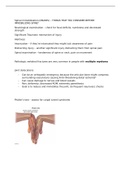
Phalen’s test – assess for carpal tunnel syndrome
,CSF leakage through nose or ears can indicate skull fracture
- If the drainage is clear, dextrose testing can be done to identify the CSF
- Presence of blood would make this test unreliable because there is glucose in
blood
o Use gauze to do halo/ring test in the presence of blood
o Blood will clot in the center, CSF will stay surrounding the blood like a
“halo”
Racoon eyes and ecchymosis behind the ear (mastoid) – battle’s sign; basilar skull
fracture
Should patient elevate arms when they have arm cast?
- Elevating the arm for the first 48 hours after placement is okay, helps reduce
edema
- If compartment (3rd space shifting tissue compartment) syndrome
develops, keep the arm at torso level
,Long term PPI (for GERD) meds can lead to
- Osteoporosis; because it can decrease the absorption of calcium
- Can increase risk for C-diff (can get because antibodies destroy normal flora)
too somehow
Mandibular fracture
- Drooling can occur because they can’t close their mouth due to edema or jaw
misalignment
- Bleeding can occur and it can pool up in the mouth – PRIORITY IS AIRWAY!!
Suction to maintain airway patency
- Give O2 via nasal cannula, opioids for pain and ice to reduce edema
Ankylosing Spondylitis
- Inflammatory disease affecting the spine, no known cause or cure
- Axial joints fuse together, person becomes very stiff and mobility is restricted
- Low back pain can be improved with activity
- If thoracic spine is affected watch out for breathing, they can end up
hypoventilating due to limited chest wall expansion
- Tell them to fix their posture, stretch, swim, stop smoking
- NSAIDs for pain
- Sleep on a firm mattress
Pelvic fracture – WORRY ABOUT BLEEDING
- Abdominal distention
- Watch out for hgb and hct, worry about internal hemorrhage
- Assess for injury to other structures within the pelvis – bowel or bladder
- Assess for hematuria and low urine output
- Absent bowel sounds – could be paralytic ileus (no bowel sounds) due to
trauma or RETROPERITONEAL HEMATOMA
o Retroperitoneal hematoma results from ruptured organs
Hip Fracture
- Ecchymosis (bruise) over hip
- Femur is very vascular – can result in significant blood loss >1000mL
- Hip pain with weight bearing
, - Muscle spasms in the injured area – muscles surrounding the fracture
contract to try and protect and stabilize the injured area
- Affected extremity can shorten
Inferior vena cava filter
- Device inserted percutaneously via the femoral vein
- Trap blood clots from lower extremity and prevent it from migrating to the
lungs causing PE
- Usually given to pts that keep getting recurrent emboli and can’t be on
anticoags
- Report this to HCP before getting MRI
- Don’t cross the legs – restricts venous return to legs
- REPORT LEG PAIN OR NUMBNESS – can indicate impaired neurovasc status
BNP
- Used to distinguish cardiac from respiratory causes of dyspnea
- Can indicate heart failure if greater than 100
CK-MB
- Released when heart muscles are injured


