

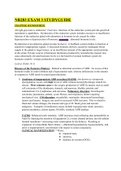
NR283 EXAM 3 STUDYGUIDE
NR283 EXAM 3 STUDYGUIDE CHAPTER 18 ENDOCRINE All right guys here is endocrine! Overview- functions of the endocrine system provide growth & reproductive capabilities. Dysfunction of the endocrine system includes excessive or insufficient function of the endocrine gland with alterations in hormone levels caused by either hypersecretion or hyposecretion of hormone abnormal hormone levels. Dysfunction of an endocrine gland can also be due to: 1) feedback systems failure to function or respond to inappropriate signals, 2) decreased hormone delivery caused by inadequate blood supply to the gland or target tissues, or an insufficient amount of the appropriate carrier proteins in the serum. Ectopic sources of hormones (hormones produced by nonendocrine tissues) may cause abnormally elevated hormone levels w/o the benefit of normal feedback system for hormone controls---ectopic production is autonomous. Look at (Table 18-1) Diseases of the Posterior Pituitary: Related to abnormal secretion of ADH. An excess of this hormone results in water retention and a hypoosmolar state, whereas deficiencies in the amount or response to ADH result in serum hyperosmolarity. 1) Syndrome of inappropriate ADH secretion (SIADH), also known as vasopressin dysregulation, occurs with high levels of ADH without normal physiologic stimuli for release. Most common cause is the ectopic production of ADH by tumors such as small cell carcinoma of the duodenum, stomach, and pancreas, bladder, prostate and endometrium CA, lymphomas, and sarcomas. Pulmonary disorders: bronchogenic carcinoma, pneumonia, asthma, cystic fibrosis, and respiratory failure requiring mechanical vent. CNS disorders: encephalitis, meningitis, intracranial hemorrhage, tumors and trauma. Surgery can result in increased ADH secretion. This is related to fluid and volume changes, the amount and type of IV fluids given and narcotic analgesics. Examples of medication causes include: hypoglycemic meds, narcotics, general anesthetics, chemo agents, NSAIDs, synthetic ADH analogs. PATHO: Enhanced water retention. ADH increases renal collecting duct permeability to water by inducing the insertion of (aquaporin-2), a water channel protein, into the tubular luminal membrane---increasing water reabsorption by the kidneys. Resulting in expansion of extracellular fluid volume----dilutional hyponatremia, hypoosmolarity, and urine is inappropriately concentrated with respect to serum osmaolarity. CLINICAL MANIFESTATION: * Thirst, ● impaired taste, ● anorexia, ● dyspnea on exertion (DOE),
Document information
- Uploaded on
- June 2, 2022
- Number of pages
- 42
- Written in
- 2020/2021
- Type
- Exam (elaborations)
- Contains
- Questions & answers


