P3, P4, M2, D1
Harvard references
Case study for P3 and P4
Resub work.
P3
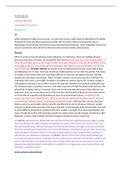
When working in health and social care, we will come across a wide range of individuals with specific
behavioural needs and these behavioural needs will have been influenced by specific factors.
Depending on how heavily these factors have impacted their behaviour, most individuals will portray
certain mannerisms that will link to the factor they are most heavily influenced by.
Physical
When it comes to how the physical factor influences our behaviour, there are multiple physical
processes that have an impact. An example of this from the Health and Social care Student Book 1, is
when some people wake up early ready to start work with enthusiasm whereas, others find it nearly
impossible to get up in a morning and have problems with alertness and concentration for the first
part of their day. Circadian rhythms are known to be the physical process that causes this as they
are following a 24–25-hour clock and control our bodily functions across this time period. They have
an impact on our sleep-wake cycle meaning it affects our alertness throughout the day, and also
involves the secretion of hormones. These circadian rhythms can in some cases be a risk factor for
individuals who work as are traffic controllers or healthcare workers due to the constant change in
shift patterns meaning it has an affect on how we sleep and therefore, our alertness during the day.
Our immune system, cognitive processes, and other aspects to do with the sleep-wake cycle are also
affected by circadian rhythms. However, these are not the only physical process that influence our
behaviour, there are many others such as the structure and function of the brain as the brain allows
us to function in a specific way depending on how it is programmed to do so. According to the
Health and Social Care Student Book 1, the brain carries out specialised functions such as memory,
concentration, hearing, seeing, and judging visuospatial imagery. Not only this, but also, the brain
helps us govern a personality which is specific and different to every individual. However, people
who have suffered with traumatic brain injury that had caused damage to the frontal lobes may start
to show different behavioural symptoms that they wouldn’t normally have experienced before the
injury. People that suffer with dementia as well may start to show drastic changes in behaviour after
diagnosis, as there brain function will have changed compared to how it used to be.
For Katrina, because of her bipolar disorder and the fact that she experiences severe highs at night-
time, this disrupts her sleep schedule meaning her circadian rhythms are a risk factor for her. The
fact she has little sleep, will have an impact on the way she behaves throughout the day as she may
feel tired and lethargic meaning she won’t have the energy to complete certain activities. It may also
make her bipolar disorder worsen as sleep has a huge impact on your mental health meaning this
will influence her behaviour negatively. For Rupert, the fact that he has a large alcohol intake will
mean that his mental behaviour changes and may make his pre-existing mental health conditions get
worse. Alcohol affects your brain function and can often make you become less aware of risks and
dangers meaning that Rupert may feel like it is alright to act in aggressive ways towards others and
therefore, continue to do so.
Social, cultural, and emotional
, Everyone has different values, norms, culture, and behaviours in society meaning that our social
influences will heavily influence the way in which we act in specific situations. An example from the
Health and Social care Student Book 1, is the way we learn table manners from our family: we may
learn spiritual values from our family or religious leaders. The things we may view as important will
differ from what others may view as important depending on our societies and cultures as these
vary from person to person, and something that someone may see as ‘different’ or ‘strange’ may be
somebody else’s ‘normal’ behaviour depending on the culture and society we live in. Emotionally,
everyone is brought up in a different way like some people may be taught to express their emotions
and openly discuss problems that are concerning to them through things such as jealousy and anger.
Whereas others may be discouraged from doing this. The way in which we are brought up
emotionally as well as the society we live in the and the values from the culture we live by will
greatly influence our behaviour.
For Katrina, she grew up in a stable household meaning that she would have been taught specific
values that her family deemed appropriate. She may continue to act out values that her family
taught her whilst staying on the ward as it has become habit for her to do so. For Rupert, he spent a
lot of time in and out of foster care and his parents died when he was relatively young meaning he
may not have had values to live by as he got older or of he did, they would have kept changing
because of how much moving around he did with different individuals. Therefore, Rupert may
behave in a more negative way because he may be confused by what values he had to live by
because of his lack of social influences growing up.
Economic
People in society will have different amounts of money to spend depending on the amount of
income they receive, and this will influence our behaviour because the amount of money we have
will determine if we have enough for basic needs. For example, the health and social care student
book 1 said that, a person may not be able to afford fruits and vegetables in order to make up a
healthy, balanced diet and therefore their diet may be poor. Your ability to access services such as
dentists, opticians, and chiropodists may be an issue for people with little income as they may not be
able to afford the time or the fares needed to travel to appointments. Also, important things such as
screening tests to check for cancers like breast cancer and cervical smear tests may also be a
problem. As individuals, both our physical and psychological health and wellbeing are influenced
when we are able to go and do activities such as swimming, dances classes, yoga classes etc. as they
will improve our social skills by allowing us to interact with others and help us relax.
For Katrina, the fact she had to ask her mother for money portrays that she is most likely struggling
to pay for her essentials meaning her health and wellbeing would have been affected. The fact she
may not have had access to activities may explain why she felt the need to give her mother death
threats as she is unable to unwind properly and therefore, anger and stress is causing her to act up.
Rupert probably spent a lot of his money on drugs and alcohol which he most likely used to relax
and unwind. Therefore, when he moved onto the ward he would have lost access to these which
means he would have lost his source of relaxation which explains why he acted so aggressively.
Physical Environment
Our behaviour and development may also be influenced by our physical environment as the
conditions we live in will change the way we act. For example, the health and social care student
book 1 said that someone who lives in an urban area and has children who has no nearby, open
spaces for them to play will be more stressed than someone who has a large back garden for
Harvard references
Case study for P3 and P4
Resub work.
P3
When working in health and social care, we will come across a wide range of individuals with specific
behavioural needs and these behavioural needs will have been influenced by specific factors.
Depending on how heavily these factors have impacted their behaviour, most individuals will portray
certain mannerisms that will link to the factor they are most heavily influenced by.
Physical
When it comes to how the physical factor influences our behaviour, there are multiple physical
processes that have an impact. An example of this from the Health and Social care Student Book 1, is
when some people wake up early ready to start work with enthusiasm whereas, others find it nearly
impossible to get up in a morning and have problems with alertness and concentration for the first
part of their day. Circadian rhythms are known to be the physical process that causes this as they
are following a 24–25-hour clock and control our bodily functions across this time period. They have
an impact on our sleep-wake cycle meaning it affects our alertness throughout the day, and also
involves the secretion of hormones. These circadian rhythms can in some cases be a risk factor for
individuals who work as are traffic controllers or healthcare workers due to the constant change in
shift patterns meaning it has an affect on how we sleep and therefore, our alertness during the day.
Our immune system, cognitive processes, and other aspects to do with the sleep-wake cycle are also
affected by circadian rhythms. However, these are not the only physical process that influence our
behaviour, there are many others such as the structure and function of the brain as the brain allows
us to function in a specific way depending on how it is programmed to do so. According to the
Health and Social Care Student Book 1, the brain carries out specialised functions such as memory,
concentration, hearing, seeing, and judging visuospatial imagery. Not only this, but also, the brain
helps us govern a personality which is specific and different to every individual. However, people
who have suffered with traumatic brain injury that had caused damage to the frontal lobes may start
to show different behavioural symptoms that they wouldn’t normally have experienced before the
injury. People that suffer with dementia as well may start to show drastic changes in behaviour after
diagnosis, as there brain function will have changed compared to how it used to be.
For Katrina, because of her bipolar disorder and the fact that she experiences severe highs at night-
time, this disrupts her sleep schedule meaning her circadian rhythms are a risk factor for her. The
fact she has little sleep, will have an impact on the way she behaves throughout the day as she may
feel tired and lethargic meaning she won’t have the energy to complete certain activities. It may also
make her bipolar disorder worsen as sleep has a huge impact on your mental health meaning this
will influence her behaviour negatively. For Rupert, the fact that he has a large alcohol intake will
mean that his mental behaviour changes and may make his pre-existing mental health conditions get
worse. Alcohol affects your brain function and can often make you become less aware of risks and
dangers meaning that Rupert may feel like it is alright to act in aggressive ways towards others and
therefore, continue to do so.
Social, cultural, and emotional
, Everyone has different values, norms, culture, and behaviours in society meaning that our social
influences will heavily influence the way in which we act in specific situations. An example from the
Health and Social care Student Book 1, is the way we learn table manners from our family: we may
learn spiritual values from our family or religious leaders. The things we may view as important will
differ from what others may view as important depending on our societies and cultures as these
vary from person to person, and something that someone may see as ‘different’ or ‘strange’ may be
somebody else’s ‘normal’ behaviour depending on the culture and society we live in. Emotionally,
everyone is brought up in a different way like some people may be taught to express their emotions
and openly discuss problems that are concerning to them through things such as jealousy and anger.
Whereas others may be discouraged from doing this. The way in which we are brought up
emotionally as well as the society we live in the and the values from the culture we live by will
greatly influence our behaviour.
For Katrina, she grew up in a stable household meaning that she would have been taught specific
values that her family deemed appropriate. She may continue to act out values that her family
taught her whilst staying on the ward as it has become habit for her to do so. For Rupert, he spent a
lot of time in and out of foster care and his parents died when he was relatively young meaning he
may not have had values to live by as he got older or of he did, they would have kept changing
because of how much moving around he did with different individuals. Therefore, Rupert may
behave in a more negative way because he may be confused by what values he had to live by
because of his lack of social influences growing up.
Economic
People in society will have different amounts of money to spend depending on the amount of
income they receive, and this will influence our behaviour because the amount of money we have
will determine if we have enough for basic needs. For example, the health and social care student
book 1 said that, a person may not be able to afford fruits and vegetables in order to make up a
healthy, balanced diet and therefore their diet may be poor. Your ability to access services such as
dentists, opticians, and chiropodists may be an issue for people with little income as they may not be
able to afford the time or the fares needed to travel to appointments. Also, important things such as
screening tests to check for cancers like breast cancer and cervical smear tests may also be a
problem. As individuals, both our physical and psychological health and wellbeing are influenced
when we are able to go and do activities such as swimming, dances classes, yoga classes etc. as they
will improve our social skills by allowing us to interact with others and help us relax.
For Katrina, the fact she had to ask her mother for money portrays that she is most likely struggling
to pay for her essentials meaning her health and wellbeing would have been affected. The fact she
may not have had access to activities may explain why she felt the need to give her mother death
threats as she is unable to unwind properly and therefore, anger and stress is causing her to act up.
Rupert probably spent a lot of his money on drugs and alcohol which he most likely used to relax
and unwind. Therefore, when he moved onto the ward he would have lost access to these which
means he would have lost his source of relaxation which explains why he acted so aggressively.
Physical Environment
Our behaviour and development may also be influenced by our physical environment as the
conditions we live in will change the way we act. For example, the health and social care student
book 1 said that someone who lives in an urban area and has children who has no nearby, open
spaces for them to play will be more stressed than someone who has a large back garden for