NSG C489 Task 2.
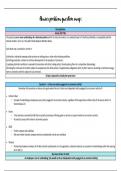
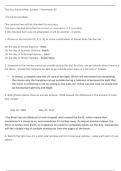
NSG C489 Task 2. C 489 Task 2 Jessica Young Western Governors University 6/7/2020 A. Root Cause Analysis, according to the Institute for Healthcare Improvement (IHI), is a system wide method for understanding triggers for adverse events and finding errors in the system that need to be changed in order to prevent the same mistakes from happening in the future. RCA is a six-step process that usually involves 4-6 team members from different levels of the entire organization who are familiar with the issue. (IHI 2020) A1. Step 1 identify what happened. Creating a flow sheet can help with a detailed picture of the scenario. Step 2 the team needs to determine what should have happened, it would be helpful to make a second flow sheet and compare it to the one from step one. Step 3 ask “why” questions to find contributing factors related to the event. Step 4 develop a statement of trigger factors containing the cause, the effect, and the details of the event. Step 5 make a list of recommended practice changes to prevent future occurrences such as educating staff, and new or changes in policies. Step 6 share the summary after you write it utilizing a flow sheet. (IHI, 2020) A2. The RCA staff are the ED doctor, the RN, the LPN the RT as well as a representative from risk management. Step one would be to identify the events. It is noted that Mr. B’s blood pressure and oxygen are on continuous monitoring, however respirations and ECG were not deemed necessary by the analgesia policy of the hospital. The LPN who briefly stopped in the room, failed to report to either the nurse or doctor of Mr. B’s low blood pressure and oxygen saturation. Step two is to realize what should have happened. Once the LPN noticed that Mr. B’s vital signs were low they should have immediately been reported to Nurse J or Dr. T in order for him to receive the proper treatment such as supplemental oxygen or use of an ECG monitor. Step three is to assess the cause with the five why’s. 1-Why did this happen? It occurred since patients were not required to be supervised by hospital staff after receiving mild sedation. 2- Why wasn’t procedure followed by staff? The LPN did not follow procedure by not warning Nurse J of low oxygenation and blood pressure. The LPN did not alert the RN due to the ED being full of patients and low on staff. 3- Why wasn’t there enough staff in the ED? The ED did not call for more assistance resulting in them being short staffed. 5- Why were the staff members not asking for more help? A lack of communication between staff is why they did not call for more help. The cause of this event therefore was a lack of communication. Step four build your claim, such as “Poor communication between staff increased the chance of staff neglecting to follow policy (effect) which caused Mr. B to code and eventually die (event).” Step five is to create a list of actions that can be suggested to prevent such events from happening in the future, such as changing hospital policy to use additional staff with patients who have had mild sedation, or to have mandatory staff meetings to retrain everyone on hospital policy for monitoring patients with moderate sedation. Step six is to write and post a review. I would create a flowsheet to clarify the instance to other staff members who were not present to teach them of the different plans we are implementing. This flowsheet could then be emailed to all employees. B. The changes I would make to protocols prevent a reoccurrence of future incidence would indicate that the nurses caring for the patient under moderate sedation should have another patient with a lower acuity. Staff education about care for moderately sedated patients should be discussed often. B1. Lewin’s change theory includes three stages which include unfreezing, change and refreezing. First is the unfreezing stage where the problem in identified, information collected, and staff notified of the need for change. People would release old habits that would make any change counterproductive. This could be accomplished by educating staff on the events surrounding Mr. B for them to understand the importance of these changes. (Cherry, 2017) The second stage is the action stage where the person making the change, decides what needs to be done, what change options there are, and puts them in motion. The third and final stage is the refreezing stage, this stage. By creating specific class dates and mandatory education for staff would result in better overall understanding from staff. (Cherry, 2017) The last step is the refreezing stage. At this step, the new change must be made the only way to do it to prevent old ways of doing things to happen again. The change agent needs to hold people accountable to the change, encourage the staff to be involved and make it their practice, and it may require new policies to support the change and new standards become current behaviors. By monitoring staff once they have completed training would ensure that policies are being followed consistently. (Cherry, 2017) C. Failure Modes and Effects Analysis (FMEA) is an active approach to reviewing a system to figure out how it could fail and to determine what harm it could cause. The FEMA team is made up of all the areas that would be involved with the specific process being evaluated. They are used to predict and keep record of the where, how, and the extent of harm that could be caused. (IHI, 2020) C1. Step one of FEMA process is to agree about a method to be evaluated for an improvement plan. When there is a comprehensive approach, possible failures are easier to find. Step two of FEMA process is developing an interdisciplinary team to focus a process. The team should allow everyone to work together on most of then plan’s steps. Step three of FEMA process is for multiple interactions amongst the team to focus on defining each step of the process. Step four of FEMA process is to note the failures for each of the stages and some of the possible contributing factors for each of the failures. Step five of FEMA process is assigning Risk Priority Numbers (RPNs) for the possibilities of occurrences and identification, and severity rates. They are scored one to ten, and rating are assigned that are decided by each of the group members. Step six of FEMA process is determining outcomes by assessing the final scores. This is determined by multiplying the three RPNs with a max of ten RPNs. The final step of FEMA process to working towards resolving these failures by creating different steps in order to prevent these failures from happening. C2. See Attached D. According to the Institute for Healthcare Improvement (IHI), improving quality care for patients by using Plan- Do- Study- Act (PDSA) cycles to allow you to assess the effectiveness of the changes that have been made in the clinical setting. Step one would be the process, I would begin by creating an outline of the changes that have been deemed necessary for the improvement plan. An example of this would be designing a flowsheet for vitals to be done every five minutes by the nurse on the patients under moderate sedation. This would allow for that nurse to recognize any changes to their condition more quickly. The next step would be to test the flowsheet on a smaller scale, such as a smaller unit. This way the effectiveness can be easily measured and if necessary, make changes to the flowsheet and note any issues. The third step is to compare the data to the information that was collected from the predictions. The final step would be to implement the flowsheet on a larger scare. The hope for these changes would be to improve safety and reduce patient harm. E. A professional nurse demonstrates leadership in supporting quality care by ensuring all staff on a unit follows the hospitals policies for all procedures they involve themselves with. A professional nurse demonstrates leadership in improving patient outcomes by ensuring that the care provided in appropriate. A professional nurse demonstrates leadership in influencing quality improvement activities by participating in training workshops for revised or new policies to allow for patients to receive the best care. E1. By the professional nurse being involved in a team with RCA or FEMA processes, the process itself is improved by having a nursing perspective which allows them to point out information in situations that is specific to the nursing profession that may have other wise been overlooked. Nurses are able to act as leaders by communicating with other team members where modes of failure may happen and give insight into processes that may need improvement. References Cherry, B. &. (2017). Contemporary nursing: Issues, trends, and management (7th ed.). St. Louis: Mosby Elsevier. Institute for Healthcare Improvement. (n.d.) https://srm-- Institute for Healthcare Improvement. (2020). Failure Modes and Effects Analysis (FEMA) to-Prevent-H 2. Nursing Theory. (n.d.). Lewin's Change Theory. Retrieved from:
Geschreven voor
- Instelling
- NSG C489
- Vak
- NSG C489
Documentinformatie
- Geüpload op
- 17 mei 2022
- Aantal pagina's
- 8
- Geschreven in
- 2022/2023
- Type
- Tentamen (uitwerkingen)
- Bevat
- Vragen en antwoorden
Onderwerpen
-
nsg c489 task 2
-
nsg c489 task 2 c 489 task 2 jessica young western governors university 672020 a root cause analysis
-
according to the institute for healthcare improvement