
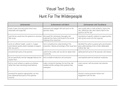
Visual Text Study
_________________________________________________
Hunt For The Wilderpeople
Achievement Achievement with Merit Achievement with Excellence
made at least three key points which were addressed and engaged with both parts of the were usually able to make authentic, beyond the
reasonably well supported question clearly text, references that were clearly linked to the
question and the text
used the key words from the question to structure discussed film techniques thoroughly and used plenty of specific evidence to support points,
their essay explained how these contributed to the overall with quotes woven into the response
meaning of the visual text
wrote at sufficient length: usually 2–3 pages had a comprehensive understanding of the identified the author’s purpose aptly and showed a
used relevant quotes and/or examples to support characters, themes and settings of the visual text good understanding of how writers deliberately
their key points crafted their text
answered both parts of the question used the key words well, but did not repeat them addressed both parts of the question with balance
necessarily
did not specifically mention language features but had a suitable introduction and conclusion used sophisticated and analytical vocabulary
implied them
had too much reliance on quotes as evidence, made a strong link between the text they had wrote concise, well-structured, and cohesive
rather than more convincing visual features studied and the wording of the question they essays
attempted
answered the question appropriately, but may showed a mature personal interest and
have addressed both parts of the question engagement with the text.
unevenly.
, 1. Aerial shot at the start to show isolation - no humans or buildings and lots of bush
2. Film divided into chapters - 10 chapters
a. A Real Bad Egg
b. Another Door
c. Goodbye Ricky Baker
d. Broken Foot camp
e. Famous
f. Close To The Sky
g. A Normal Life
h. The Knack
i. Turn Of The Tide
j. War
k. Epilogue
Symbols:
1. Doors
2. Hot water bottle
Character
Characters can be understood by the following:
Character Used language features
1. Costume 1. Camera angles
a. Time and place 2. Palette (skin colour)
b. Social position 3. Lighting
, c. Social attitudes/beliefs a. Can alter our perception of a character or situation by
d. Character type creating areas of light and shade within a shot
2. Names b. Lots of shadow suggests depression, sadness or a threat
3. Makeup 4. Music/sound
a. Used to alter the actors features so that he or she can 5. Symbolism
represent the image of the character required by the a. An object can have a symbolic meaning - hot water bottle
director of the film shows Ricky’s desire for a home, family and security. He
takes it to the bush with him
Narrative structure Setting
1. Chapters 1.
2. Scenes
Hector Faulkner:
a) Independent man and turns into family man
b) In chapter one he won’t let Ricky call him uncle, he stands in a door frame and is man alone. In the last scene, he is sitting at a doorstep and
he says that Ricky can call him uncle.
c) Very commonly shown in doorways
Ricky:
a) City boy wearing streetwear at the start and then turns into a bushman and wears wolly clothes and beanies
b) Uses haikus and they change throughout the movie from Kingi you wanker to more positive things


