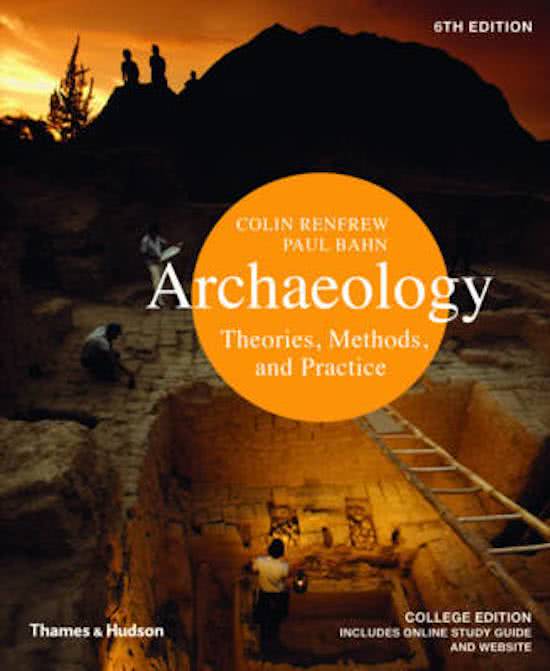
Archaeology: Theories, Methods, and Practice
6th Edition
Colin Renfrew & Paul Bahn
Instructor’s Manual
, Chapter 1
The Searchers: The History of Archaeology
What are the goals of archaeology?
Our first section introduces students to the ways in which the objectives of archaeology have
changed through time, reflecting improved methods, multi-disciplinary influences, and changing
philosophical perspectives. The concept of culture is introduced, with Edward Tylor’s definition
(1871), and the broadness of anthropology is here divided into to three sub-disciplines: biological
anthropology, cultural anthropology, and archaeology. Archaeology is framed as “the past tense of
cultural anthropology,” and includes the concepts of material culture and ethnoarchaeology.
Archaeology as science underscores the scientific methods archaeologists rely upon while
archaeology as history emphasizes the ways in which archaeological research techniques are
similar to those used by other humanities.
The introductory section concludes by discussing the aims of archaeology, and the types of
questions archaeologists ask. Rather than limit ourselves to the reconstruction of people’s past
lifeways, the authors try to extend the idea beyond the jigsaw puzzle metaphor to include attempts
to understand why people lived as they did in the past. In other words, explaining change is a
fundamental goal, particularly of processual archaeology. More recent approaches that focus on
symbolic and cognitive aspects are mentioned and grouped under postprocessual or interpretive
archaeology.
, CHAPTER OVERVIEW
After reading Chapter 1, students should
• Understand the basic goals of archaeology
• Understand the relationship of archaeology to other disciplines such as history,
anthropology, and science
• Have a basic overview of the history of archaeology, and the major conceptual advances
that inform the discipline
• Recognize the major pioneers of archaeology
• Have a familiarity with the major contemporary trends in archaeology, and their
philosophical underpinnings
, Key Concepts and People
Speculative Phase The Development of Field Techniques
William Stukeley, p.22 Lieutenant-General Pitt-Rivers, p.33
Thomas Jefferson, p.23 Sir William Flinders Petrie, p.34
Sir Mortimer Wheeler, p.34
Beginning of Modern Archaeology Alfred Kidder, p.35
James Hutton, p.26
Uniformitarianism, p.26 Classification and Consolidation
Charles Lyell, p.26 Gordon Willey, p.32
V. Gordon Childe, p.36
Antiquity of Humankind Classification, p.36
Jacques Boucher de Perthes, p.26
The Ecological Approach
The Concept of Evolution Julian Steward, p.36
Evolution, p.26 Grahame Clarke, pp.36–37
Cultural ecology, p.36
Evolution: Darwin's Great Idea
Charles Darwin, pp.26–27 The Rise of Archaeological Science
Lewis Henry Morgan, p.27 Willard Libby, p.37
Historical particularism, p.27 Radiocarbon dating, p.37
Cultural evolutionism, p.27
Women Pioneers of Archaeology
Three Age System Tatiana Proskouriakoff, p.39
Three Age system, p.27–28 Kathleen Kenyon, p.38
C.J. Thomsen, p.28 Mary Leakey, p.39
Typology, p.28
A Turning Point in Archaeology
Discovering the Early Civilizations New Archaeology, p.40
Rosetta Stone, p.29 Culture, p.40
Stephens and Catherwood, p.29
Heinrich Schliemann, p.32 World Archaeology
The Leakey Family, p.42
North American Archaeological Pioneers Archaeology and living societies, pp.42–43
Ephraim Squier, p.30 Postprocessual archaeology, p.43
Samuel Haven, p.30 Ian Hodder, p.43
John Wesley Powell, pp.30–31 Feminist archaeology, p.45
William Henry Holmes, p.31 Heritage, p.45
Çatalhöyük: Interpretive Archaeologies in
Action
Çatalhöyük, pp.46-47
6th Edition
Colin Renfrew & Paul Bahn
Instructor’s Manual
, Chapter 1
The Searchers: The History of Archaeology
What are the goals of archaeology?
Our first section introduces students to the ways in which the objectives of archaeology have
changed through time, reflecting improved methods, multi-disciplinary influences, and changing
philosophical perspectives. The concept of culture is introduced, with Edward Tylor’s definition
(1871), and the broadness of anthropology is here divided into to three sub-disciplines: biological
anthropology, cultural anthropology, and archaeology. Archaeology is framed as “the past tense of
cultural anthropology,” and includes the concepts of material culture and ethnoarchaeology.
Archaeology as science underscores the scientific methods archaeologists rely upon while
archaeology as history emphasizes the ways in which archaeological research techniques are
similar to those used by other humanities.
The introductory section concludes by discussing the aims of archaeology, and the types of
questions archaeologists ask. Rather than limit ourselves to the reconstruction of people’s past
lifeways, the authors try to extend the idea beyond the jigsaw puzzle metaphor to include attempts
to understand why people lived as they did in the past. In other words, explaining change is a
fundamental goal, particularly of processual archaeology. More recent approaches that focus on
symbolic and cognitive aspects are mentioned and grouped under postprocessual or interpretive
archaeology.
, CHAPTER OVERVIEW
After reading Chapter 1, students should
• Understand the basic goals of archaeology
• Understand the relationship of archaeology to other disciplines such as history,
anthropology, and science
• Have a basic overview of the history of archaeology, and the major conceptual advances
that inform the discipline
• Recognize the major pioneers of archaeology
• Have a familiarity with the major contemporary trends in archaeology, and their
philosophical underpinnings
, Key Concepts and People
Speculative Phase The Development of Field Techniques
William Stukeley, p.22 Lieutenant-General Pitt-Rivers, p.33
Thomas Jefferson, p.23 Sir William Flinders Petrie, p.34
Sir Mortimer Wheeler, p.34
Beginning of Modern Archaeology Alfred Kidder, p.35
James Hutton, p.26
Uniformitarianism, p.26 Classification and Consolidation
Charles Lyell, p.26 Gordon Willey, p.32
V. Gordon Childe, p.36
Antiquity of Humankind Classification, p.36
Jacques Boucher de Perthes, p.26
The Ecological Approach
The Concept of Evolution Julian Steward, p.36
Evolution, p.26 Grahame Clarke, pp.36–37
Cultural ecology, p.36
Evolution: Darwin's Great Idea
Charles Darwin, pp.26–27 The Rise of Archaeological Science
Lewis Henry Morgan, p.27 Willard Libby, p.37
Historical particularism, p.27 Radiocarbon dating, p.37
Cultural evolutionism, p.27
Women Pioneers of Archaeology
Three Age System Tatiana Proskouriakoff, p.39
Three Age system, p.27–28 Kathleen Kenyon, p.38
C.J. Thomsen, p.28 Mary Leakey, p.39
Typology, p.28
A Turning Point in Archaeology
Discovering the Early Civilizations New Archaeology, p.40
Rosetta Stone, p.29 Culture, p.40
Stephens and Catherwood, p.29
Heinrich Schliemann, p.32 World Archaeology
The Leakey Family, p.42
North American Archaeological Pioneers Archaeology and living societies, pp.42–43
Ephraim Squier, p.30 Postprocessual archaeology, p.43
Samuel Haven, p.30 Ian Hodder, p.43
John Wesley Powell, pp.30–31 Feminist archaeology, p.45
William Henry Holmes, p.31 Heritage, p.45
Çatalhöyük: Interpretive Archaeologies in
Action
Çatalhöyük, pp.46-47