
Hazards Poppy Stone
Hazards
Hazard concept
Hazard- a threat either natural or human that has the potential to cause damage to human life or
property
Natural phenomenon- physical event that does not affect humans e.g. volcanic eruption
Natural hazard- natural event that occurs in a populated area that can affect human e.g. earthquake
Natural disaster- an event that causes large numbers of fatalities or property damage
Natural hazards characteristics:
• Lots of property damage
• People injured or killed
• Lots of homeless
• High intensity
• No warning
• Emergency response
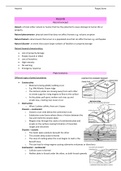
Plate tectonics
Different types of plate boundaries
• Constructive
o Material is being added, building crust
o E.g. Mid Atlantic Ocean ridge
o The tectonic plates are moving away from each other
to create a gap for rising magma to flow to the surface
o As the plates pull apart, molten rock rises up and
erupts lava, creating new ocean crust
• Destructive
o When 2 plates collide, there are 3 types
Oceanic – continental
o Oceanic crust sinks below the continental crust
o Subduction zone forms where there is friction between the
two and melts the oceanic plate
o Magma rises through the cracks of continental plate and
erupts on the surface causing formation of mountain
ranges and volcanoes
Oceanic – oceanic
o The faster plate subducts beneath the other
o This creates deep ocean trenches
o The zone of melting when the crust begins to melt is the
Benioff Zone
o This can lead to rising magma causing submarine volcanoes or island arcs
Continental – continental
o Collision zone is formed
o Neither plate is forced under the other, so both forced upwards
1
, Hazards Poppy Stone
o This forms fold mountains
• Conservative
o Plates slide past each other in opposite directions or in
same direction at different speeds
o Friction is eventually overcome, and the plates slip past in
sudden movement
o The shockwaves created produce an earthquake
o E.g. San Andreas Fault in California
Folding- happens when 2 pieces of a plate come together and push against each other
Faulting- plates are parallel to each other they run up and down the plate in an area called the fault
zone
Volcanoes
Spatial distribution
• Most volcanoes occur along the pacific plate boundary with the India-Australian plate
• Most of the hotspots occur in the north American plate or African plate
• Subduction zones on northwest of the pacific plate where most of the volcanoes are formed
• Less common on west of Nazca plate as divergent plate boundary so no volcanoes formed
Magnitude
• Volcano explosivity index:
• Criterion used to award 0-8 on the VEI
• Volume of ejecta
• Height of the eruptive column
• Height of spreading of the eruptive plume
o 1= Gentle
o 4 = Cataclysmic
o 8= mega colossal
• Eruptions become 10x bigger by each magnitude
Frequency- less frequent eruptions have larger magnitude are more damaging
Randomness and regularity- some are very regular, others may ne dormant for 100s or 1000 of
years then erupt several times in quick succession
Predictability- the regularity in which a volcano erupts can help scientists predict when it might
erupt again. Can monitor small earthquakes and changes in shape suggest, an eruption is imminent
What is being monitored Equipment What does it indicate
Upward movement of iron Magnetometers Changing magnetism within the volcano is a common
rich magma indication of rising magma
Ground deformation Tiltometers and electronic Bulging of the ground is caused by rising magma. Slope
distance measurements angles and increasing distance between points measured
accurately
Seismic activity Seismometers Microquakes indicate rising magma fracturing and
cracking the overlying rocks
Rising groundwater temp/ Hydrological Rising magma will both heat groundwater and corrupt it
gas content instrumentation with gas such as sulphur
2
Hazards
Hazard concept
Hazard- a threat either natural or human that has the potential to cause damage to human life or
property
Natural phenomenon- physical event that does not affect humans e.g. volcanic eruption
Natural hazard- natural event that occurs in a populated area that can affect human e.g. earthquake
Natural disaster- an event that causes large numbers of fatalities or property damage
Natural hazards characteristics:
• Lots of property damage
• People injured or killed
• Lots of homeless
• High intensity
• No warning
• Emergency response
Plate tectonics
Different types of plate boundaries
• Constructive
o Material is being added, building crust
o E.g. Mid Atlantic Ocean ridge
o The tectonic plates are moving away from each other
to create a gap for rising magma to flow to the surface
o As the plates pull apart, molten rock rises up and
erupts lava, creating new ocean crust
• Destructive
o When 2 plates collide, there are 3 types
Oceanic – continental
o Oceanic crust sinks below the continental crust
o Subduction zone forms where there is friction between the
two and melts the oceanic plate
o Magma rises through the cracks of continental plate and
erupts on the surface causing formation of mountain
ranges and volcanoes
Oceanic – oceanic
o The faster plate subducts beneath the other
o This creates deep ocean trenches
o The zone of melting when the crust begins to melt is the
Benioff Zone
o This can lead to rising magma causing submarine volcanoes or island arcs
Continental – continental
o Collision zone is formed
o Neither plate is forced under the other, so both forced upwards
1
, Hazards Poppy Stone
o This forms fold mountains
• Conservative
o Plates slide past each other in opposite directions or in
same direction at different speeds
o Friction is eventually overcome, and the plates slip past in
sudden movement
o The shockwaves created produce an earthquake
o E.g. San Andreas Fault in California
Folding- happens when 2 pieces of a plate come together and push against each other
Faulting- plates are parallel to each other they run up and down the plate in an area called the fault
zone
Volcanoes
Spatial distribution
• Most volcanoes occur along the pacific plate boundary with the India-Australian plate
• Most of the hotspots occur in the north American plate or African plate
• Subduction zones on northwest of the pacific plate where most of the volcanoes are formed
• Less common on west of Nazca plate as divergent plate boundary so no volcanoes formed
Magnitude
• Volcano explosivity index:
• Criterion used to award 0-8 on the VEI
• Volume of ejecta
• Height of the eruptive column
• Height of spreading of the eruptive plume
o 1= Gentle
o 4 = Cataclysmic
o 8= mega colossal
• Eruptions become 10x bigger by each magnitude
Frequency- less frequent eruptions have larger magnitude are more damaging
Randomness and regularity- some are very regular, others may ne dormant for 100s or 1000 of
years then erupt several times in quick succession
Predictability- the regularity in which a volcano erupts can help scientists predict when it might
erupt again. Can monitor small earthquakes and changes in shape suggest, an eruption is imminent
What is being monitored Equipment What does it indicate
Upward movement of iron Magnetometers Changing magnetism within the volcano is a common
rich magma indication of rising magma
Ground deformation Tiltometers and electronic Bulging of the ground is caused by rising magma. Slope
distance measurements angles and increasing distance between points measured
accurately
Seismic activity Seismometers Microquakes indicate rising magma fracturing and
cracking the overlying rocks
Rising groundwater temp/ Hydrological Rising magma will both heat groundwater and corrupt it
gas content instrumentation with gas such as sulphur
2


