Med_Surg_Chapter_52
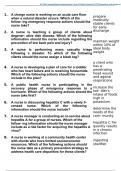
Med – Surg Chapter 52: Assessment and Management of Patients With Endocrine Disorders Question A client has a decreased level of thyroid hormone being excreted. What will the feedback loop do to maintain the level of thyroid hormone required to maintain homeostatic stability? • Stimulate more hormones using the negative feedback system Question A client has been diagnosed with myxedema from long-standing hypothyroidism. What clinical manifestations of this disorder does the nurse recognize are progressing to myxedema coma? Select all that apply. • Hypothermia • Hypotension • Hypoventilation Question A client has a dysfunction in one of his glands that is causing a decrease in the level of calcium in the blood. What gland should be evaluated for dysfunction? • Parathyroid gland Question A client has been experiencing a decrease in serum calcium. After diagnostics, the physician believes the calcium level fluctuation is due to altered parathyroid function. What is the role of parathormone? • increase serum calcium level Question A client with Addison's disease comes to the clinic for a follow-up visit. When assessing this client, the nurse should stay alert for signs and symptoms of: • sodium and potassium abnormalities. Question A client is admitted for treatment of the syndrome of inappropriate antidiuretic hormone (SIADH). Which nursing intervention is appropriate? • Restricting fluids Question A client is being evaluated for hypothyroidism. During assessment, the nurse should stay alert for: • decreased body temperature and cold intolerance. Question A client is experiencing an increase in blood glucose levels. The nurse understands that which of the following hormones would be important in lowering the client's blood glucose level? • Insulin Question A client is scheduled for a diagnostic test to measure blood hormone levels. The nurse expects that this test will determine which of the following? • The functioning of endocrine glands Question A client is suspected to have a pituitary tumor due to signs of diabetes insipidus. What initial test does the nurse help to prepare the client for? • Magnetic resonance imaging (MRI) Question A client presents with a huge lower jaw, bulging forehead, large hands and feet, and frequent headaches. What could be causing this client's symptoms? • hyperpituitarism Question A client sustained a head injury when falling off of a ladder. While in the hospital, the client begins voiding large amounts of clear urine and states he is very thirsty. The client states that he feels weak, and he has had an 8-lb weight loss since admission. What should the client be tested for? • Diabetes insipidus (DI) Question A client with pheochromocytoma is scheduled for an adrenalectomy. Which of the following would the nurse perform preoperatively? • Monitor blood pressure (BP) frequently. Question A client with acromegaly has been given the option of a surgical approach or a medical approach. The client decides to have a surgical procedure to remove the pituitary gland. What does the nurse understand this surgical procedure is called? • Hypophysectomy Question A client with acromegaly is admitted to the hospital with complaints of partial blindness that began suddenly. What does the nurse suspect is occurring with this client? • Pressure on the optic nerve Question A client with hypothyroidism (myxedema) is receiving levothyroxine (Synthroid), 25 mcg P.O. daily. Which finding should the nurse recognize as an adverse reaction to the drug? • Tachycardia Question A client with severe hypoparathyroidism is experiencing tetany. What medication, prescribed by the physician for emergency use, will the nurse administer to correct the deficit? • Calcium gluconate Question A female client with hyperglycemia who weighs 210 lb (95 kg) tells the nurse that her husband sleeps in another room because her snoring keeps him awake. The nurse notices that the client has large hands and a hoarse voice. Which disorder would the nurse suspect as a possible cause of the client's hyperglycemia? • Acromegaly Question A health care provider suspects that a thyroid nodule may be malignant. The nurse knows to prepare information for the patient based on the usual test that will be ordered to establish a diagnosis. What is that test? • Fine-needle biopsy of the thyroid gland Question A nurse is assessing a client with hyperthyroidism. What findings should the nurse expect? • Weight loss, nervousness, and tachycardia Question A nurse is assessing a client with possible Cushing's syndrome. In a client with Cushing's syndrome, the nurse expects to find: • deposits of adipose tissue in the trunk and dorsocervical area. Question A nurse is assessing a client after a thyroidectomy. The assessment reveals muscle twitching and tingling, along with numbness in the fingers, toes, and mouth area. The nurse should suspect which complication? • Tetany Question A nurse is assessing a client with Cushing's syndrome. Which observation should the nurse report to the physician immediately? • An irregular apical pulse Question A nurse is assigned to care for a patient with increased parathormone secretion. Which of the following serum levels should the nurse monitor for this patient? • Calcium Question A nurse is caring for a client who was recently diagnosed with hyperparathyroidism. Which statement by the client indicates the need for additional discharge teaching? • "I will increase my fluid and calcium intake." Question A nurse is planning care for a client in acute addisonian crisis. Which nursing diagnosis should receive the highest priority? • Decreased cardiac output Question A nurse is teaching a client with adrenal insufficiency about corticosteroids. Which statement by the client indicates a need for additional teaching? • "I may stop taking this medication when I feel better." Question A nurse should expect a client with hypothyroidism to report: • puffiness of the face and hands. Question A nursing student asks the instructor why the pituitary gland is called the “master gland.” What is the best response by the instructor? • “It regulates the function of other endocrine glands.” Question A patient is ordered desmopressin (DDAVP) for the treatment of diabetes insipidus. What therapeutic response does the nurse anticipate the patient will experience? A decrease in urine output Question A patient is suspected of having a pheochromocytoma and is having diagnostic tests done in the hospital. What symptoms does the nurse recognize as most significant for a patient with this disorder? • Blood pressure varying between 120/86 and 240/130 mm Hg Question A patient with a history of hypothyroidism is admitted to the intensive care unit unconscious and with a temperature of 95.2ºF. A family member informs the nurse that the patient has not taken thyroid medication in over 2 months. What does the nurse suspect that these findings indicate? • Myxedema coma Question A young client has a significant height deficit and is to be evaluated for diagnostic purposes. What could be the cause of this client's disorder? • pituitary disorder Question Accidental removal of one or both parathyroid glands can occur during a thyroidectomy. Which of the following is used to treat tetany? • Calcium gluconate Question Although not designated as endocrine glands, several organs within the body secrete hormones as part of their normal function. Which organ secretes hormones involved in increasing blood pressure and volume and maturation of red blood cells? • kidneys Question An incoherent client with a history of hypothyroidism is brought to the emergency department by the rescue squad. Physical and laboratory findings reveal hypothermia, hypoventilation, respiratory acidosis, bradycardia, hypotension, and nonpitting edema of the face and periorbital area. Knowing that these findings suggest severe hypothyroidism, the nurse prepares to take emergency action to prevent the potential complication of: • myxedema coma. Question An instructor is preparing a teaching plan for a class on the various pituitary hormones. Which hormone would the instructor include as being released by the posterior pituitary gland? • Oxytocin Question Beta-blockers are used in the treatment of hyperthyroidism to counteract which of the following effects? • Sympathetic Question Cardiac effects of hyperthyroidism include • palpitations. Question Dilutional hyponatremia occurs in which disorder? • Syndrome of inappropriate antidiuretic hormone secretion (SIADH) Question During preoperative teaching for a client who will undergo subtotal thyroidectomy, the nurse should include which statement? • "You must avoid hyperextending your neck after surgery." Question During the first 24 hours after a client is diagnosed with addisonian crisis, which intervention should the nurse perform frequently? • Assess vital signs. Question Early this morning, a client had a subtotal thyroidectomy. During evening rounds, the nurse assesses the client (who now has nausea) and records a temperature of 105°F (40.5°C), tachycardia, and extreme restlessness. What is the most likely cause of these signs? • Thyroid crisis Question For a client with hyperthyroidism, treatment is most likely to include: • a thyroid hormone antagonist. Question For the first 72 hours after thyroidectomy surgery, a nurse should assess a client for Chvostek's sign and Trousseau's sign because they indicate: • hypocalcemia. Question On the third day after a partial thyroidectomy, a client exhibits muscle twitching and hyperirritability of the nervous system. When questioned, the client reports numbness and tingling of the mouth and fingertips. Suspecting a life-threatening electrolyte disturbance, the nurse notifies the surgeon immediately. Which electrolyte disturbance most commonly follows thyroid surgery? • Hypocalcemia Question Parathyroid hormone (PTH) has which effects on the kidney? • Stimulation of calcium reabsorption and phosphate excretion Question Patients with hyperthyroidism are characteristically: • Sensitive to heat Question The nurse assesses a patient who has been diagnosed with Addison's disease. Which of the following is a diagnostic sign of this disease? • Potassium of 6.0 mEq/L Question The nurse assesses a patient who has an obvious goiter. What type of deficiency does the nurse recognize is most likely the cause of this? • Iodine Question The nurse is caring for a patient with hyperthyroidism who suddenly develops symptoms related to thyroid storm. What symptoms does the nurse recognize that are indicative of this emergency? • Temperature of 102ºF Question The nurse is reviewing a client's history which reveals that the client has had an oversecretion of growth hormone (GH) that occurred before puberty. The nurse interprets this as which of the following? • Gigantism Question The nurse is reviewing the history and physical examination of a client diagnosed with hyperthyroidism. Which of the following would the nurse expect to find? • Reports of increased appetite Question The nurse practitioner who assesses a patient with hyperthyroidism would expect the patient to report which of the following conditions? • Weight loss Question Trousseau sign is elicited • by occluding the blood flow to the arm for 3 minutes with the use of a blood pressure cuff. Question Trousseau’s sign is elicited by which of the following? • Carpopedal spasm is induced by occluding the blood flow to the arm for 3 minutes with the use of a blood pressure cuff. Question When assessing a client with pheochromocytoma, a tumor of the adrenal medulla that secretes excessive catecholamine, the nurse is most likely to detect: • a blood pressure of 176/88 mm Hg. Question When caring for a client with diabetes insipidus, the nurse expects to administer: • vasopressin. Question When preparing teaching plan for a client with an endocrine disorder, the nurse includes information about hormone regulation. Which of the following would the nurse include? • Most disorders result from over- or underproduction of the hormone. Question Which assessment is done by the nurse when conducting a physical examination? • Examine the shape and color of the nails Question Which assessment would a nurse perform on a client with Cushing’s syndrome who is at high risk of developing a peptic ulcer? • Observe stool color. Question Which diagnostic test is done to determine suspected pituitary tumor? • computed tomography scan Question Which glands regulate calcium and phosphorous metabolism? • Parathyroid Question Which hormone would be responsible for increasing blood glucose levels by stimulating glycogenolysis? • Glucagon Question Which instruction should be included in the discharge teaching plan for a client after thyroidectomy for Graves' disease? • Have regular follow-up care. Question Which of the following endocrine disorder causes the patient to have dilutional hyponatremia? • Syndrome of inappropriate antidiuretic hormone secretion (SIADH) Question Which of the following would the nurse expect the physician to order for a client with hypothyroidism? • Levothyroxine sodium Question Which of the following would the nurse need to be alert for in a client with severe hypothyroidism? • Myxedemic coma Question While assessing a client with hypoparathyroidism, the nurse taps the client's facial nerve and observes twitching of the mouth and tightening of the jaw. The nurse would document this finding as which of the following? • Positive Chvostek's sign Question Undersecretion of thyroid hormone during fetal and neonatal development can cause which of the following? • Cretinism
Written for
- Institution
- Med_Surg_Chapter_52
- Module
- Med_Surg_Chapter_52
Document information
- Uploaded on
- April 13, 2022
- Number of pages
- 10
- Written in
- 2022/2023
- Type
- Exam (elaborations)
- Contains
- Questions & answers
Subjects
-
medsurgchapter52
-
med – surg chapter 52 assessment and management of patients with endocrine disorders question a client has a decreased level of thyroid hormone being excreted what will the fee