STUDY UNIT 1
Unit outcomes
• identify the three major flows in the economy
• distinguish between a flow and a stock
• identify the various economic participants
• identify the various injections into and
• leakages from the circular flow of income and spending
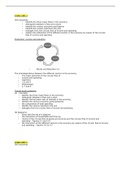
• explain the interaction of the different sectors in the economy by means of the circular
flow of income and spending
Production, income and spending
• Stocks and flows Box 3-1
The interdependence between the different sectors in the economy
• The major elements of the circular flow of
• income and spending
• Injections
• I, G and X
• Withdrawals
• S, T and Z
Typical exam questions
(a) Concepts:
• identify the three major flows in the economy
• distinguish between a flow and a stock
• identify the two basic sets of markets in the economy
• identify the various economic participants/list
• the components of total spending
• identify the various injections into and
• leakages from the circular flow of income and spending
(b) Diagrams:
• Show with the aid of a diagram:
• the interaction of households and firms by
• means of the circular flow of goods and services and the circular flow of income and
spending – Figures 3-2 and 3-3
• the interaction of the different sectors in the economy by means of the circular flow of income
and spending – Figures 3-4 to 3-7
STUDY UNIT 2
Unit outcomes
, • explain what money is and explain its functions
• discuss the role of financial intermediaries
• discuss the functions of the SARB
• discuss the supply of and demand for money
• explain and illustrate with the aid of a diagram the
• interaction between the interest rate and the demand
• for money
• discuss the instruments of monetary policy
The financial sector
• Functions of money
what money is not
• Different kinds of money
• Financial intermediaries
commercial banks
• Functions of SARB
Supply of money
• M=C+D
• demand deposits
• credit multiplier
• Trade
• Government
Demand for money
• Definition
• Liquidity preference
transactions motive – f(Y) – active balance
precautionary motive – f(Y) – active balance
speculative motive – f(i) – passive balance
• Table 15-2, Figure 15-1
Money market equilibrium
• Demand determined money supply
• Figure 15-2
Monetary policy
• Definition
• Instruments of monetary policy
Typical exam questions
(a) Concepts:
• list the functions of money
• define money
Unit outcomes
• identify the three major flows in the economy
• distinguish between a flow and a stock
• identify the various economic participants
• identify the various injections into and
• leakages from the circular flow of income and spending
• explain the interaction of the different sectors in the economy by means of the circular
flow of income and spending
Production, income and spending
• Stocks and flows Box 3-1
The interdependence between the different sectors in the economy
• The major elements of the circular flow of
• income and spending
• Injections
• I, G and X
• Withdrawals
• S, T and Z
Typical exam questions
(a) Concepts:
• identify the three major flows in the economy
• distinguish between a flow and a stock
• identify the two basic sets of markets in the economy
• identify the various economic participants/list
• the components of total spending
• identify the various injections into and
• leakages from the circular flow of income and spending
(b) Diagrams:
• Show with the aid of a diagram:
• the interaction of households and firms by
• means of the circular flow of goods and services and the circular flow of income and
spending – Figures 3-2 and 3-3
• the interaction of the different sectors in the economy by means of the circular flow of income
and spending – Figures 3-4 to 3-7
STUDY UNIT 2
Unit outcomes
, • explain what money is and explain its functions
• discuss the role of financial intermediaries
• discuss the functions of the SARB
• discuss the supply of and demand for money
• explain and illustrate with the aid of a diagram the
• interaction between the interest rate and the demand
• for money
• discuss the instruments of monetary policy
The financial sector
• Functions of money
what money is not
• Different kinds of money
• Financial intermediaries
commercial banks
• Functions of SARB
Supply of money
• M=C+D
• demand deposits
• credit multiplier
• Trade
• Government
Demand for money
• Definition
• Liquidity preference
transactions motive – f(Y) – active balance
precautionary motive – f(Y) – active balance
speculative motive – f(i) – passive balance
• Table 15-2, Figure 15-1
Money market equilibrium
• Demand determined money supply
• Figure 15-2
Monetary policy
• Definition
• Instruments of monetary policy
Typical exam questions
(a) Concepts:
• list the functions of money
• define money