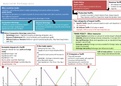
Trade Policy: Revenue Tariffs
Import tariffs: • No industry to
TAX or duty levied on products that are • G wants to mak
Why countries trade: imported to a country imports
- Country = self sufficient when it makes everything it consumes within its borders.
ADAM SMITH: Protective Tariffs:
“it’s better to specialise in a couple of goods & services and trade with other countries, countries • G wants to protect a local industry from cheap imports
have different resources” • They impose a tariff on imports to make the product more
- Countries could have a absolute or comparative advantage in trade.
Two categories of import tariffs:
Comparative Advantage Absolute Advantage 1. Specific Tariffs: Specific amount taxed on each unit imported. Ex
* Ability of a party to produce a good / * Ability of a party to produce more of a good / car imported.
service at a lower marginal and service than competitors, using the same amount 2. Ad Valorem Tariffs: % of value is taxed.
opportunity cost over another. of resources. Example: 20% on price of all new imported cars.
Where Comparative Advantage comes from TRADE POLICY - Other measures
• Technology (Japan = high tech country, producing computers, etc.) • Import Quotas (restriction on amount of certain import allowed)
• Resource Endowments (SA = lot of minerals such as platinum, gold) • Subsidies (Instead of taxing overseas companies, G can give the m
• Different tastes or Demand (Holland = good in producing bicycles, they have long history • Non-tariff barriers (Rules and regulations set on standard of impo
with this) packed / size of fruit)
• Exchange controls (Foreign currency needed for foreign trade, by
If the trade opens: trade is restricted)
Economic Impact of a Tariff: * New price for cars = Pw • Exchange rate policy (Exchange rate influences trade)
Example: Market for Cars (with no foreign
* Supply of cars in local industry fall to
trade) AIM of trade policies = to protect
Q1
Equilibrium Price = Pd * Demand in local country will increase to IF G imposes a Tariff: from cheap international brands.
Equilibrium QTY = Q3 Q5 * Price will increase
Equilibrium = Ed * MEANING: shortage in domestic supply * At Price Pt, Local supplier will supply Q2
Due to other countries that have will be filled with imports * Consumers will demand Q4
comparative advantage in producing cars, * New Equilibrium = Ew; Price = Pw; Qty = * Imported amount is now Q2-Q4
the world price = Pw Q5 * Equilibrium = Et; Price = Pt; Qty = Q4
Import tariffs: • No industry to
TAX or duty levied on products that are • G wants to mak
Why countries trade: imported to a country imports
- Country = self sufficient when it makes everything it consumes within its borders.
ADAM SMITH: Protective Tariffs:
“it’s better to specialise in a couple of goods & services and trade with other countries, countries • G wants to protect a local industry from cheap imports
have different resources” • They impose a tariff on imports to make the product more
- Countries could have a absolute or comparative advantage in trade.
Two categories of import tariffs:
Comparative Advantage Absolute Advantage 1. Specific Tariffs: Specific amount taxed on each unit imported. Ex
* Ability of a party to produce a good / * Ability of a party to produce more of a good / car imported.
service at a lower marginal and service than competitors, using the same amount 2. Ad Valorem Tariffs: % of value is taxed.
opportunity cost over another. of resources. Example: 20% on price of all new imported cars.
Where Comparative Advantage comes from TRADE POLICY - Other measures
• Technology (Japan = high tech country, producing computers, etc.) • Import Quotas (restriction on amount of certain import allowed)
• Resource Endowments (SA = lot of minerals such as platinum, gold) • Subsidies (Instead of taxing overseas companies, G can give the m
• Different tastes or Demand (Holland = good in producing bicycles, they have long history • Non-tariff barriers (Rules and regulations set on standard of impo
with this) packed / size of fruit)
• Exchange controls (Foreign currency needed for foreign trade, by
If the trade opens: trade is restricted)
Economic Impact of a Tariff: * New price for cars = Pw • Exchange rate policy (Exchange rate influences trade)
Example: Market for Cars (with no foreign
* Supply of cars in local industry fall to
trade) AIM of trade policies = to protect
Q1
Equilibrium Price = Pd * Demand in local country will increase to IF G imposes a Tariff: from cheap international brands.
Equilibrium QTY = Q3 Q5 * Price will increase
Equilibrium = Ed * MEANING: shortage in domestic supply * At Price Pt, Local supplier will supply Q2
Due to other countries that have will be filled with imports * Consumers will demand Q4
comparative advantage in producing cars, * New Equilibrium = Ew; Price = Pw; Qty = * Imported amount is now Q2-Q4
the world price = Pw Q5 * Equilibrium = Et; Price = Pt; Qty = Q4