

Lecture 1 Introduction
The Selfish Ledger
A system to predict the likelihood that a user will or will not be able to take action in
the future.
Youth culture = ‘A group’s distinctive way of live, including its beliefs and values, it’s customs and it’s
art and technologies (Arnett & Hughes, 2012).
Talcott Parsons (1964): youth culture is hedonism & irresponsibility (and adventure) vs. routine, delay
of gratification and responsibilities.
Youth culture unwritten rules: the digital world has its own jargon as well as ‘rules’ about how to
behave.
There are less youth cultures than two decades ago because there are less changes going on right
now. Social media plays an important role in this and we need to prepare youth for consequences
and risks of using social media.
Youth and culture and media: is there a mobile youth culture?
- Separate social position characteristic for youth culture
- ‘Generational distinctiveness’ (a generation can distinct themselves from previous
generations) through digital media …. Though also so connected.
- Also recognize the existence of subcultures within (Brake, 2013)
Youth culture, youth development and media (Mchale et al., 2009)
Parents
Peers
Schools
Neighborhoods
Availability of media use
… and permission to use media
,Social media use 12-16 years
Examples of problematic use
- Loss of control/not being able to stop
- Losing interest in other activities
- Conflict parents
- Problems at school
Do you feel addicted to social media use?
2018:
- 22% of the girls feels quite well/definitely addicted
- 11% of the boys feels quite well/definitely
addicted
Gaming?
2018:
- 96% of the boys played a game in last three
months
- 70% of the girls played a game in last three
months
Erikson’s theory (1902-1994)
- Life phases are characterized by ‘crisis’. Adolescence is identity versus identity confusion
- ‘Healthy path’ = stable and secure identity
Youth culture, media and identity formation
Youth (sub)cultures can support identity formation:
- Support intimate interactions with others
- Self-exploration and trying different ‘selves’ (self-concept)
- Provide possible role models (Bandura’s social learning theory)
- Create feelings of ingroup and outgroup favoritism (Social Identity Theory, Tajfel)
Social relations: friendships, romantic relations, peer influence, social status & popularity
, Social relations, youth culture and digital media
Youth culture can support connecting:
- Meeting similar others (values, beliefs, behavior)
- Shared preferences (music, social networks) increase friendship stability and formation
- Learn from role models (easier when you feel connected/similar)
Emotion, well-being and youth culture
Youth culture can support in:
- Need to belong
- Social capital or social support
- Acceptance
- Mood regulation (express emotions)
Problem behavior, media and youth culture
- How can youth culture and media lead to problem behavior.
- Always supportive?
- Selection effects? (does these all relate to each other?)
What about the role of digital media?
- Explore identity by looking at vloggers or ‘like’ certain groups
- Connect to others and strengthen relationships by social media
- Feel better while listening to music or release stress by playing games
- Behave to the norms of certain music groups or copy vloggers
Lecture 2 Theories
Media theories
1. Media use: how media is used by the users
2. Media effects: what effect does the media have
3. Mechanism/processes of media effects
Media use (Valkenburg, Peter & Walther, 2016)
- From… ‘what people do with media’ = media use theories
- To…. ‘the effect media has on the user = media effects theories
Media use
1. Uses and gratification theory
• People actively seek for media that satisfy their needs
• Different needs: identity, relationship, relaxation/entertainment, knowledge
• Is also influenced by personality differences
• Different media compete with each other
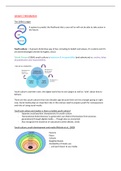
2. Ecological perspective (Bronfenbrenner) →
• Micro system: childs’ direct environment
• Meso system: connection between child’s daily
environments
• Exosystem: indirect environments
• Macrosystem: more abstract system, beliefs and
values
• Parenting influences media use
• Peers provide access to media that are not allowed
at home
The Selfish Ledger
A system to predict the likelihood that a user will or will not be able to take action in
the future.
Youth culture = ‘A group’s distinctive way of live, including its beliefs and values, it’s customs and it’s
art and technologies (Arnett & Hughes, 2012).
Talcott Parsons (1964): youth culture is hedonism & irresponsibility (and adventure) vs. routine, delay
of gratification and responsibilities.
Youth culture unwritten rules: the digital world has its own jargon as well as ‘rules’ about how to
behave.
There are less youth cultures than two decades ago because there are less changes going on right
now. Social media plays an important role in this and we need to prepare youth for consequences
and risks of using social media.
Youth and culture and media: is there a mobile youth culture?
- Separate social position characteristic for youth culture
- ‘Generational distinctiveness’ (a generation can distinct themselves from previous
generations) through digital media …. Though also so connected.
- Also recognize the existence of subcultures within (Brake, 2013)
Youth culture, youth development and media (Mchale et al., 2009)
Parents
Peers
Schools
Neighborhoods
Availability of media use
… and permission to use media
,Social media use 12-16 years
Examples of problematic use
- Loss of control/not being able to stop
- Losing interest in other activities
- Conflict parents
- Problems at school
Do you feel addicted to social media use?
2018:
- 22% of the girls feels quite well/definitely addicted
- 11% of the boys feels quite well/definitely
addicted
Gaming?
2018:
- 96% of the boys played a game in last three
months
- 70% of the girls played a game in last three
months
Erikson’s theory (1902-1994)
- Life phases are characterized by ‘crisis’. Adolescence is identity versus identity confusion
- ‘Healthy path’ = stable and secure identity
Youth culture, media and identity formation
Youth (sub)cultures can support identity formation:
- Support intimate interactions with others
- Self-exploration and trying different ‘selves’ (self-concept)
- Provide possible role models (Bandura’s social learning theory)
- Create feelings of ingroup and outgroup favoritism (Social Identity Theory, Tajfel)
Social relations: friendships, romantic relations, peer influence, social status & popularity
, Social relations, youth culture and digital media
Youth culture can support connecting:
- Meeting similar others (values, beliefs, behavior)
- Shared preferences (music, social networks) increase friendship stability and formation
- Learn from role models (easier when you feel connected/similar)
Emotion, well-being and youth culture
Youth culture can support in:
- Need to belong
- Social capital or social support
- Acceptance
- Mood regulation (express emotions)
Problem behavior, media and youth culture
- How can youth culture and media lead to problem behavior.
- Always supportive?
- Selection effects? (does these all relate to each other?)
What about the role of digital media?
- Explore identity by looking at vloggers or ‘like’ certain groups
- Connect to others and strengthen relationships by social media
- Feel better while listening to music or release stress by playing games
- Behave to the norms of certain music groups or copy vloggers
Lecture 2 Theories
Media theories
1. Media use: how media is used by the users
2. Media effects: what effect does the media have
3. Mechanism/processes of media effects
Media use (Valkenburg, Peter & Walther, 2016)
- From… ‘what people do with media’ = media use theories
- To…. ‘the effect media has on the user = media effects theories
Media use
1. Uses and gratification theory
• People actively seek for media that satisfy their needs
• Different needs: identity, relationship, relaxation/entertainment, knowledge
• Is also influenced by personality differences
• Different media compete with each other
2. Ecological perspective (Bronfenbrenner) →
• Micro system: childs’ direct environment
• Meso system: connection between child’s daily
environments
• Exosystem: indirect environments
• Macrosystem: more abstract system, beliefs and
values
• Parenting influences media use
• Peers provide access to media that are not allowed
at home


