Integrative Personality Theory
Name
PSY 330: Theories of Personality
Date
, As a therapist one of the tools of the profession is to assess one’s client’s personality in
an attempt to learn how to better help that individual. Everyone is unique in both their
personality and in how that personality is formed and expressed, but what is the best way to
assess this person’s uniqueness? In this paper we will look at seven major concepts of
personality: Psychodynamic, Neurobiological, Behavioral, Cognitive, Interpersonal, Trait, and
the Self- Psychology Model Concepts to determine which will be use to develop my own
personal Integrative Personality Theory
Psychodynamic Model Concept
Psychodynamic theory was first developed by Freud in an era of sexual repression
during a time when very little was known or studied of the human psyche. The psychodynamic
theory is a view that explains personality in terms of conscious and unconscious forces and it
holds that childhood experiences are the major force that shapes a person’s personality. Critics
of this model site the difficulty in researching using scientific methods to verify hypotheses.
Even though this is the case, the pioneers in this field not only created the framework for
modern day psychotherapy but they also coined terms and ideas that are still used, at least in
part, today by professionals and laypersons alike.
Two of the early pioneers in the psychodynamic model concept are Freud and Jung both
emphasized the conscious and unconscious mind but of the two, I favor Jung over Freud. Jung
emphasized collective unconscious and through a process he called analytic psychology
attempted to assist the patient too integrate their conscious and unconscious minds. Jung also
refused to “accept the sexual instinct as the primary force in mental life”. [Lec15] Although, he
disagreed with Freud fundamentally Jung did use some therapy techniques of Freud’s such as
free association and dream analysis.
Jung’s most impressive work and theory that I choose to include in my integrated
personality theory is his Extraversion-Introversion model, which he described as a dimension of
personality. Extroversion he defined as “an outward-turning of the libido” and introversion as
“turning inwards of the libido”[Dic64] To Jung, libido was not solely about sexual energy but
, rather about generalized psychic energy. [McL14] He then theorized that there are four basic
functions - thinking, feeling, sensing, and intuiting. Which when combined with whether a
person is introverted or extraverted would yield a cross-classification of eight pure personality
types. To determine what combination of these a person is we can use the Jung Typology Test
or we can use “Briggs-Myers Type Indicator (MBTI) assessment, both of which will be
covered later in this paper.
Neurobiological Model Concept
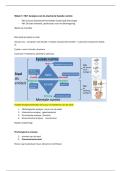
Hans Selye borrowed the term “stress” from the field of engineering and applied it to a
biological model. He was a pioneer in his field and his contributions are used to this day. He
theorized the General Adaptation Syndrome (GAS), which explains the three stages of response
we have to stress which are alarm, resistance, and exhaustion. Chronic stress can affect not just
our physical health but our mental health as well. Western medicine at first embraced the mind-
body connection, but as we became more technical and scientific we discarded this as folk
medicine. America is just now returning to the knowledge that there is a definite mind-body
connection, except now we have scientific studies to prove it.
Sustained high levels of cortisol takes a physical and emotional toll, this can cause
epigenetic changes, or the turning on certain genes. Higher levels of cortisol can result from
trauma such as childhood sexual and physical abuse and could “produce consistently higher
levels of cortisol and more easily triggered cortisol responses to stimulation, which have been
linked to higher levels of depression and post-traumatic stress disorder.”[Lec15] in adults who
suffered from traumas at a young age. High emotional arousal to stress can be directly linked to
all personality disorders including depression “It has been suggested that even permanent
mental derangements can result from maladaptation to severe systemic stress” [The53]
Humans are not built to live in a constant state of stress so our psyche and our physical health
takes damage from rampant uncontrolled stressors.
Stress is more than simple worry, stress in terms of the abuse a child can suffer goes way
beyond feeling ‘stressed-out’ about getting the kids to school on time. Real stress is defined as
Name
PSY 330: Theories of Personality
Date
, As a therapist one of the tools of the profession is to assess one’s client’s personality in
an attempt to learn how to better help that individual. Everyone is unique in both their
personality and in how that personality is formed and expressed, but what is the best way to
assess this person’s uniqueness? In this paper we will look at seven major concepts of
personality: Psychodynamic, Neurobiological, Behavioral, Cognitive, Interpersonal, Trait, and
the Self- Psychology Model Concepts to determine which will be use to develop my own
personal Integrative Personality Theory
Psychodynamic Model Concept
Psychodynamic theory was first developed by Freud in an era of sexual repression
during a time when very little was known or studied of the human psyche. The psychodynamic
theory is a view that explains personality in terms of conscious and unconscious forces and it
holds that childhood experiences are the major force that shapes a person’s personality. Critics
of this model site the difficulty in researching using scientific methods to verify hypotheses.
Even though this is the case, the pioneers in this field not only created the framework for
modern day psychotherapy but they also coined terms and ideas that are still used, at least in
part, today by professionals and laypersons alike.
Two of the early pioneers in the psychodynamic model concept are Freud and Jung both
emphasized the conscious and unconscious mind but of the two, I favor Jung over Freud. Jung
emphasized collective unconscious and through a process he called analytic psychology
attempted to assist the patient too integrate their conscious and unconscious minds. Jung also
refused to “accept the sexual instinct as the primary force in mental life”. [Lec15] Although, he
disagreed with Freud fundamentally Jung did use some therapy techniques of Freud’s such as
free association and dream analysis.
Jung’s most impressive work and theory that I choose to include in my integrated
personality theory is his Extraversion-Introversion model, which he described as a dimension of
personality. Extroversion he defined as “an outward-turning of the libido” and introversion as
“turning inwards of the libido”[Dic64] To Jung, libido was not solely about sexual energy but
, rather about generalized psychic energy. [McL14] He then theorized that there are four basic
functions - thinking, feeling, sensing, and intuiting. Which when combined with whether a
person is introverted or extraverted would yield a cross-classification of eight pure personality
types. To determine what combination of these a person is we can use the Jung Typology Test
or we can use “Briggs-Myers Type Indicator (MBTI) assessment, both of which will be
covered later in this paper.
Neurobiological Model Concept
Hans Selye borrowed the term “stress” from the field of engineering and applied it to a
biological model. He was a pioneer in his field and his contributions are used to this day. He
theorized the General Adaptation Syndrome (GAS), which explains the three stages of response
we have to stress which are alarm, resistance, and exhaustion. Chronic stress can affect not just
our physical health but our mental health as well. Western medicine at first embraced the mind-
body connection, but as we became more technical and scientific we discarded this as folk
medicine. America is just now returning to the knowledge that there is a definite mind-body
connection, except now we have scientific studies to prove it.
Sustained high levels of cortisol takes a physical and emotional toll, this can cause
epigenetic changes, or the turning on certain genes. Higher levels of cortisol can result from
trauma such as childhood sexual and physical abuse and could “produce consistently higher
levels of cortisol and more easily triggered cortisol responses to stimulation, which have been
linked to higher levels of depression and post-traumatic stress disorder.”[Lec15] in adults who
suffered from traumas at a young age. High emotional arousal to stress can be directly linked to
all personality disorders including depression “It has been suggested that even permanent
mental derangements can result from maladaptation to severe systemic stress” [The53]
Humans are not built to live in a constant state of stress so our psyche and our physical health
takes damage from rampant uncontrolled stressors.
Stress is more than simple worry, stress in terms of the abuse a child can suffer goes way
beyond feeling ‘stressed-out’ about getting the kids to school on time. Real stress is defined as