NURS_623_EXAM 4STUDY GUIDE.
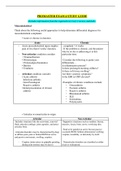
NURS_623_EXAM 4STUDY GUIDE. PROMASTER EXAM 4 STUDY GUIDE (Includes information from the required text, Cary’s review, and Leik) Musculoskeletal Think about the following useful approaches to help determine differential diagnoses for musculoskeletal complaints: • Acute or chronic in duration Acute Chronic - Acute musculoskeletal injury implies pain of less than 6 weeks’ duration. - Non-articular condition consider: • Trauma/fracture • Fibromyalgia • Polymyalgia rheumatica • Bursitis • Tendinitis - Articular condition consider: • Acute arthritis Infectious arthritis Gout Pseudogout Reactive arthritis • Initial presentation of chronic arthritis - complaint 6 weeks - If the problem is chronic, ask the patient why he or she is addressing it at this particular time. -Consider the following to guide your differentials… Is inflammation present? Is there prolonged morning stiffness? Is there soft tissue swelling? Are there systemic symptoms? Is the ESR or CRP elevated? -Examples of chronic conditions include: • Osteoarthritis • Psoriatic arthritis • Reactive arthritis • Rheumatoid arthritis • SLE • Sclerodema • Polymyositis • Articular or nonarticular in origin Articular Non-Articular -Includes structures like the synovium, synovial fluid, articular cartilage, joint capsules, and juxta- articular bone. -Articular disorders may be characterized by deep or diffuse pain, pain or limited ROM on active and passive movement, swelling, crepitus. - Crepitus (joint noises or palpable grinding during joint motion) may be due to -Supportive structures such as tendons, bursae, muscles, fascia, bone, nerve, overlying skin. -Tend to be painful on active but not passive (assisted) ROM. Seldom demonstrate swelling, crepitus, instability, or deformity by itself. - Nonarticular disorders are classified as either focal or widespread. articular surface abnormalities or synovitis. - Crepitus not associated with pain or limitation of motion is generally of no clinical significance. - Articular disorders are classified based on the number of involved joints: Monoarticular (one joint), periarticular (two to four joints), or polyarticular (more than four joints). • Inflammatory or noninflammatory in nature INFLAMMATORY NON-INFLAMATORY -Inflammatory disorders may be infectious or idiopathic. -These are identified by the presence of all or some of the four cardinal signs of infiammation (erythema, warmth, pain, or swelling); systemic symptoms (fatigue, weight loss, morning stiffness, fever); or laboratory evidence of inflammation (elevated erythrocyte sedimentation rate or C-reactive protein, anemia of chronic disease, hypoalbuminemia, or thrombocytosis). -Noninflammatory disorders tend to be related to trauma (meniscus tear), ineffective repair (OA), neoplasm, or pain amplification (fibromyalgia). -There may be pain without swelling or warmth, absence of inflammatory or systemic features, minimal or absent morning stiffness, and normal (for age) laboratory testing. • Localized or systemic in distribution - A major goal of the physical exam is to detect warmth over a joint, joint effusion, and pain on joint motion. These are hallmarks of synovitis • Know how to Grade muscle testing 5 normal-complete ROM against gravity with normal resistance 4 good – complete ROM against gravity with some resistance 3 fair-complete ROM with gravity eliminated 2 poor-complete ROM with gravity eliminated 1 trace –muscle contraction –little or no joint motion 0-no evidence of muscular function
Document information
- Uploaded on
- March 2, 2022
- Number of pages
- 50
- Written in
- 2021/2022
- Type
- Other
- Person
- Unknown