

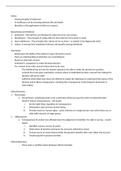
Ethics:
- Moral principles of behaviour
- In healthcare can be choosing between life and death
- Bioethics is the application of ethics to research
Beauchamp and Childress:
1. Autonomy –The right for an individual to make his or her own choice.
2. Beneficence –The principle of acting with the best interest of the other in mind.
3. Non-maleficence –The principle that “above all, do no harm,” as stated in the Hippocratic Oath.
4. Justice–A concept that emphasizes fairness and equality among individuals
Autonomy:
- Based upon the ability of the patient to give informed consent
- Have an understanding of what they are consenting for
- Based on informed consent
- Individual is competent to make informed decision
- For consent to be valid, several criteria have to be met:
- The individual has to have the mental capacity to be able to make the decision in question.
- Consent has to be given voluntarily–consent where an individual has been coerced into making the
decision will not be valid.
- Sufficient information also has to be offered to enable the individual to understand the nature of the
decision and its likely consequences, including the consequences of declining the treatment or
intervention.
Ethical theories:
1. Deontology
a. Moral theory, emphasises duty to do a particular action because the action is inherently right
(doesn’t look at consequences) - rule based
i. Do the right thing, regardless of consequences
ii. Emphasises value of every human being
iii. Provides basis for human rights – gives interests of a single person even when those are at
odds with interests of larger group
2. Utilitarianism
a. Consequences of conduct are ultimate basis for judgement of whether it is right or wrong – results
based
i. Identifies various courses of action
ii. Determines all benefits and harms for everyone affected by action
iii. Choose course of action that provides the greatest benefits after costs taken into account
iv. Greatest good for greatest number
Ethical dilemmas:
- Occur when a problem exists between ethical principles
- Moral principles of behaviour
- In healthcare can be choosing between life and death
- Bioethics is the application of ethics to research
Beauchamp and Childress:
1. Autonomy –The right for an individual to make his or her own choice.
2. Beneficence –The principle of acting with the best interest of the other in mind.
3. Non-maleficence –The principle that “above all, do no harm,” as stated in the Hippocratic Oath.
4. Justice–A concept that emphasizes fairness and equality among individuals
Autonomy:
- Based upon the ability of the patient to give informed consent
- Have an understanding of what they are consenting for
- Based on informed consent
- Individual is competent to make informed decision
- For consent to be valid, several criteria have to be met:
- The individual has to have the mental capacity to be able to make the decision in question.
- Consent has to be given voluntarily–consent where an individual has been coerced into making the
decision will not be valid.
- Sufficient information also has to be offered to enable the individual to understand the nature of the
decision and its likely consequences, including the consequences of declining the treatment or
intervention.
Ethical theories:
1. Deontology
a. Moral theory, emphasises duty to do a particular action because the action is inherently right
(doesn’t look at consequences) - rule based
i. Do the right thing, regardless of consequences
ii. Emphasises value of every human being
iii. Provides basis for human rights – gives interests of a single person even when those are at
odds with interests of larger group
2. Utilitarianism
a. Consequences of conduct are ultimate basis for judgement of whether it is right or wrong – results
based
i. Identifies various courses of action
ii. Determines all benefits and harms for everyone affected by action
iii. Choose course of action that provides the greatest benefits after costs taken into account
iv. Greatest good for greatest number
Ethical dilemmas:
- Occur when a problem exists between ethical principles


