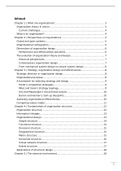
Inhoud
Chapter 1 | What are organizations?......................................................................3
Organization theory in action.............................................................................. 3
Current challenges........................................................................................... 4
What is an organization?..................................................................................... 4
Chapter 2 | Perspectives on organizations.............................................................4
Closed and open systems.................................................................................... 5
Organizational configuration............................................................................... 5
Dimensions of organization design......................................................................6
Performance and effectiveness outcomes........................................................6
The evolution of organization theory and design................................................7
Historical perspectives..................................................................................... 7
Contemporary organization design..................................................................7
From mechanical system design to natural system design..............................8
Chapter 3 | Strategy, organization design and effectiveness.................................8
Strategic direction in organization design...........................................................8
Organizational purpose....................................................................................... 8
A framework for selecting strategy and design...................................................9
Porter’s competitive strategies........................................................................9
Miles and Snow’s strategy typology.................................................................9
Kim and Mauborgne’s red and blue oceans...................................................10
Barron and Hannan’s start-up blueprints.......................................................10
Assessing organizational effectiveness.............................................................10
Competing values model................................................................................... 11
Chapter 4 | Fundamentals of organization structure............................................12
Organization structure...................................................................................... 12
Information linkages.......................................................................................... 13
Organizational design........................................................................................ 13
Simple structure............................................................................................. 14
Functional structure....................................................................................... 14
Divisional structure........................................................................................ 15
Geographical structure................................................................................... 15
Matrix structure.............................................................................................. 15
Horizontal structure....................................................................................... 16
Virtual network structure............................................................................... 17
Hybrid structure............................................................................................. 17
Applications of structural design.......................................................................18
Chapter 5 | The external environment.................................................................18
1
, The environmental domain............................................................................... 18
Environmental uncertainty................................................................................ 19
Simple-complex dimension............................................................................ 19
Stable-unstable dimension............................................................................. 19
Framework for assessing environmental uncertainty.....................................20
Adapting to environmental uncertainty.............................................................20
Framework for organizational responses to uncertainty................................21
Resource dependence....................................................................................... 21
Strategies to control the environment...............................................................21
Organization-environment integrative framework.........................................22
Chapter 6 | Interorganizational relationships........................................................22
Organizational ecosystems............................................................................... 22
Interorganizational framework..........................................................................23
Chapter 7 | Designing organizations for the international environment...............26
Global organizations.......................................................................................... 26
Designing structure to fit global strategy..........................................................27
Building global capabilities................................................................................ 29
Transnational model....................................................................................... 30
New approaches to global organizational design..............................................30
Dragon multinationals.................................................................................... 30
Value chains................................................................................................... 30
Chapter 8 | Manufacturing and service technologies...........................................31
Core organization manufacturing technology...................................................31
Contemporary applications............................................................................ 31
Performance and structural implications........................................................32
Core organization service technology...............................................................33
Non-core departmental technology...................................................................34
Department design............................................................................................ 34
Workflow interdependence among departments..............................................35
Impact of technology on job design..................................................................36
Chapter 9 | Information technology and control...................................................37
Operations......................................................................................................... 37
Decision-making................................................................................................ 37
Control............................................................................................................... 38
Adding strategic value....................................................................................... 38
Internal coordination...................................................................................... 38
External relationships..................................................................................... 39
Future trends..................................................................................................... 40
Implications of IT on organization design..........................................................40
2
,Chapter 10 | Organization size, life cycle and decline..........................................40
Large versus small organizations......................................................................40
Organizational life cycle.................................................................................... 41
Organizational bureaucracy and control...........................................................41
Organizational decline and downsizing.............................................................42
Chapter 11 | Organizational culture and ethical values........................................43
Organizational culture....................................................................................... 43
Organization design and culture....................................................................43
Ethical values and social responsibility.............................................................44
Sources of ethical values in organizations.....................................................45
Value-based leadership.................................................................................. 45
Managing ethics............................................................................................. 45
Culture and ethics in a global environment....................................................46
Chapter 12 | Innovation and change....................................................................46
Technology change........................................................................................... 47
Service and product change.............................................................................. 48
Strategy and structure change..........................................................................48
Culture change.................................................................................................. 48
Strategies for implementing change.................................................................49
Chapter 13 | Decision-making processes..............................................................50
Individual decision-making................................................................................ 51
Organizational decision-making........................................................................52
The learning organization.............................................................................. 53
Contingency decision-making framework..........................................................54
Summary of decision-making models............................................................55
Special decision circumstances.........................................................................55
Chapter 14 | Conflict, power and politics..............................................................56
Intergroup conflict in organizations...................................................................56
Sources of conflict.......................................................................................... 56
Power and organizations................................................................................... 57
Vertical sources of power............................................................................... 57
Horizontal sources of power...........................................................................57
Political processes in organizations...................................................................58
Using power, politics and collaboration.............................................................58
Chapter 1 | What are organizations?
Organization theory in action
Political economy of organizations: a theoretical framework that focuses on two
key concepts of organizations and their interaction:
3
, 1. Polity / political system: the constitution, or fundamental norms, of the
organization and the system of authority, power and influence.
2. Economy: the economic structures and processes of the organization; that
is, the system for processing and transforming raw materials into the
goods and services that the organization produces.
Current challenges
- Globalization (globalized production, fast communication, outsourcing
(descent payment, security, child labour, taxes))
- Ethics and social responsibility (ecological, financial)
- Responsiveness (environmental changes, technological changes,
organizational crises, shifting customer expectations, replacing of tangible
goods by increasing importance of knowledge)
- Digital workplace (computers, disintermediation, open information
sharing, digital relationships)
- Diversity (women, ethnic minorities, elder, immigrants, work-life balance,
managing diversity)
What is an organization?
Organizations: social entities that are goal-directed, that are designed as
deliberately structured and coordinated activity systems, and that are linked to
the external environment.
Types of organizations
- For profit
Retaining the confidence of shareholders, increase sales revenues.
- Non-profit
Securing funding, competing with profit-making businesses, no measurable
tangible goals.
- Social enterprise
Combining commercial activity generating revenue with the pursuit of
social goals.
Importance of organizations
Organizations are credited with:
1. Bringing together resources to achieve desired goals and outcomes.
2. Producing goods and services.
3. Facilitating innovation.
4. Harnessing modern manufacturing, service and information technologies.
5. Adapting to and influencing a changing environment.
6. Creating value.
7. Accommodating ongoing challenges of diversity, ethics and the
motivation and coordination of employees.
Chapter 2 | Perspectives on organizations
4
Chapter 1 | What are organizations?......................................................................3
Organization theory in action.............................................................................. 3
Current challenges........................................................................................... 4
What is an organization?..................................................................................... 4
Chapter 2 | Perspectives on organizations.............................................................4
Closed and open systems.................................................................................... 5
Organizational configuration............................................................................... 5
Dimensions of organization design......................................................................6
Performance and effectiveness outcomes........................................................6
The evolution of organization theory and design................................................7
Historical perspectives..................................................................................... 7
Contemporary organization design..................................................................7
From mechanical system design to natural system design..............................8
Chapter 3 | Strategy, organization design and effectiveness.................................8
Strategic direction in organization design...........................................................8
Organizational purpose....................................................................................... 8
A framework for selecting strategy and design...................................................9
Porter’s competitive strategies........................................................................9
Miles and Snow’s strategy typology.................................................................9
Kim and Mauborgne’s red and blue oceans...................................................10
Barron and Hannan’s start-up blueprints.......................................................10
Assessing organizational effectiveness.............................................................10
Competing values model................................................................................... 11
Chapter 4 | Fundamentals of organization structure............................................12
Organization structure...................................................................................... 12
Information linkages.......................................................................................... 13
Organizational design........................................................................................ 13
Simple structure............................................................................................. 14
Functional structure....................................................................................... 14
Divisional structure........................................................................................ 15
Geographical structure................................................................................... 15
Matrix structure.............................................................................................. 15
Horizontal structure....................................................................................... 16
Virtual network structure............................................................................... 17
Hybrid structure............................................................................................. 17
Applications of structural design.......................................................................18
Chapter 5 | The external environment.................................................................18
1
, The environmental domain............................................................................... 18
Environmental uncertainty................................................................................ 19
Simple-complex dimension............................................................................ 19
Stable-unstable dimension............................................................................. 19
Framework for assessing environmental uncertainty.....................................20
Adapting to environmental uncertainty.............................................................20
Framework for organizational responses to uncertainty................................21
Resource dependence....................................................................................... 21
Strategies to control the environment...............................................................21
Organization-environment integrative framework.........................................22
Chapter 6 | Interorganizational relationships........................................................22
Organizational ecosystems............................................................................... 22
Interorganizational framework..........................................................................23
Chapter 7 | Designing organizations for the international environment...............26
Global organizations.......................................................................................... 26
Designing structure to fit global strategy..........................................................27
Building global capabilities................................................................................ 29
Transnational model....................................................................................... 30
New approaches to global organizational design..............................................30
Dragon multinationals.................................................................................... 30
Value chains................................................................................................... 30
Chapter 8 | Manufacturing and service technologies...........................................31
Core organization manufacturing technology...................................................31
Contemporary applications............................................................................ 31
Performance and structural implications........................................................32
Core organization service technology...............................................................33
Non-core departmental technology...................................................................34
Department design............................................................................................ 34
Workflow interdependence among departments..............................................35
Impact of technology on job design..................................................................36
Chapter 9 | Information technology and control...................................................37
Operations......................................................................................................... 37
Decision-making................................................................................................ 37
Control............................................................................................................... 38
Adding strategic value....................................................................................... 38
Internal coordination...................................................................................... 38
External relationships..................................................................................... 39
Future trends..................................................................................................... 40
Implications of IT on organization design..........................................................40
2
,Chapter 10 | Organization size, life cycle and decline..........................................40
Large versus small organizations......................................................................40
Organizational life cycle.................................................................................... 41
Organizational bureaucracy and control...........................................................41
Organizational decline and downsizing.............................................................42
Chapter 11 | Organizational culture and ethical values........................................43
Organizational culture....................................................................................... 43
Organization design and culture....................................................................43
Ethical values and social responsibility.............................................................44
Sources of ethical values in organizations.....................................................45
Value-based leadership.................................................................................. 45
Managing ethics............................................................................................. 45
Culture and ethics in a global environment....................................................46
Chapter 12 | Innovation and change....................................................................46
Technology change........................................................................................... 47
Service and product change.............................................................................. 48
Strategy and structure change..........................................................................48
Culture change.................................................................................................. 48
Strategies for implementing change.................................................................49
Chapter 13 | Decision-making processes..............................................................50
Individual decision-making................................................................................ 51
Organizational decision-making........................................................................52
The learning organization.............................................................................. 53
Contingency decision-making framework..........................................................54
Summary of decision-making models............................................................55
Special decision circumstances.........................................................................55
Chapter 14 | Conflict, power and politics..............................................................56
Intergroup conflict in organizations...................................................................56
Sources of conflict.......................................................................................... 56
Power and organizations................................................................................... 57
Vertical sources of power............................................................................... 57
Horizontal sources of power...........................................................................57
Political processes in organizations...................................................................58
Using power, politics and collaboration.............................................................58
Chapter 1 | What are organizations?
Organization theory in action
Political economy of organizations: a theoretical framework that focuses on two
key concepts of organizations and their interaction:
3
, 1. Polity / political system: the constitution, or fundamental norms, of the
organization and the system of authority, power and influence.
2. Economy: the economic structures and processes of the organization; that
is, the system for processing and transforming raw materials into the
goods and services that the organization produces.
Current challenges
- Globalization (globalized production, fast communication, outsourcing
(descent payment, security, child labour, taxes))
- Ethics and social responsibility (ecological, financial)
- Responsiveness (environmental changes, technological changes,
organizational crises, shifting customer expectations, replacing of tangible
goods by increasing importance of knowledge)
- Digital workplace (computers, disintermediation, open information
sharing, digital relationships)
- Diversity (women, ethnic minorities, elder, immigrants, work-life balance,
managing diversity)
What is an organization?
Organizations: social entities that are goal-directed, that are designed as
deliberately structured and coordinated activity systems, and that are linked to
the external environment.
Types of organizations
- For profit
Retaining the confidence of shareholders, increase sales revenues.
- Non-profit
Securing funding, competing with profit-making businesses, no measurable
tangible goals.
- Social enterprise
Combining commercial activity generating revenue with the pursuit of
social goals.
Importance of organizations
Organizations are credited with:
1. Bringing together resources to achieve desired goals and outcomes.
2. Producing goods and services.
3. Facilitating innovation.
4. Harnessing modern manufacturing, service and information technologies.
5. Adapting to and influencing a changing environment.
6. Creating value.
7. Accommodating ongoing challenges of diversity, ethics and the
motivation and coordination of employees.
Chapter 2 | Perspectives on organizations
4