NURS 3632 PROCESS RECORDING FINAL
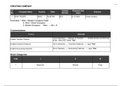
NURS 3632 PROCESS RECORDING FINAL NURS 3632 PROCESS RECORDING FINAL Therapeutic communication is a skill which is developed through purposeful practice. This assignment assists the student in evaluating his/her own communication skills during a conversation with a patient. The process recording helps the student objectively examine both the environment and the interaction between two individuals. What is a Process Recording? A process recording is a learning tool which aids a student to develop observation and communication skills. A nursing student/patient interaction is recorded verbatim (or as closely as possible). Included are: 1. Descriptions of both the student nurse and patient’s non-verbal behavior and communication techniques; 2. Facilitator (F) or barrier (B) utilized; 3. Interpretation/revision of the student and patient’s verbal and non-verbal communication and communication technique. 4. Instructor feedback will be provided when appropriate. Purpose of Process Recording: 1. To guide the student in the development of self-awareness of impact of own behaviors - verbal and non-verbal, on a patient. 2. To encourage the student to explore a variety of strategies to accomplish stated communication goal. 3. To enable student to become more objective in the processing of patient messages. 4. To create an opportunity for student to propose interpretation/revision of verbal, non-verbal and communication techniques. 5. To provide the student with a means to see their development of communication skills. 6. To assist the instructor in gaining an understanding of the student’s ability to communicate therapeutically with patients and families, and provide concrete examples and remediation. Process Recording Guidelines: 1. First, interview a patient in a health care facility for about 5-10 minutes. As soon after the interview as possible, write down the exact conversation. Since both verbal and nonverbal messages play a role in communication, record both the exact verbal exchange and nonverbal communication. At least sender-receiver exchanges must be included. The introductory and closing statements are not considered as exchanges. 2. Then, collect pertinent patient data for the top section of the assignment. To protect the patient and student's privacy, use the word patient or abbreviation pt., not ever use names or initials, when referring to patients. If another individual is included in the process recording use terms such as pt’s nurse, pt’s husband, etc. NEVER EVER USE REAL NAMES OR INITIALS. 3. Next, identify facilitators and blockers (refer to your Videbeck textbook). When communication facilitators are identified, name the type of communication facilitator. When communication barriers are identified, name the type of communication barrier and identify alternative therapeutic responses. 4. Last, write one paragraph summarizing your evaluation of the communication process.
Written for
Document information
- Uploaded on
- November 8, 2021
- Number of pages
- 8
- Written in
- 2021/2022
- Type
- Exam (elaborations)
- Contains
- Questions & answers
Subjects
-
introduction nurs 3632 process recording final therapeutic communication is a skill which is developed through purposeful practice this assignment assists the student in evaluating hisher own c