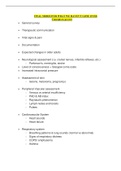
NR-304: Health Assessment II FINAL EXAM REVIEW 2021 GRADE A
● General survey ● Therapeutic communication ● Vital signs & pain ● Documentation ● Expected changes in older adults ● Neurological assessment (i.e. cranial nerves, infantile reflexes, etc.) ○ Parkinson's, meningitis, stroke ● Level of consciousness + Glasgow coma scale ● Increased intracranial pressure ● Assessment of skin ○ lesions, melanoma, pregnancy) ● Peripheral Vascular assessment ○ Venous vs arterial insufficiency ○ PAD & AB index ○ Raynaud's phenomenon ○ Lymph nodes and tonsils ○ Pulses ● Cardiovascular System ○ Heart sounds ○ Heart failure ● Respiratory system ○ Breathing patterns & lung sounds (normal vs abnormal) ○ Signs of respiratory distress ○ COPD/ emphysema ○ Asthma ● Subjective vs objective data ● Levels of priority: i.e. who should nurse see first? ● Abdominal assessment ○ Abnormal GI conditions: appendicitis, peritonitis, cholecystitis ● Musculoskeletal and neurovascular assessment ○ Osteoporosis ○ Carpal tunnel syndrome ○ Osteoarthritis ● Breast assessment ○ Teaching ○ Assessment ○ Mastitis ● Genitourinary ○ Labs: BUN & Creatinine, PSA ○ STIs ○ HPV ○ Dehydration ○ BPH ○ Urinary Retention Peripheral Vascular Assessment EXAM 1 ● Risk factors –modifiable and non-modifiable for peripheral vascular abnormalities ○ Modifiable ■ Smoking ■ Stress ■ Occupation ■ Certain Medications ○ Non-Modifiable ■ Culture : Hispanic or African-American descent are at greatest risk for hypertension, diabetes, and peripheral vascular disease. ■ PAD most prevalent in Non-hispanic, Black ■ Increased risk of developing varicose veins if you are of risk of german descent. ● Special considerations for the peripheral vascular and lymphatic systems across the lifespan ○ Infants and children- lymph nodes are typically larger and palpable - Enlarged tonsils are common in children with respiratory infection - Pulses should be 2+ and equal in upper and lower extremities ○ Pregnancy- bilateral pitting edema in the lower extremities especially at the end of the day and in the third trimester - 80% have peripheral edema - Varicose veins likely seen in third trimester ○ Older adults - Distal pulses may become more difficult to find - Vessels maybe harden, calcification of arterial walls (arterosclerosis) (atherosclerosis is the build up of fatty plaques plus hardening) - Changes associated with arterial insufficiency may be seen: thick ridged nails, thin shiny skin and hair loss on lower legs - Increased systolic BP - Increased risk of developing PAD - Loss of lymphatic tissue that leads to smaller and loss of lymph nodes ● Culture & environmental concerns related to the peripheral vascular assessment -Culture : Hispanic or African-American descent are at greatest risk for hypertension, diabetes, and peripheral vascular disease. -PAD most prevalent in Non-hispanic Black -Increased risk of developing varicose veins if you are of risk of german descent. ● Examination techniques - Inspect and palpate the arms first : checking for skin coloration, hair distribution, capillary refill, pulse rating, lesions edema, lesions - Check epitrochlear area for palpable lymph node ( use shaking had technique, use free hand to feel in the groove of elbow, should be nonpalnpable) - Inspect and palpate the legs : checking for skin coloration, hair distribution, capillary refill, pulse rating, lesions edema, lesions - Measure calf c
Document information
- Uploaded on
- November 6, 2021
- Number of pages
- 28
- Written in
- 2021/2022
- Type
- Exam (elaborations)
- Contains
- Questions & answers