MEASUREMENT
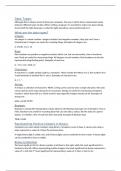
Time
Time can be measured using a stopwatch or stopclock which are usually
accurate to one or two decimal places
The units of time normally used are seconds or minutes although other
units may be used for extremely slow reactions (e.g. rusting)
1 minute = 60 seconds
Temperature
Temperature is measured with a thermometer which can normally give
readings to the nearest degree Celsius
Digital thermometers are available which are more precise than traditional
thermometers
Traditional thermometers rely upon the uniform expansion and contraction
of a liquid substance with temperature; they tend to be
more accurate than digital thermometers which often need to be re-
calibrated
The units of temperature are degrees Celsius (ºC)
Mass
Mass is measured using a digital balance which normally give readings to
two decimal places. These must be tared (set to zero) before use
The standard unit of mass is kilograms (kg) but in chemistry grams (g) are
most often used
1 kilogram = 1000 grams
Volume-liquids
The volume of a liquid can be determined using several types of
apparatus, depending on the level of accuracy needed
For approximate volumes where accuracy isn´t an important factor,
measuring cylinders are used. These are graduated (have a scale so can
Time
Time can be measured using a stopwatch or stopclock which are usually
accurate to one or two decimal places
The units of time normally used are seconds or minutes although other
units may be used for extremely slow reactions (e.g. rusting)
1 minute = 60 seconds
Temperature
Temperature is measured with a thermometer which can normally give
readings to the nearest degree Celsius
Digital thermometers are available which are more precise than traditional
thermometers
Traditional thermometers rely upon the uniform expansion and contraction
of a liquid substance with temperature; they tend to be
more accurate than digital thermometers which often need to be re-
calibrated
The units of temperature are degrees Celsius (ºC)
Mass
Mass is measured using a digital balance which normally give readings to
two decimal places. These must be tared (set to zero) before use
The standard unit of mass is kilograms (kg) but in chemistry grams (g) are
most often used
1 kilogram = 1000 grams
Volume-liquids
The volume of a liquid can be determined using several types of
apparatus, depending on the level of accuracy needed
For approximate volumes where accuracy isn´t an important factor,
measuring cylinders are used. These are graduated (have a scale so can