HRM3705 Remuneration Management - Exam Prep & Revision
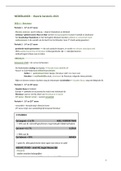
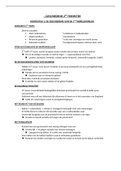
Compensation Management HRM3705 Patric Trollope 11‐16‐2019 S - The study-notes marketplace Downloaded by: juneymay | Distribution of this document is illegal S - The study-notes marketplace 1 Chapter 1: Remuneration Management Overview Remuneration Definition The financial & non‐financial extrinsic rewards provided by an employer for the time, skills & effort made available by the employee in fulfilling job requirements aimed at achieving organisational objectives. Remuneration includes both intrinsic & extrinsic rewards which employees receive for performing their jobs & both these elements encompass an organisations total remuneration system. Remuneration Components 1. Financial rewards Refers to monetary forms of pay the employer provides employees Funds are spent by the employer It includes all cash payments such as: i. base salary ii. pay for performance iii. employee benefits that the employer pays on behalf of its employees Direct remuneration i. Base Pay; Overtime ii. Pay–for–performance 1. Merit pay 2. Bonuses 3. Price rate pay 4. Commission 5. Team‐based pay 6. Gain sharing 7. Profit sharing 8. Stock options Indirect Remuneration i. Legally required benefits 1. Annual leave 2. Sick leave 3. Maternity leave 4. Family responsibility leave 5. Unemployment insurance Downloaded by: juneymay | Distribution of this document is illegal S - The study-notes marketplace 2 6. Payment for occupational injuries & diseases ii. Discretionary benefits 1. Medical aid 2. Pension 3. Various allowances 4. Housing subsidy 5. Group life insurance 6. Study assistance 2. Non‐Financial rewards Work environment Work‐life balance Recognition Career development Job security Remuneration as a total reward approach The monetary & non‐monetary returns provided to employees in exchange for their time, talents, efforts & results. It involves the integration of compensation, benefits, work‐life, performance, recognition & development & career opportunities to atract, motivate & retain the talent required to achieve desired business results. FINANCIAL REWARDS + NON‐FINANCIAL REWARDS = TOTAL REWARDS Remuneration Objectives 1. Attract employees 2. Retain employees 3. Motivate employees 4. Comply with legal requirements 5. Treat employees fairly a. Internal equity – fairness of pay differences among different jobs in an organisation b. External equity – fairness of an employee’s remuneration in comparison to the pay offered by competitors for similar jobs. 6. Manage remuneration efficientl
Geschreven voor
- Instelling
- University of South Africa
- Vak
- HRM3705 Compesantion Management Exam Guide | Latest
Documentinformatie
- Geüpload op
- 27 september 2021
- Aantal pagina's
- 66
- Geschreven in
- 2021/2022
- Type
- Tentamen (uitwerkingen)
- Bevat
- Vragen en antwoorden
Onderwerpen
-
hrm3705 remuneration management exam prep amp revision